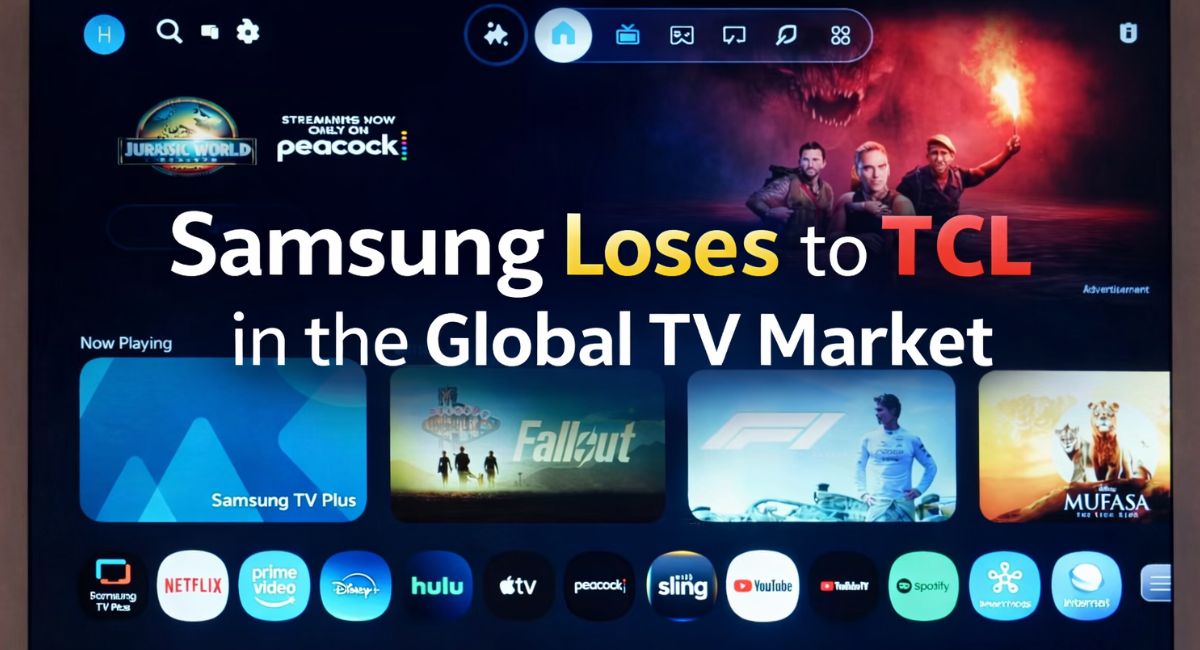
The television industry has long been shaped by a handful of dominant brands, and for years, Samsung stood at the forefront of the global TV market. Known for its innovation in display technology, premium QLED panels, and design excellence, Samsung built a reputation synonymous with quality and performance.
However, recent industry reports indicate a significant shift: Samsung loses to TCL in the global TV market, signaling a dramatic change in competitive dynamics.
This development is not just about numbers on a market share chart. It represents evolving consumer priorities, aggressive pricing strategies, manufacturing scale advantages, and a rapidly changing technological landscape.
In this in-depth analysis, we explore how TCL surpassed Samsung, compare their TV specifications, evaluate product strategies, and examine what this leadership shift means for buyers worldwide.
The Headline: Samsung Loses to TCL in the Global TV Market
For years, Samsung maintained strong global leadership in television shipments and revenue share. Its QLED lineup, Neo QLED mini-LED panels, and 8K flagship models reinforced its premium positioning.
TCL, once considered primarily a budget-friendly alternative, has steadily expanded its global presence. Through aggressive pricing, vertical integration in panel manufacturing, and innovation in Mini LED technology, TCL has reshaped perceptions.
When Samsung loses to TCL in the global TV market, it reflects more than a temporary fluctuation. It highlights a broader market evolution.
Understanding Market Share Shifts
To appreciate the impact of Samsung losing to TCL in the global TV market, it’s important to understand how leadership is measured:
- Unit shipments
- Revenue share
- Premium segment dominance
- Regional market strength
TCL’s strategy focused heavily on volume and affordability without significantly compromising display technology. By targeting mid-range and large-screen categories aggressively, TCL captured strong demand in emerging markets and price-sensitive regions.
Samsung, on the other hand, concentrated more on premium innovation and higher-margin models.
The result: TCL gained significant ground in total shipments, eventually surpassing Samsung in key metrics.
TCL’s Rise: Strategy, Technology, and Timing
1. Mini LED Dominance
One of TCL’s most important strategic moves was early investment in Mini LED technology.
Mini LED TVs use thousands of smaller LEDs for backlighting, offering:
- Improved contrast
- Better brightness control
- Reduced blooming
- Enhanced HDR performance
TCL integrated Mini LED panels across various price tiers, making advanced display tech more accessible.
2. Competitive Pricing
TCL aggressively priced its TVs below major competitors while maintaining solid build quality and feature sets.
Consumers increasingly prioritized:
- Large screen sizes (65-inch and above)
- 4K resolution
- HDR compatibility
- Smart TV functionality
TCL delivered these at highly competitive price points.
Read more:- HP Pavilion x360 vs Lenovo Ideapad 5 2-in-1: Which 2-in-1 Laptop Truly Deserves Your Wallet??
3. Vertical Integration Advantage
TCL benefits from strong panel manufacturing capabilities, giving it greater cost control and supply chain flexibility.
This allowed faster scaling during periods of high demand.
Samsung’s Position: Premium Focus and Innovation
Although Samsung loses to TCL in the global TV market in certain metrics, Samsung remains a technological leader.
Samsung continues to invest heavily in:
- QLED and Neo QLED panels
- 8K resolution technology
- AI upscaling
- Premium design aesthetics
- Gaming optimization features
Samsung’s TVs consistently lead in:
- Peak brightness
- Color volume
- Advanced processing
- Gaming refresh rates
However, higher pricing limits mass-market volume dominance.
Specifications Comparison: TCL vs Samsung TVs
Below is a general comparison between TCL’s popular Mini LED lineup and Samsung’s Neo QLED models.
Display Technology
TCL Mini LED TVs
- Mini LED backlighting
- 4K resolution (3840 x 2160)
- High peak brightness
- Dolby Vision support
Samsung Neo QLED TVs
- Mini LED (Quantum Matrix Technology)
- 4K and 8K variants
- High brightness with Quantum Dot layer
- HDR10+ support
Refresh Rate
- TCL: 120Hz on mid-to-premium models
- Samsung: 120Hz to 144Hz (select models)
Gaming Features
TCL:
- HDMI 2.1 support
- VRR (Variable Refresh Rate)
- Auto Low Latency Mode
Samsung:
- HDMI 2.1
- Game Bar interface
- VRR
- AMD FreeSync Premium Pro
Smart Platform
TCL:
- Google TV or Roku TV (region dependent)
Samsung:
- Tizen OS
Audio
TCL:
- Dolby Atmos support
- Built-in multi-channel speakers
Samsung:
- Object Tracking Sound (OTS)
- Q-Symphony support
While Samsung offers more advanced premium-level refinements, TCL delivers competitive performance at lower price tiers.
Why Consumers Are Choosing TCL?
When Samsung loses to TCL in the global TV market, consumer behavior plays a critical role.
Today’s buyers prioritize:
- Screen size over brand prestige
- Value for money
- Smart TV ecosystem compatibility
- Gaming-ready features
TCL provides:
- Large 75-inch and 85-inch models at aggressive prices
- Competitive brightness levels
- Strong HDR implementation
- Google TV integration
In many households, TCL offers sufficient performance without requiring premium pricing.
The Premium Segment: Samsung Still Strong
It’s important to clarify that Samsung losing to TCL in the global TV market does not mean Samsung is no longer relevant.
Samsung continues to dominate in:
- Ultra-premium segments
- 8K television category
- Luxury design-focused TVs
- Advanced panel innovation
Consumers who prioritize:
- Absolute picture refinement
- Industry-leading brightness
- Advanced motion processing
- Cutting-edge gaming features
Still frequently choose Samsung.
Regional Impact of the Market Shift
TCL’s growth has been particularly strong in:
- Asia-Pacific
- North America
- Emerging economies
Samsung remains dominant in:
- Premium European markets
- Certain high-income segments
This regional balance contributes to shifting global rankings.
Manufacturing Scale and Supply Chain Efficiency
TCL’s control over display manufacturing enables:
- Faster adaptation to market demand
- Reduced production costs
- Improved supply chain resilience
Samsung outsources some panel production while focusing more on technology differentiation.
This difference in operational model influences volume leadership.
Long-Term Industry Implications
Samsung losing to TCL in the global TV market reflects broader industry trends:
- Democratization of display technology
- Reduced premium brand loyalty
- Increased consumer price sensitivity
- Rapid technological diffusion
Mini LED technology is no longer exclusive to premium brands. Affordable innovation is now the norm.
What This Means for Consumers?
For buyers, this shift is positive.
Increased competition leads to:
- Better pricing
- Faster innovation
- Improved feature availability
- Larger screens at lower costs
Consumers now benefit from premium-level display performance at mid-range pricing.
Should You Buy TCL or Samsung?
Choose TCL if you want:
- Maximum screen size for your budget
- Strong Mini LED performance
- Google TV integration
- Competitive HDR features
Choose Samsung if you want:
- Premium brand assurance
- Advanced gaming features
- Refined design
- High-end processing technology
The Future of the TV Market
This market shift is unlikely to be temporary.
TCL’s strategy of combining volume manufacturing with display innovation positions it strongly for sustained growth.
Samsung may respond by:
- Adjusting pricing
- Expanding Mini LED tiers
- Accelerating next-generation display tech
The competition ultimately drives better products for consumers.
When Samsung loses to TCL in the global TV market, it signals more than a brand shift. It represents evolving consumer preferences, the rise of value-driven innovation, and the democratization of advanced display technology.
TCL’s ascent highlights the growing importance of affordability combined with performance. Samsung’s premium innovation continues to set high standards.
For consumers, this competitive battle ensures better TVs at better prices — and that is ultimately the biggest victory.
FAQs
Why did Samsung lose to TCL in the global TV market?
TCL gained market share through competitive pricing, Mini LED technology expansion, strong manufacturing control, and large-screen offerings that appealed to value-focused consumers.
Is TCL better than Samsung TVs?
Not necessarily. TCL offers better value for money in many cases, while Samsung often provides more refined premium features and advanced display processing.
Does TCL make its own panels?
Yes, TCL has strong manufacturing capabilities and significant control over its display panel production, contributing to cost efficiency.
Are Samsung TVs still premium?
Yes. Samsung remains a leader in premium TV innovation, including Neo QLED, 8K resolution, and gaming features.