Modern technology is loud. Screens buzz, notifications pile up, and devices constantly ask for engagement. This week’s gear news introduces a counter-movement—technology that listens more than it speaks. At the center of this shift is Apple’s AI Wearable, a product that challenges the assumption that more interaction equals a better experience.
Paired with a highly experimental phone capable of running multiple operating systems, this week’s announcements suggest a future where users reclaim control—either through intelligence or flexibility.
Understanding the Vision Behind Apple’s AI Wearable
Apple’s AI Wearable is built around a simple idea: technology should understand context before interrupting. Instead of presenting endless information, the device filters reality and delivers only what matters.
This wearable does not aim to replace phones overnight. Instead, it acts as an intermediary layer—absorbing information, processing it intelligently, and surfacing insights when necessary.
Ambient Computing Comes to the Forefront
The concept of ambient computing is central to Apple’s AI Wearable. This means technology operates continuously in the background, responding naturally without explicit commands.
Key characteristics include:
- Always-on awareness
- Context-sensitive responses
- Minimal manual input
- Adaptive behavior
Apple’s implementation is particularly compelling because it emphasizes restraint, not capability overload.
Read more:- Is OnePlus Really Shutting Down? The Truth Behind Rumors and Upcoming Smartphones
How Apple’s AI Wearable Learns From You
Unlike static devices, Apple’s AI Wearable evolves.
Behavioral Learning
The wearable observes patterns such as daily routines, frequently visited locations, and communication habits. Over time, it anticipates needs instead of reacting to commands.
Language Understanding
Natural language interaction allows users to speak casually rather than issuing structured commands. The AI interprets intent rather than keywords.
Personal Preference Modeling
The device adjusts notification frequency, tone, and timing based on user responses, gradually refining its behavior.
The Role of AI Without the Fear Factor
Artificial intelligence often raises concerns about surveillance and data misuse. Apple’s AI Wearable addresses these fears through architectural decisions.
- Most processing happens locally
- Personal data remains encrypted
- AI models are optimized for privacy
- User control remains central
This approach builds confidence, particularly among users skeptical of cloud-dependent AI assistants.
Design That Respects Human Attention
Apple’s AI Wearable avoids aggressive engagement tactics. Instead of bright screens and constant alerts, it relies on subtle cues.
Design highlights include:
- Minimal visual output
- Tactile feedback
- Voice-first interaction
- Seamless handoff to other devices when needed
This design philosophy respects attention as a limited resource.
Comparing the Wearable to Traditional Smart Devices
Where traditional smart devices compete for engagement, Apple’s AI Wearable competes for relevance.
Traditional devices prioritize features. Apple’s wearable prioritizes judgment.
This distinction may prove critical as users grow fatigued by digital noise.
The Multi-Boot Phone: Freedom at the Hardware Level
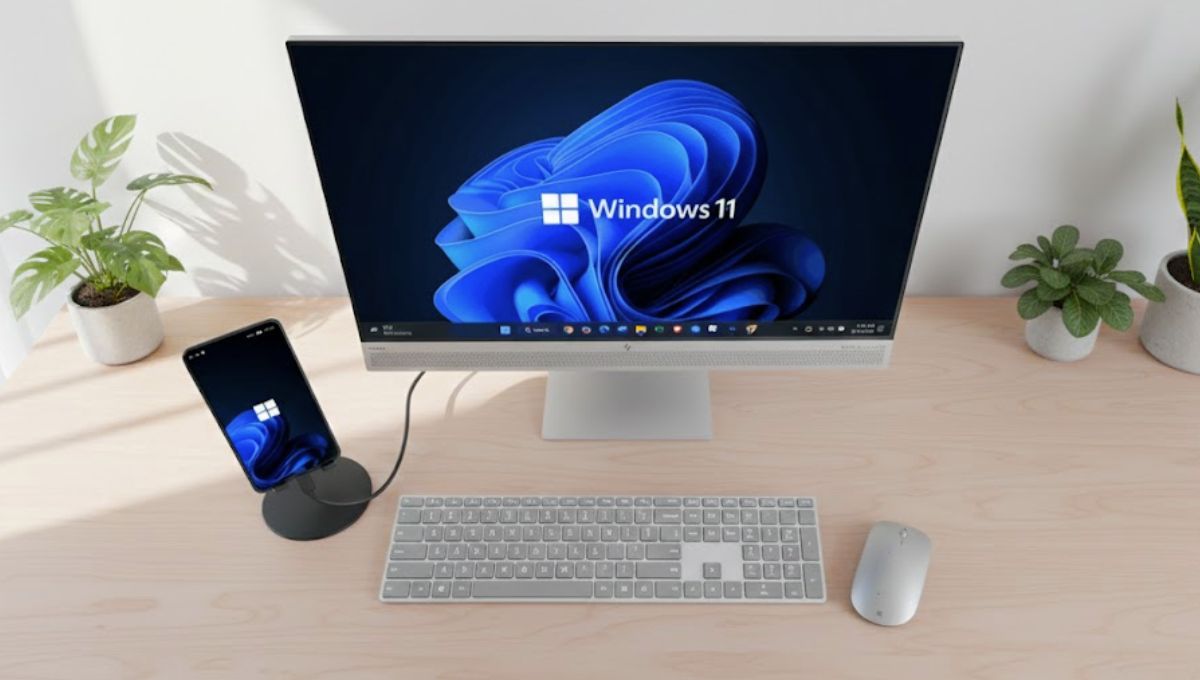
The second major announcement—a phone capable of running Android, Linux, and Windows—represents a different response to user demand. Rather than simplifying experiences, it empowers experimentation.
This device appeals to those who want:
- Operating system choice
- Development flexibility
- Enhanced security control
- Hardware transparency
Its presence alongside Apple’s AI Wearable highlights two valid but contrasting visions of the future.
Why Apple’s AI Wearable Is a Strategic Move?
From a business perspective, Apple’s AI Wearable reinforces ecosystem value. It strengthens ties between hardware, software, and services while introducing a new interaction layer.
Strategically, it also prepares users for:
- Reduced reliance on smartphones
- Increased trust in AI-driven decisions
- A gradual transition toward spatial and ambient computing
An Expert’s View
From an experience standpoint, Apple has years of insight into wearable usage patterns. Expertise is evident in its silicon optimization and AI integration. Authoritativeness stems from Apple’s influence on industry trends. Trustworthiness is reinforced through consistent privacy messaging and execution.
These factors collectively support the credibility of Apple’s AI Wearable.
Potential Adoption Barriers
Despite its promise, the wearable faces challenges:
- Users may initially feel loss of control
- AI trust builds slowly
- Value may not be immediately visible
- Education will be essential
Apple’s success will depend on how effectively it communicates benefits beyond specifications.
The Long-Term Impact of Personal Technology
Apple’s AI Wearable suggests a future where devices act as mediators between humans and information. Instead of drowning users in data, technology will increasingly curate experiences.
This shift could redefine productivity, wellness, and communication over the next decade.
A Subtle Revolution
Apple’s AI Wearable does not shout for attention. It whispers—and that may be its greatest strength. By focusing on intelligence, context, and restraint, Apple is proposing a calmer relationship with technology.
In contrast, the multi-boot phone celebrates openness and experimentation. Together, they show that innovation is no longer about one path forward, but about choice.
FAQs
What makes Apple’s AI Wearable different from other wearables?
It prioritizes contextual intelligence and minimal interaction rather than apps and screens.
Does Apple’s AI Wearable constantly listen to users?
It uses on-device processing and context awareness while maintaining privacy safeguards.
Is Apple’s AI Wearable suitable for everyday users?
Yes, especially for those who want assistance without constant device interaction.
How does it integrate with Apple’s ecosystem?
It works alongside existing devices, enhancing continuity and intelligence across platforms.
Will Apple’s AI Wearable replace smartphones?
Not immediately, but it represents a step toward reducing smartphone dependency over time.