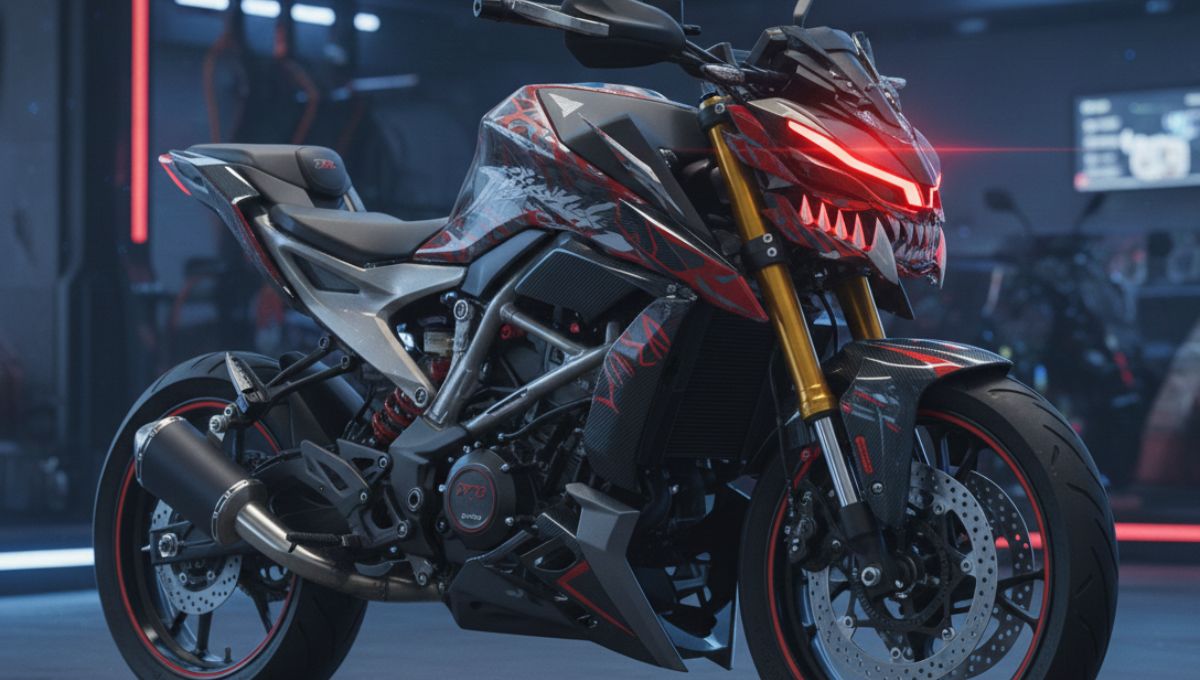
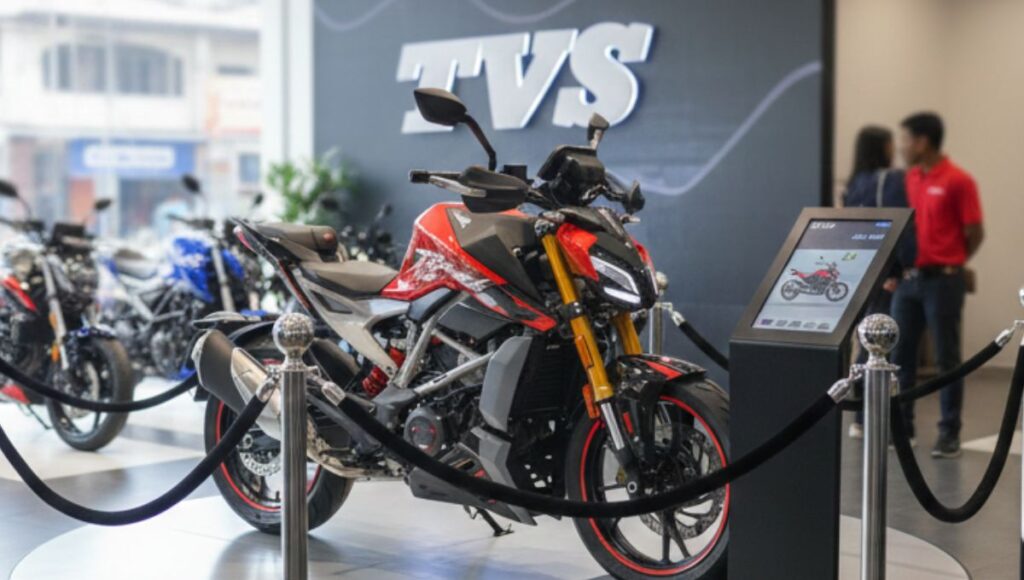
The TVS Apache RTR 310 is a stunning streetfighter motorcycle that combines aggressive design with cutting-edge technology, delivering an exhilarating riding experience. Perfectly suited for both city commutes and spirited rides, it represents the pinnacle of TVS’s racing DNA, packed with advanced features that elevate performance and rider comfort.
Engine
The heart of the Apache RTR 310 is its unique 312.2cc single-cylinder, liquid-cooled, DOHC engine that boasts a compact design for optimal mass centralisation. It produces up to 35.6 PS of power at 9700 rpm and a maximum torque of 28.7 Nm at 6650 rpm in Sport, Track, and SuperMoto modes. The engine features electronic throttle control, a slipper clutch, a 6-speed gearbox with a bidirectional quickshifter, and advanced cooling systems for sustained high performance.
Chassis and Suspension
Built on a hybrid trellis and cast frame with an aluminium sub-frame, the motorcycle promises dynamic response and agile handling. It sports a 41mm USD front fork and a solid die-cast aluminium swingarm with preload-adjustable mono-shock suspension at the rear, tuned by KYB for precise damping and superior cornering performance.
Exterior and Design
With fluid lines and sharp, angular contours inspired by cyborg aesthetics, the Apache RTR 310 stands out with an aggressive stance marked by a raked tail and forward-biased mass. Features like the adaptive Bi-LED cyborg headlamp with sequential TSL, knuckle guards, and a transparent clutch cover add both style and functionality, complementing the sporty steel tapered handlebars.
Read More : NEW Scrambler 400 XC – Full Review, Features, Performance & Complete Buyer’s Guide
Interior and Instrumentation
The bike’s cockpit integrates a 5-inch horizontal TFT race computer that provides real-time telemetry, ride modes, traction control, cruise control, and bluetooth music control. The cluster also supports voice assist, navigation via What3words, smart connectivity through the TVS SmartXonnect app, and crash alert for enhanced safety.
Technology and Safety
Highlights include race-tuned linear traction control, cruise control, ride-by-wire throttle, a segment-first 6-axis IMU with advanced cornering ABS and wheelie control. It also features glide-through technology for smooth starts, dual-channel ABS, tyre pressure monitoring, and fully adjustable front and rear suspension.
Read More : TVS Apache RTX — The New Benchmark in Affordable Adventure Motorcycles
Technical Specifications
| Category | Details |
| Engine | 312.2cc, single-cylinder, liquid-cooled, DOHC |
| Power | 35.6 PS @ 9700 rpm (Sport/Track/SuperMoto modes) |
| Torque | 28.7 Nm @ 6650 rpm (Sport/Track/SuperMoto modes) |
| Transmission | 6-speed with bidirectional quickshifter and slipper clutch |
| Frame | Hybrid trellis & cast frame with aluminium sub-frame |
| Front Suspension | 41mm USD fork, fully adjustable (preload, compression, rebound) |
| Rear Suspension | KYB mono-shock, preload-adjustable |
| Brakes | Dual-channel ABS with cornering, front disc, rear disc |
| Instrumentation | 5-inch TFT with Bluetooth, voice assist, navigation |
| Rider Aids | 5 ride modes (Urban, Rain, Sport, Track, SuperMoto), traction control, cruise control, 6-axis IMU |
FAQs
What is the engine capacity and power output of the TVS Apache RTR 310?
It has a 312.2cc liquid-cooled engine producing up to 35.6 PS and 28.7 Nm of torque in maximum power modes.
Does it have adjustable suspension?
Yes, both front and rear suspension are fully adjustable for preload, compression, and rebound damping.
What rider aids and tech features are included?
Features include traction control, cruise control, ride modes, voice assist, Bluetooth connectivity, and a 5-inch TFT cluster.
Is the Apache RTR 310 suitable for both city and track riding?
Absolutely, with multiple ride modes including Urban, Sport, Track, Rain, and Supermoto, it adapts well to all conditions.
What safety systems are integrated?
The bike offers dual-channel ABS with cornering assist, linear traction control, tyre pressure monitoring, and crash alert.
.
The 5 Powerful Hero Karizma XMR Alternatives That Might Be Better for Entry-Level Sports Bike Buyers
After Two Tough Years, Shimano Reports Growth in Bike Component Sales for First Time: Is the Cycling...
CFMoto Brings Moto2 Looks to Its Small XO Papio Racer: The Pocket Rocket That Thinks It’s a Grand Pr...