In the evolving landscape of global defense, technological superiority has become the ultimate currency of power. Nations are no longer competing solely through troop strength or nuclear stockpiles; the race now centers on advanced military hardware and software technology—systems that integrate artificial intelligence, hypersonic propulsion, stealth materials, directed-energy weapons, cyber capabilities, and autonomous platforms.
Recent developments indicate that China has made significant strides in acquiring and developing next-generation military systems. These advancements are not limited to traditional weapons platforms. They span integrated combat networks, precision-guided munitions, long-range missile systems, electronic warfare suites, and AI-powered battlefield management tools.
The implications extend far beyond Beijing’s borders. For the United States, Russia, India, and Pakistan, this shift represents both a strategic challenge and a recalibration moment.
Let’s examine the technological landscape, the hardware and software specifications involved, and what this evolving balance of power could mean for global security.
Understanding the New Era of Military Hardware and Software Technology
Modern defense systems rely on the fusion of physical assets and digital intelligence.
Core Categories of Advanced Military Technology
- Stealth Aircraft and Naval Platforms
- Artificial Intelligence-Driven Command Systems
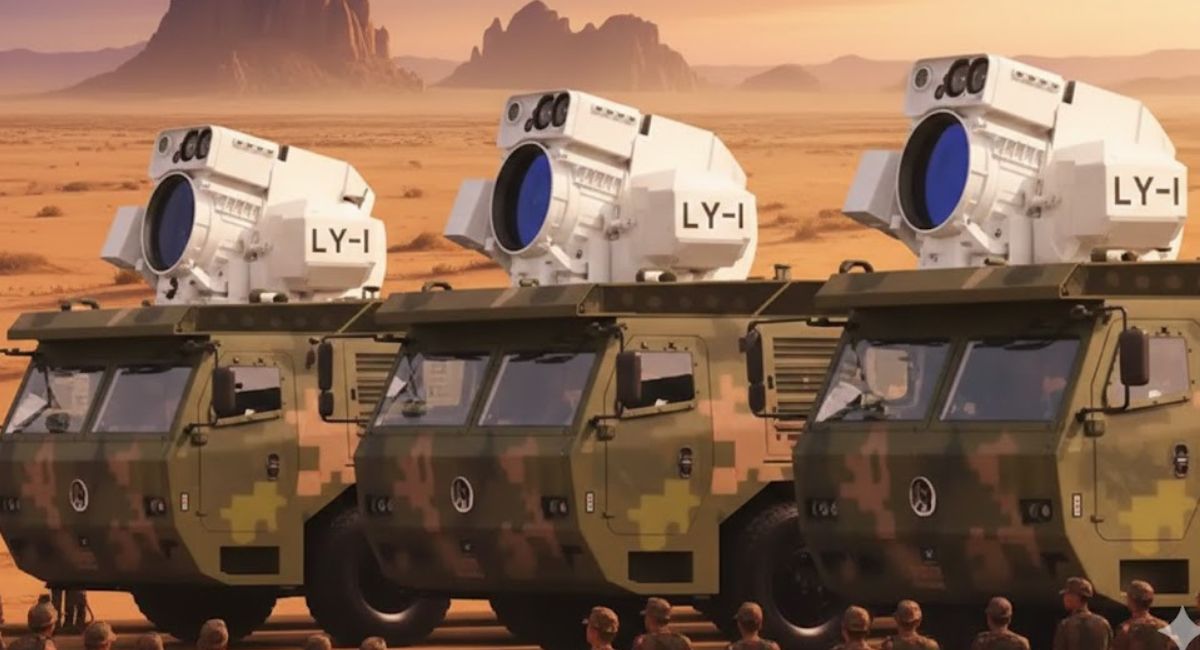
- Directed Energy Weapons (Laser Systems)
- Hypersonic Weapons Systems
- Cyber and Electronic Warfare Capabilities
- Beyond Visual Range (BVR) Combat Systems
- Autonomous Drones and Unmanned Vehicles
The integration of software intelligence into hardware platforms creates network-centric warfare capabilities.
Hypersonic Capabilities: Speed Beyond Defense
One of the most discussed advancements is hypersonic missile technology.
Technical Specifications
- Speeds exceeding Mach 5
- Maneuverable glide vehicles
- Reduced radar detectability
- Advanced thermal shielding
- Extended operational range
Hypersonic systems challenge existing missile defense architectures due to their velocity and unpredictable flight paths.
For the US and Russia, both of whom have active hypersonic programs, China’s progress adds urgency to defensive and offensive modernization.
Read more:- ZAWYA-PRESSR Spotlight: Is Otech the Missing Link in Regional Digital Growth?
Stealth Advancements and Air Superiority
Stealth technology remains critical in achieving air dominance.
Key Specifications in Modern Stealth Platforms
- Radar-absorbent composite materials
- Reduced infrared signatures
- Internal weapons bays
- Advanced avionics integration
- AI-assisted targeting systems
The combination of stealth airframes and networked software systems increases survivability in contested airspace.
For India and Pakistan, advancements in stealth aviation technology within the region could alter aerial balance calculations.
AI-Driven Command and Control Systems
Military software is increasingly defining battlefield effectiveness.
AI Integration Features
- Real-time threat assessment
- Predictive logistics planning
- Autonomous drone swarm coordination
- Cyber defense monitoring
- Multi-domain battlefield mapping
AI-powered systems reduce decision latency and enhance situational awareness.
The strategic advantage lies not only in hardware but in algorithmic superiority.
Directed Energy Weapons
Laser-based systems are transitioning from experimental phases to operational prototypes.
Technical Attributes
- High-energy beam generation
- Rapid target engagement
- Reduced ammunition dependency
- Potential anti-drone applications
- Missile interception capability
Directed energy weapons offer cost-effective countermeasures against drone swarms and incoming projectiles.
This technology introduces a new layer of defensive architecture.
Electronic Warfare and Cyber Dominance
Electronic warfare capabilities disrupt enemy communications and sensor networks.
Key Capabilities
- Radar jamming
- GPS signal disruption
- Cyber intrusion systems
- Electromagnetic pulse resilience
- Spectrum control technology
Military conflicts increasingly involve digital interference before physical engagement.
Software superiority becomes a decisive factor.
Naval Modernization and Maritime Implications
China’s naval expansion complements advancements in military hardware and software technology.
Maritime System Specifications
- Aircraft carrier expansion
- Anti-ship ballistic missile systems
- Integrated combat management software
- Submarine stealth enhancements
- AI-enabled maritime surveillance
The Indo-Pacific region remains strategically sensitive.
For the US Navy and regional powers like India, maritime balance is critical.
What It Means for the United States?
The US maintains one of the world’s most advanced defense ecosystems. However, accelerated Chinese technological acquisition introduces competitive pressure.
Strategic Implications
- Increased focus on hypersonic defense systems
- Expansion of Indo-Pacific alliances
- Enhanced AI research investment
- Modernization of missile interception programs
- Greater cybersecurity spending
The US defense strategy increasingly emphasizes multi-domain integration.
Implications for Russia
Russia historically leads in missile and air defense systems. China’s rapid modernization presents both collaboration and competition dynamics.
Potential impacts include:
- Technology sharing recalibration
- Strategic partnership adjustments
- Export market competition
- Influence in Eurasian defense markets
While cooperation remains visible, strategic competition cannot be ignored.
Implications for India
India faces a complex strategic environment, particularly along its northern and maritime boundaries.
Key Considerations
- Strengthening indigenous defense manufacturing
- Expanding missile defense systems
- Accelerating AI integration
- Investing in next-generation aircraft
- Enhancing cybersecurity resilience
India’s defense modernization efforts may intensify in response to regional developments.
Implications for Pakistan
Pakistan’s defense posture is closely linked to regional equilibrium.
Possible impacts include:
- Defense procurement adjustments
- Increased reliance on strategic partnerships
- Emphasis on asymmetric capabilities
- Cyber warfare preparedness
Regional stability depends on maintaining credible deterrence without escalation.
Technology as the New Strategic Currency
The global defense landscape is shifting from quantity to quality.
Key trends include:
- Autonomous combat systems
- Space-based surveillance
- Quantum communication research
- Satellite defense networks
- Integrated battlefield data fusion
Military hardware and software technology now define deterrence credibility.
Economic and Industrial Implications
Defense modernization stimulates domestic industries.
Benefits include:
- Research and development growth
- Semiconductor manufacturing expansion
- AI talent development
- Defense export revenue
However, increased military spending can strain fiscal resources.
Balancing defense and development remains critical.
Risks of Technological Escalation
While technological progress enhances deterrence, it also introduces risks:
- Accelerated arms races
- Reduced decision time in crisis scenarios
- Cyber vulnerability exploitation
- Space militarization concerns
Diplomatic frameworks must evolve alongside technology.
The Role of International Norms
Global governance mechanisms lag behind technological innovation.
Areas requiring regulation include:
- Autonomous weapon deployment
- AI ethics in warfare
- Hypersonic arms control
- Cyber warfare standards
Strategic stability depends on cooperative frameworks.
Long-Term Outlook
The future of military hardware and software technology will likely involve:
- Increased AI autonomy
- Human-machine teaming
- Enhanced predictive logistics
- Energy-efficient defense systems
- Multi-domain integrated command centers
The competition will extend beyond hardware to data ecosystems.
China’s acquisition and development of advanced military hardware and software technology signals a significant evolution in global defense dynamics.
For the United States, it reinforces the need for sustained technological investment.
For Russia, it recalibrates strategic positioning.
For India and Pakistan, it reshapes regional security calculations.
Ultimately, the modern battlefield is no longer defined by sheer numbers. It is defined by speed, intelligence integration, network resilience, and strategic foresight.
Technological dominance now shapes geopolitical power.
The evolution of military hardware and software technology represents more than technological progress—it signifies a transformation in global power structures.
As nations compete in AI, hypersonics, cyber capabilities, and integrated defense systems, strategic balance becomes increasingly complex.
Understanding these developments is essential not only for policymakers but for global citizens observing a rapidly shifting world order.
FAQs
What is military hardware and software technology?
It refers to advanced defense systems combining physical platforms (hardware) like aircraft, missiles, and ships with digital intelligence systems (software) such as AI-driven command tools and cyber defense networks.
Why are hypersonic weapons significant?
Hypersonic weapons travel at speeds exceeding Mach 5 and can maneuver unpredictably, making them difficult to intercept with existing missile defense systems.
How does AI improve military systems?
AI enhances real-time decision-making, predictive logistics, threat detection, autonomous operations, and battlefield coordination.
What are directed energy weapons?
Directed energy weapons use concentrated energy, such as lasers, to disable or destroy targets with high precision.
How could China’s advancements affect India?
India may accelerate its defense modernization programs, invest in missile defense, and expand indigenous technology development.