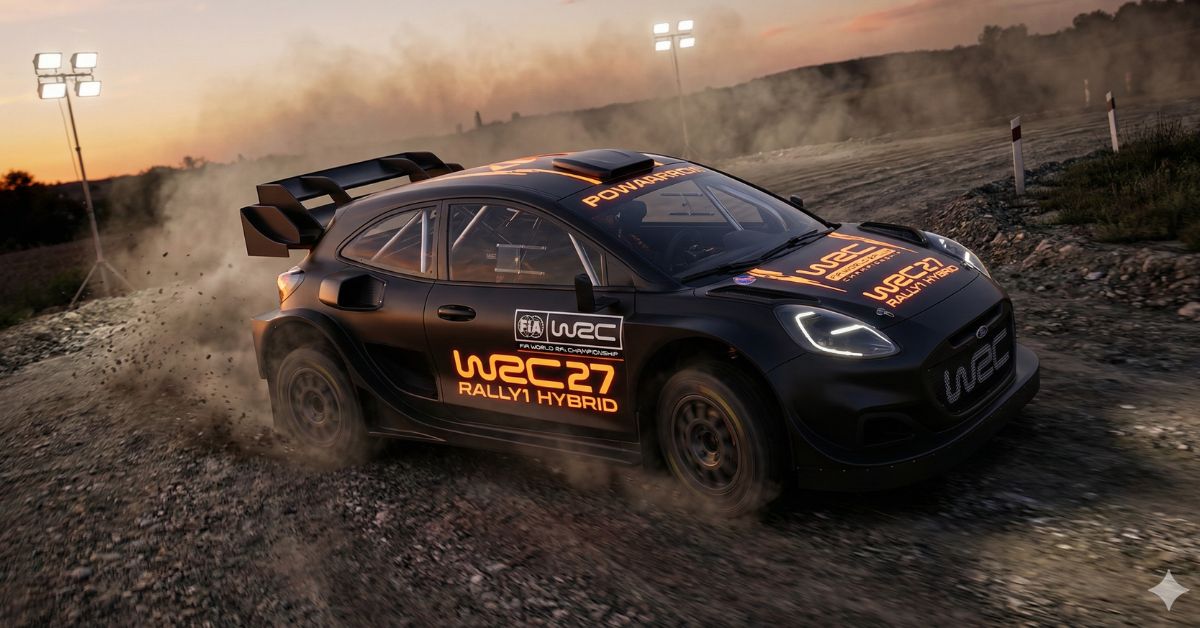
Hey rally fans, big news from the FIA! They’ve just unveiled the WRC27 Rally1 concept, giving us our first real peek at the beasts that will dominate the World Rally Championship starting 2027. This isn’t just a facelift – it’s a smart rethink aimed at slashing costs, boosting safety, and opening the doors wider for teams big and small. Imagine rally cars that pack a serious punch but won’t break the bank, all while keeping that heart-pounding spectacle alive.
Core Design Philosophy
The WRC27 Rally1 builds on what’s worked, but smarter. At its heart is a tubular frame safety cell – evolved from the 2022 Rally1 cars through tons of crash testing and sim work. This bad boy cuts complexity and costs while ramping up protection against frontal, side, roof, and rear hits.
Expect a vehicle footprint locked in: minimum 4100mm long, max 4300mm, up to 1875mm wide, 2600mm wheelbase min, and 1270mm height min. Bodywork? Total freedom inside that “reference volume” – teams can go production-look or wild bespoke designs.
Powertrain and Performance Specs
No hybrids here – we’re talking a Rally2-derived 1.6-litre turbocharged ICE, sustainably fuelled, pumping out around 290 horsepower. It’s mated to a four-wheel-drive system and a five-speed gearbox for that raw rally rush.
Brakes and steering pull straight from Rally2 specs too, keeping things reliable and affordable. Suspension switches to double wishbone setup – ditching MacPherson struts for better handling on gravel, tarmac, or snow. Top speed and 0-60? Not nailed down yet, but expect WRC-level ferocity with tighter performance gaps to Rally2 cars.
Here’s a quick specs rundown:
| Specification | Details |
| Engine | 1.6L turbocharged ICE, ~290hp |
| Drivetrain | 4WD, 5-speed sequential gearbox |
| Suspension | Double wishbone |
| Chassis | Tubular spaceframe safety cell |
| Dimensions (L/W/H/WB) | 4100-4300mm / 1875mm / 1270mm+ / 2600mm+ |
| Cost Cap (Tarmac spec) | €345,000 (~₹3.1 crore) |
Safety and Build Innovations
Safety leads the charge. The upgraded spaceframe slashes intrusion and absorbs energy like a champ – all while trimming costs. Aero gets simplified too: fewer flaps and wings mean less R&D spend, but still plenty of downforce for those hairpin bends.
Durability jumps up with steel wheel arch liners to fight punctures, and components built to last a full WRC season. Minimum 10 units per constructor, homologated for 10 years – stability for teams.
Cost Control and Accessibility
Here’s the game-changer: a €345,000 cap on a ready-to-race tarmac-spec car – over 50% cheaper than current Rally1s. Testing limits to 21 days/year for manufacturers, no extra young driver days – levels the field.
Logistics slim down with local facilities and data sharing for remote engineering. Powertrain’s future-proof too – room for hybrids or electrics later.
The Rally Pyramid Shift
WRC27 Rally1 cars race alongside Rally2 in the top tier – mixing elite firepower with accessible machines. Constructors (OEMs like Toyota or tuners) handle design, build, and marketing. First up: Project Rally One in 2027.
Read More : The CFX-5E: The All-New Electric Dirt Bike for Young Riders
Competitor Comparison
Current Rally1 (like Toyota GR Yaris) vs WRC27 Rally1:
| Aspect | Current Rally1 (2022-26) | WRC27 Rally1 |
| Power | ~500hp (hybrid) | ~290hp (ICE) |
| Cost Cap | No cap (~€700k+) | €345k |
| Chassis | Spaceframe | Evolved spaceframe |
| Suspension | MacPherson | Double wishbone |
| Aero/Body | Complex, production-based | Simplified, flexible volume |
| Competitors | Fewer manufacturers | OEMs + tuners |
Pros and Cons
Pros
- Massive cost drop makes WRC viable for more teams.
- Top-tier safety with proven spaceframe tech.
- Flexible designs spark creativity and variety.
- Closer Rally1-Rally2 racing for epic battles.
- Sustainable fuel ready, future powertrain options.
Cons
- Power dip from 500hp hybrids might feel less explosive initially.
- Limited testing could challenge newcomers.
- No India-specific pricing – pro racing focus, not street sales.
- Transition means current Rally1 fleets phase out post-2026.
The FIA’s WRC27 Rally1 concept is a masterstroke – keeping rally’s soul alive while fixing what held it back: sky-high costs and narrow entry. From 2027, expect fiercer grids, safer rides, and non-stop action. If you’re a fan, gear up – this era could be WRC’s best yet.
FAQs
What is the WRC27 Rally1 concept?
It’s the FIA’s blueprint for top WRC cars from 2027 – a cost-capped, safe spaceframe racer with Rally2 parts for broader competition.
How much horsepower does the WRC27 Rally1 have?
Around 290hp from a 1.6L turbo ICE, dropping the hybrid boost but closing gaps to Rally2 cars.
What’s the cost cap for WRC27 Rally1 cars?
€345,000 for a tarmac-ready car – over 50% less than today’s Rally1, targeting more constructors.
Will WRC27 Rally1 race against Rally2 cars?
Yes, both compete in the top category for a mixed, unpredictable field.
What safety upgrades does it feature?
An evolved tubular safety cell with better energy absorption and intrusion protection across all crash angles.
Can teams design custom bodywork?
Absolutely – within a set volume, from production-style to full custom rally monsters.
What’s the suspension like on WRC27 Rally1?
Double wishbone all around, borrowed from Rally2 for cost savings and sharp handling.
Who can build WRC27 Rally1 cars?
Constructors – big OEMs or smaller tuners – must produce at least 10 units.
Is mileage or fuel efficiency a focus?
Sustainable fuels are standard, prioritizing endurance over street mileage in this pro racing setup.
When does WRC27 Rally1 start racing?
From the 2027 season, with early birds like Project Rally One confirmed.
How does it compare to current Rally1 cars?
Cheaper, safer, simpler aero, less power but more accessible – perfect for growing the sport.