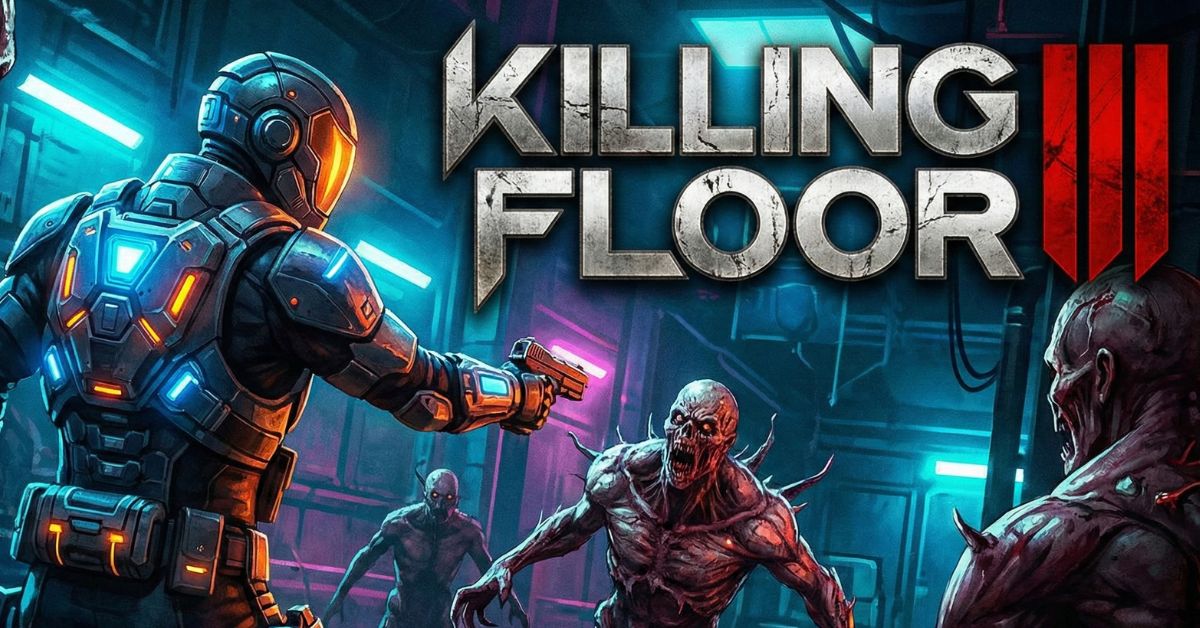
Imagine the rush of holding the line together as bio-engineered horrors swarm, your team’s perfect weld and well-timed heals turning certain doom into triumphant victory. That exhilarating teamwork? Killing Floor 3 crafts it into a co-op horror masterpiece that strengthens friendships and creates legendary gaming memories. As a veteran of countless Killing Floor waves on PS5, I’ve witnessed the franchise’s magic firsthand—and why KF3 elevates zombie shooters into something truly special you can’t put down.
For years, Killing Floor has held its own niche in the co‑op horror shooter scene — gritty, unapologetically brutal, and endlessly replayable. But Killing Floor 3 isn’t satisfied with just evolving the formula; it’s redefining what a modern co‑op horror experience can be. As someone who’s played hours of Killing Floor 2 and followed Tripwire Interactive’s design philosophy closely, I can confidently say that KF3 represents a leap forward in atmosphere, mechanics, and team‑based depth that most zombie shooters can’t touch.
The Evolution of the Killing Floor Franchise
The Killing Floor series began as a Unreal Tournament 2004 mod — a cult favorite that prioritized frantic firefights over narrative polish. When Tripwire turned it into a standalone release, it carved out a reputation for industrial‑grungy environments, memorable enemies (Zeds), and community‑driven game modes. Killing Floor 2 expanded that formula, adding better visuals, robust perk systems, and consistent updates supported by an active player base.
With Killing Floor 3, the franchise takes a strategic turn. It’s no longer just about surviving waves; it’s about controlling chaos through cooperation, precision, and tactical synergy. The developers have been clear: the focus is on elevating teamwork and immersion to next‑gen standards. It shows in everything from the AI system to the environmental storytelling.
Co‑op Depth Beyond Spray and Pray
Many zombie shooters sell the idea of co‑op but barely require coordination. Killing Floor 3 flips that. Every class — or “Perk” as veterans know them — now offers distinct tactical roles tied to gear and abilities that actively affect the battlefield. Support players can fortify positions, medics can deploy field stimulants with greater impact, and sharpshooters benefit from improved precision‑based damage bonuses.
What stands out is how the game’s systems encourage communication. Teams that strategize — balancing ammo conservation, weldable choke points, and Zed priority calls — will thrive. Lone wolves who treat it like an arcade run‑and‑gun? They’ll be overrun fast. It’s that balance of tension and teamwork that makes Killing Floor 3 gameplay uniquely rewarding, especially on higher difficulties.
Smarter Zeds, Meaner Battles
Tripwire’s horror formula has always leaned on its grotesque creature design, but Killing Floor 3 introduces advanced AI that transforms combat dynamics. Zeds no longer spawn predictably or funnel mindlessly — they react to player tactics, flank positions, and exploit weaknesses. A well‑placed EMP might scatter a wave temporarily, but expect them to regroup intelligently.
Expect revamped enemy archetypes too — not just re‑skins of classics like the Fleshpound or Scrake, but new bio‑engineered nightmares designed to pressure specific playstyles. This smarter, adaptive AI ensures each match feels tense and unpredictable, enhancing the “survival horror” aspect far beyond pattern recognition.

Weapon Systems and Tactical Customization
Weapons were always the star of Killing Floor’s chaotic ballet, and KF3 perfects that synergy between grit and precision. Firearms now feel weightier and more responsive, with ballistic modeling that rewards control and accuracy over mindless spraying. Each weapon can be customized with functional upgrades — barrel attachments, ammo modifiers, and optics — that change how your loadout behaves.
Tripwire’s weapon realism has always catered to shooter purists, but now it pairs that with meaningful progression. Instead of grinding for vanity, upgrades feel like tactical investments. A medic’s pistol modded for burst fire changes the flow of a rescue maneuver; an engineer’s turret upgrade can single‑handedly anchor a choke point. The result: every match feels like a tactical sandbox rather than a wave-based shooting gallery.
Darker, Cinematic Atmosphere
KF3 embraces a tone closer to dystopian horror than B‑movie gorefest. The visual direction — cold lighting, industrial decay, and grotesque biotech imagery — gives the game a chilling sense of dread. The story centers on Horzine Biotech’s total collapse into corporate dystopia, painting a world that feels more grounded and disturbingly plausible.
This shift impacts gameplay immersion, too. The lighting and sound design aren’t just aesthetic; they serve tactical purposes. Shadows conceal movement, alarms distort situational awareness, and the ambient tension of each map keeps you on edge between waves. It’s clear Tripwire wants players to feel the world’s decay, not just shoot through it.

Storytelling and Lore: More Than Background Noise
Previous Killing Floor entries treated lore as a backdrop — fun flavor text supporting wave-based chaos. Killing Floor 3 upgrades that to narrative framework. It explores Horzine’s experiments, rogue clones, and the ethical rot that led to Zed outbreaks. The lore surfaces through mission dialogue, environmental storytelling, and in‑mission decisions that slightly affect outcomes.
These details give context to your actions. You’re not just blasting monsters; you’re cleaning up the fallout of corporate horror gone unchecked. It’s a subtle, mature narrative direction that strengthens the emotional weight behind the bloodshed.
Built for PS5 and Modern Hardware
*Killing Floor 3 PS5* players can expect the full benefit of next‑gen optimization. The framerate target is a smooth 60 FPS with dynamic 4K rendering, delivering crisp, visceral encounters even amid chaos. Haptic feedback and adaptive triggers on the DualSense controller amplify immersion — you’ll feel recoil variations between weapon types, and even the pulse of your character under stress.
Load times are near‑instant, letting players drop into co‑op sessions seamlessly. The immersive 3D audio also makes a huge difference: hearing a Stalker creeping up from behind feels genuinely hair‑raising. Combined with subtle motion blur and volumetric lighting, KF3 on PS5 feels not just smoother, but significantly more atmospheric than its predecessors.
Killing Floor 3 vs Other Zombie Games
Comparisons with Left 4 Dead or Back 4 Blood are inevitable, but Killing Floor 3 operates on a different frequency. L4D thrives on cinematic pacing and accessibility, while KF3 doubles down on mechanical mastery and player intentionality. Every bullet, class synergy, and map choke point serves a purpose — there’s no autopilot mode.
Where Back 4 Blood relied on deck modifiers for meta‑progression, KF3 integrates personalization directly into gameplay. Its darker tone, AI sophistication, and pacing lean closer to tactical horror than arcade co‑op. Simply put, Killing Floor 3 doesn’t want you to feel powerful all the time; it wants you to earn your survival.
The Next Evolution of Co‑op Horror Shooters
*Killing Floor 3* represents what players have been asking for: a shooter that balances raw action with strategic tension, polished horror design, and meaningful teamwork. Tripwire isn’t chasing trends — it’s redefining its signature identity in a way that feels true to the franchise’s DNA while embracing next‑gen sensibilities.
For PS5 gamers looking for more than a zombie rush, Killing Floor 3 delivers a mature, meticulously designed experience built on fear, precision, and cooperation. It’s not just another entry in the horde shooter lineup — it’s a statement game. And if the early previews are any indication, it could very well set the new standard for co‑op horror shooters in 2026 and beyond.