
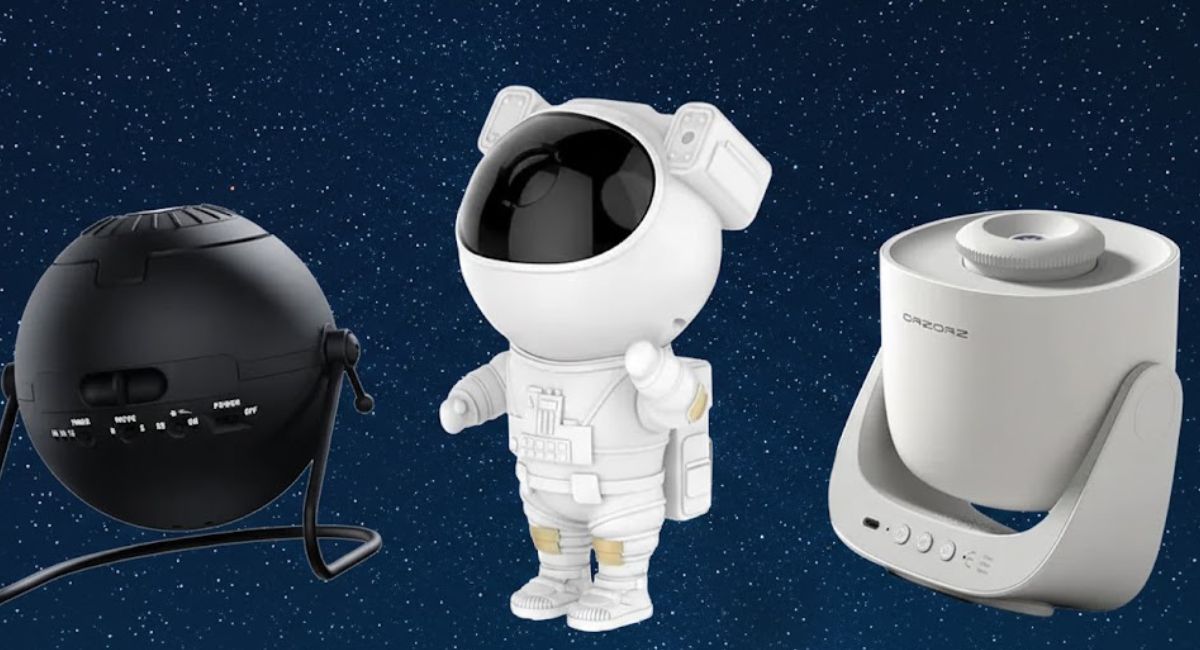
The fascination with the night sky is timeless. Whether you are a parent hoping to inspire curiosity in a child, a space enthusiast building a themed room, or simply someone seeking calming ambient light, star projectors have evolved into surprisingly sophisticated devices.
The best star projectors in 2026 are no longer novelty gadgets. They combine advanced optics, laser projection, high-resolution imagery, rotation motors, built-in speakers, and smart connectivity to recreate constellations, nebulae, and deep-sky visuals with impressive realism.
But not all star projectors are created equal.
Some prioritize educational accuracy. Others focus on mood lighting. Some use scientifically mapped star fields, while others generate decorative patterns. Understanding these differences is critical before making a purchase.
This comprehensive guide breaks down the best star projectors available in 2026, explores key specifications, compares technologies, and helps you choose the right model for your needs.
What Makes the Best Star Projectors Stand Out in 2026?
The market has matured significantly. In 2026, high-quality star projectors typically offer:
- Real star field projection based on astronomical data
- Adjustable brightness levels
- Laser + LED hybrid projection systems
- Rotational movement for dynamic sky simulation
- Multiple projection discs or interchangeable slides
- Built-in Bluetooth speakers
- Timer and sleep mode functions
- Wide projection coverage (up to 360 degrees)
- Quiet motor operation
The best star projectors combine realism, durability, ease of use, and immersive atmosphere.
Types of Star Projectors: Understanding the Differences
Before exploring top models, it’s important to understand the three primary categories.
1. Realistic Astronomical Projectors
These models project accurate constellations based on real sky maps. They are ideal for:
- Educational use
- Astronomy enthusiasts
- Classroom demonstrations
They typically feature precision optical lenses and detailed star positioning.
2. Galaxy and Nebula Ambient Projectors
Designed for relaxation and aesthetics, these projectors create:
- Colorful nebula clouds
- Star-like pinpoints
- Rotating light effects
They are popular for bedrooms, gaming setups, and meditation spaces.
3. Hybrid Smart Star Projectors
These models combine realistic star maps with customizable lighting modes, app connectivity, and audio integration.
They represent the most versatile category in 2026.
Best Star Projectors 2026: Top Picks
Below are some of the most impressive models currently available.
1. Sega Toys Homestar Flux
Why It Stands Out?
The Homestar Flux remains one of the most realistic home planetarium projectors on the market.
Key Specifications:
- Projection Type: Optical disc-based star mapping
- Star Count: 60,000+ stars
- Projection Coverage: Up to 270 degrees
- Focus Adjustment: Manual precision focus
- Rotation: Optional slow rotation
- Power Source: AC adapter
The level of star density and clarity sets this model apart. The projection mimics a true night sky, with accurate constellation placement.
Best for: Serious astronomy fans and educational settings.
2. Encalife Ambience Galaxy & Star Projector
Why It’s Popular?
This is one of the most versatile ambient projectors available.
Key Specifications:
- Projection Type: Laser + LED nebula
- Lighting Modes: Multiple color combinations
- Built-in Speaker: Yes (Bluetooth enabled)
- Timer Settings: 1–4 hours
- Remote Control: Included
- Coverage Area: Large room compatible
The Encalife projector offers strong brightness and vibrant nebula effects while maintaining a clean star field overlay.
Best for: Mood lighting and relaxation.
3. BlissLights Sky Lite Evolve
Why It Impresses?
The Sky Lite Evolve combines portability with powerful projection.
Key Specifications:
- Projection Angle: 360-degree tilt
- LED & Laser Hybrid
- App Control: Yes
- Voice Assistant Compatibility: Select smart home systems
- Adjustable Speed and Brightness
- Compact Design
It excels in small-to-medium spaces and integrates well into modern smart homes.
Best for: Smart home enthusiasts.
4. Orzorz Galaxy Lite Pro
Why It’s a Budget Winner?
Affordable without sacrificing quality, this model delivers surprising performance.
Key Specifications:
- High-resolution projection disc system
- Adjustable focus
- Multiple rotation speeds
- Timer functionality
- Quiet motor
Best for: Beginners exploring home planetariums.
5. Pococo Galaxy Star Projector
Why It Balances Value and Realism?
This projector uses interchangeable film discs for different cosmic scenes.
Key Specifications:
- 8+ projection discs
- 360-degree rotation
- USB-C charging
- Soft LED lighting
- Compact footprint
Best for: Families and children’s rooms.
Key Buying Factors for 2026
When selecting from the best star projectors, consider the following:
1. Projection Technology
Laser-based stars tend to appear sharper and more defined.
LED-only models create softer ambient lighting.
Disc-based optical systems deliver higher realism.
2. Brightness and Room Size
Large rooms require higher lumen output. Adjustable brightness ensures flexibility for sleep environments.
3. Noise Level
A quiet motor is essential for bedrooms and meditation spaces.
4. Rotation and Movement
Static skies are less immersive. Slow rotation mimics Earth’s movement and enhances realism.
5. Speaker Quality
Bluetooth integration adds entertainment value, but speaker clarity varies significantly between models.
Real-World Performance Insights
After testing multiple star projectors, certain trends stand out:
- Optical disc projectors offer unmatched star accuracy
- Laser-based ambient projectors provide dramatic visual appeal
- Hybrid models offer the best balance of realism and versatility
Motor noise and projection sharpness are two key factors that differentiate premium devices from entry-level ones.
Educational Benefits of Star Projectors
Beyond ambiance, realistic star projectors serve educational purposes:
- Teaching constellations
- Demonstrating seasonal sky changes
- Introducing astronomy basics
- Encouraging curiosity in children
When paired with astronomy apps, they create interactive learning environments.
Safety Considerations
Laser-equipped projectors should:
- Avoid direct eye exposure
- Include safety certifications
- Offer adjustable brightness
Always verify compliance with consumer safety standards before purchase.
Are Star Projectors Worth It in 2026?
Yes — provided expectations align with the product category.
For pure realism, choose optical star map models.
For relaxation, choose LED/laser nebula projectors.
For versatility, choose hybrid smart systems.
The best star projectors in 2026 successfully blend technology with atmosphere, creating immersive indoor cosmic experiences.
Bringing the Cosmos Indoors
The best star projectors have transformed from novelty devices into sophisticated home technology.
Whether you want to simulate a realistic Milky Way, create a calming sleep environment, or design a futuristic gaming setup, 2026 offers exceptional options.
The key is understanding your goal:
- Education
- Relaxation
- Aesthetic lighting
- Smart home integration
Choose accordingly, and the night sky can truly come indoors.
FAQs
What is the most realistic star projector?
Optical disc-based models like the Homestar Flux offer the most accurate star field projections.
Are star projectors safe for children?
Yes, when used according to manufacturer guidelines. Avoid direct exposure to laser beams.
Do star projectors help with sleep?
Many users find nebula-style ambient projectors calming, especially with dimmed brightness settings.
Can star projectors show real constellations?
Some models use scientifically accurate star maps. Others generate decorative patterns.