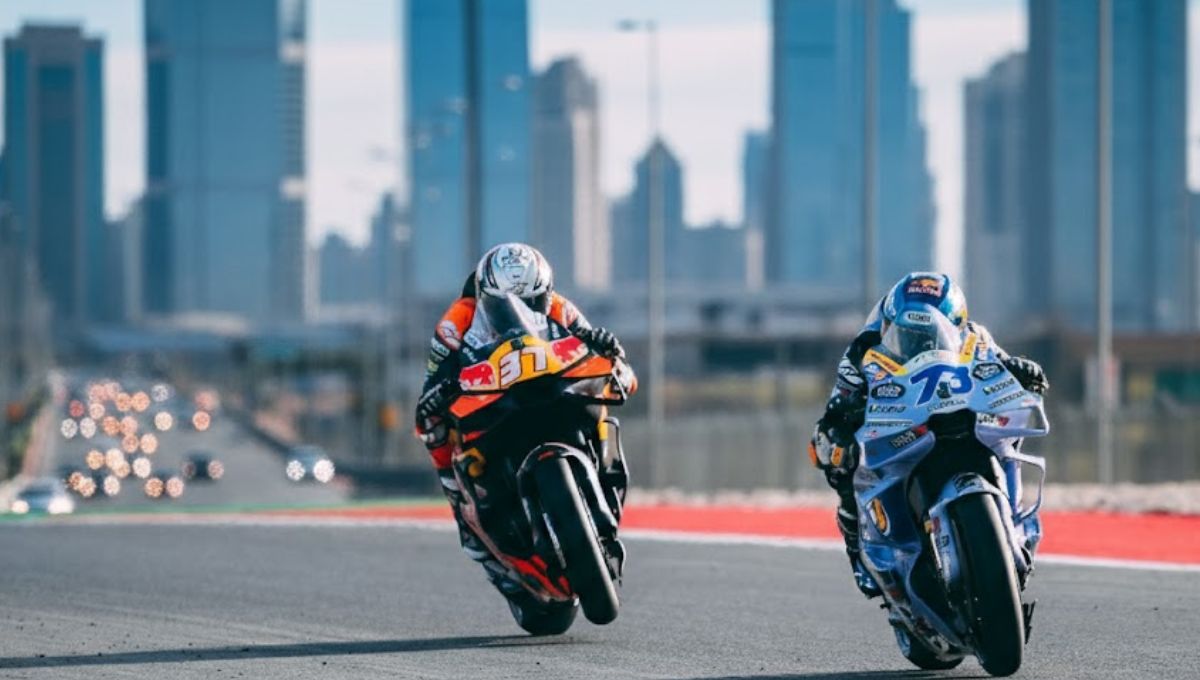
When a Ducati rider openly states that the factory needs to “improve” its next MotoGP bike, it carries weight. Ducati has dominated the modern MotoGP era with relentless technical progress, overwhelming data resources, and an aggressive satellite-team strategy. For years, the Ducati MotoGP bike has been the benchmark across speed traps, race wins, and championships.
Yet Alex Marquez’s remarks reflect something deeper than a casual observation. They signal a shift in competitive momentum. Aprilia is no longer chasing Ducati blindly; it is actively challenging its performance envelope. And with 2026 looming as a crucial development year, Ducati can no longer rely on incremental updates alone.
This article explores why the Ducati MotoGP bike must evolve for 2026, what Aprilia has done differently, and how the technical direction of MotoGP is forcing manufacturers to rethink performance beyond raw power.
Alex Marquez speaks about the future of Ducati’s MotoGP bike, it signals confidence, not concern. Ducati has already set the benchmark in MotoGP, and this statement highlights the brand’s refusal to stand still while rivals improve.
Instead of framing Ducati as falling behind, the title positions the team at a natural evolution point—where dominance shifts from raw speed to refinement, efficiency, and smarter engineering. It invites readers to explore how even the strongest MotoGP bike must adapt as competition intensifies, especially with manufacturers like Aprilia closing gaps through innovation.
Ducati’s Current Strength: Why the MotoGP Bike Still Sets the Standard?
Ducati’s MotoGP bike remains the most complete machine on the grid in measurable performance metrics. Its strengths are undeniable:
- Best-in-class straight-line speed
- Exceptional rear-end stability under acceleration
- Advanced ride-height and holeshot systems
- Deep data integration across factory and satellite teams
The Desmosedici platform has benefited from continuity. Ducati has resisted radical redesigns in favor of evolutionary refinement. This approach has delivered consistent results, allowing riders with varying styles to remain competitive.
However, dominance can breed vulnerability. As regulations tighten and rivals improve efficiency rather than brute force, the gaps that once protected Ducati are shrinking.
Aprilia’s Rise: Efficiency Over Excess
Aprilia’s recent progress has been built on clarity of purpose. Rather than chasing Ducati’s top-speed numbers, Aprilia has focused on:
- Corner entry stability
- Mid-corner speed
- Predictable front-end feedback
- Reduced rider workload
This philosophy has allowed Aprilia riders to maintain tire performance deeper into races. In modern MotoGP, race management matters as much as outright pace, and Aprilia’s MotoGP bike has become increasingly forgiving over long stints.
Alex Marquez’s comments highlight this contrast. Ducati may still be faster in absolute terms, but Aprilia is extracting performance more consistently.
Read more:- The Tomodachi Life Direct Announcement Raises More Questions Than Answers
The Rider Perspective: Why Alex Marquez’s Words Matter?
Alex Marquez occupies a unique position in MotoGP. He is experienced enough to recognize technical patterns yet honest enough to speak candidly about them. His feedback reflects real race conditions rather than theoretical performance.
When he suggests Ducati needs improvement for 2026, it implies:
- Certain handling traits are becoming harder to manage
- Rivals are closing gaps in critical race phases
- The current MotoGP bike may be reaching diminishing returns
This isn’t a criticism of Ducati’s engineers—it’s a recognition that MotoGP’s competitive landscape is shifting.
Where the Ducati MotoGP Bike Is Starting to Feel Pressure?
Front-End Confidence
Ducati’s aggressive aerodynamics and stiff chassis generate massive grip, but they can reduce front-end feel. Riders often describe needing absolute commitment to trust the bike under braking.
Aprilia’s recent designs prioritize communication through the front tire. This makes marginal grip situations easier to manage, especially late in races.
Tire Management
Michelin’s tires reward smooth load transfer. Ducati’s explosive acceleration can stress rear tires, especially on high-grip circuits. Aprilia’s gentler power delivery preserves tire life.
Adaptability Across Circuits
Ducati still excels on power tracks, but technical layouts increasingly expose its need for precise setup windows.
2026 MotoGP Bike Regulations: Why This Year Matters?
While 2026 is not a full regulatory reset, it represents a convergence point. Manufacturers must prepare bikes that:
- Work with limited aerodynamic freedoms
- Maximize efficiency over outright force
- Offer broader usability for diverse riders
Ducati’s traditional strength—engineering excess—may face constraints that favor balanced designs.
Technical Specs Overview: Ducati MotoGP Bike (Current Baseline)
Engine
- 1000cc V4, desmodromic valve system
- Approx. 300+ horsepower (unofficial)
- Seamless gearbox
Chassis
- Aluminum twin-spar frame
- Carbon-reinforced swingarm variants
Electronics
- Unified Magneti Marelli ECU
- Advanced traction, engine braking, and torque maps
Aerodynamics
- Multi-element winglets
- Integrated ground-effect fairing design
Suspension
- Öhlins front and rear (spec components)
These specs still define the class—but specs alone no longer guarantee superiority.
What Ducati Needs to Improve for 2026?
Rideability Over Raw Speed
Alex Marquez’s comments underline the need for smoother power delivery. Ducati must reduce rider fatigue without sacrificing performance.
Chassis Feedback
A slightly more compliant chassis could improve front-end confidence and allow riders to push deeper into braking zones.
Aerodynamic Balance
Refining aero efficiency rather than adding downforce could reduce turbulence sensitivity and improve consistency.
Ducati’s Advantage: Resources and Data
If any manufacturer can respond effectively, it is Ducati. Its satellite teams generate unmatched data volume. This allows Ducati engineers to test multiple configurations simultaneously.
The question isn’t whether Ducati can improve—it’s whether it can improve in the right direction.
The Bigger Picture: MotoGP’s Evolution Beyond Power
MotoGP is no longer a horsepower arms race. It is an efficiency contest shaped by:
- Tire longevity
- Rider confidence
- Aerodynamic stability
- Race-long consistency
Aprilia has recognized this earlier than most. Ducati now faces the challenge of evolving without losing its identity.
A Necessary Wake-Up Call
Alex Marquez’s statement should not be seen as criticism but as foresight. Ducati’s MotoGP bike remains elite, but complacency is MotoGP’s greatest enemy.
For 2026, Ducati must evolve smarter, not louder. If it succeeds, it will remain the benchmark. If it doesn’t, the grid is ready to capitalize.
FAQs
Why does Ducati need to improve its MotoGP bike for 2026?
Because rivals like Aprilia have reduced performance gaps through better efficiency, tire management, and rider-friendly handling.
Is the Ducati MotoGP bike no longer competitive?
It remains highly competitive, but its advantages are smaller than before, especially in race consistency.
What has Aprilia improved most?
Front-end feedback, mid-corner stability, and tire preservation over long race distances.
Will 2026 bring major MotoGP regulation changes?
Not a full reset, but development limitations and aero controls make balance more important than raw power.
The 5 Powerful Hero Karizma XMR Alternatives That Might Be Better for Entry-Level Sports Bike Buyers
After Two Tough Years, Shimano Reports Growth in Bike Component Sales for First Time: Is the Cycling...
CFMoto Brings Moto2 Looks to Its Small XO Papio Racer: The Pocket Rocket That Thinks It’s a Grand Pr...