
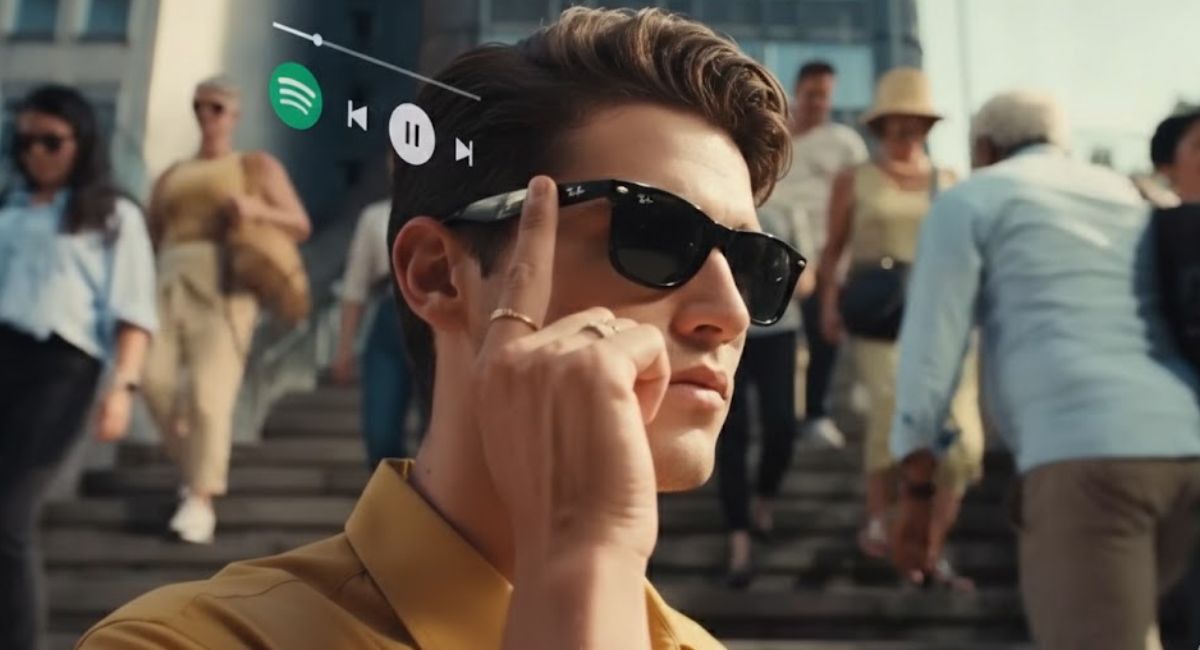
Wearable technology has steadily moved from novelty to necessity. From fitness trackers to wireless earbuds, devices that blend seamlessly into daily life are becoming central to how we communicate and consume information. Now, a new development is pushing the boundaries even further: the integration of facial recognition technology into Smart Glasses.
Meta’s reported plans to incorporate advanced facial recognition capabilities into its wearable eyewear signal a significant turning point. While Smart Glasses have already enabled features such as hands-free photography, voice assistance, and real-time AI interaction, adding biometric identification introduces a new level of contextual awareness—and a new layer of controversy.
This article takes a comprehensive look at what this move means, how the technology works, the potential specifications, privacy implications, real-world applications, and whether consumers are ready for such a leap.
The Current State of Smart Glasses Technology
Before diving into facial recognition, it’s important to understand where Smart Glasses stand today.
In recent years, Meta Platforms has collaborated with Ray-Ban to launch stylish AI-powered eyewear. These devices combine traditional sunglasses aesthetics with embedded cameras, speakers, microphones, and voice assistant functionality.
Typical features of current-generation Smart Glasses include:
- Dual 12MP ultra-wide cameras
- Open-ear directional speakers
- Beamforming microphones
- Touch-sensitive frame controls
- Bluetooth and Wi-Fi connectivity
- Live streaming capabilities
- AI voice assistant integration
These devices are powered by custom chipsets optimized for wearable efficiency and connected to companion smartphone apps for expanded functionality.
What Facial Recognition Means in Smart Glasses?
Facial recognition technology allows a device to identify or verify a person by analyzing unique facial features captured via a camera. When integrated into Smart Glasses, this capability transforms the device from a passive recording tool into an active recognition system.
Potential capabilities could include:
- Identifying known contacts in real time
- Displaying contextual information about recognized individuals
- Assisting users with memory recall
- Enhancing accessibility for users with cognitive challenges
Technically, this requires:
- High-resolution front-facing cameras
- On-device AI processing
- Secure biometric data storage
- Cloud-based model training infrastructure
The addition of facial recognition significantly elevates the role of Smart Glasses from accessory to augmented cognitive assistant.
Read more:- German Court Bans Acer and Asus PC Sales: What Nokia’s Patent Victory Means for the Global PC Industry?
How the Technology Could Work?
Facial recognition in Smart Glasses would likely operate through a multi-layered system:
1. Image Capture
Cameras embedded in the frame continuously capture visual input within the user’s field of view.
2. Facial Mapping
AI algorithms detect facial landmarks—distance between eyes, jawline shape, cheekbone structure.
3. Biometric Encoding
The facial data is converted into encrypted mathematical representations.
4. Matching
The system compares captured data against a secure database of stored facial profiles.
5. Contextual Display
Upon recognition, the system could deliver discreet audio or visual feedback.
To maintain responsiveness, much of this processing would need to occur locally on the device using edge AI rather than relying entirely on cloud servers.
Expected Hardware Specifications
Although official specifications may evolve, a next-generation Smart Glasses model with facial recognition could include:
Processor:
- Custom wearable AI chipset
- Neural processing unit (NPU) for real-time image analysis
Cameras:
- Dual 12MP or higher resolution sensors
- Improved low-light performance
- Wide dynamic range
Connectivity:
- Bluetooth 5.3
- Wi-Fi 6 or higher
- Optional 5G tethering via smartphone
Storage:
- 32GB–64GB internal storage
- Encrypted biometric data partitions
Battery:
- Approx. 6–8 hours of active use
- USB-C fast charging
- Charging case support
Audio:
- Open-ear speakers
- Noise-canceling microphone array
Security Features:
- Encrypted facial database
- User-controlled data permissions
- Biometric authentication to access stored profiles
These specifications would position Smart Glasses as powerful wearable AI platforms rather than simple camera accessories.
Real-World Applications of Facial Recognition in Smart Glasses
The integration of facial recognition opens doors to diverse applications.
Professional Networking
Imagine attending a business conference and discreetly receiving reminders about a person’s name, company, and last interaction. For professionals, this could enhance productivity and social confidence.
Accessibility Support
For individuals with memory impairments or cognitive challenges, facial recognition could help identify caregivers, family members, or acquaintances.
Security and Authentication
Smart Glasses could verify identities in controlled environments, potentially serving as wearable authentication devices in enterprise settings.
Personalized Social Interaction
Recognizing friends in crowded environments could enable contextual AI prompts, such as recalling shared experiences or mutual interests.
Privacy Concerns and Ethical Considerations
The introduction of facial recognition into Smart Glasses inevitably raises significant privacy questions.
Consent and Awareness
Unlike smartphones, Smart Glasses are less conspicuous. People in public spaces may not be aware they are being scanned or recorded.
Data Storage Risks
Biometric data is highly sensitive. Any breach involving facial recognition databases could have serious consequences.
Regulatory Landscape
Governments worldwide are tightening regulations around biometric surveillance. Regions such as the European Union enforce strict data protection laws, and compliance will be critical.
Social Acceptance
Public reaction will play a major role. Early wearable cameras faced backlash due to perceived invasiveness. Facial recognition amplifies those concerns.
Meta will likely need to implement:
- Clear visual recording indicators
- User consent mechanisms
- Strict data encryption standards
- Transparent privacy policies
Comparing Smart Glasses to Smartphones
Smartphones already support facial recognition for unlocking devices. However, integrating it into Smart Glasses changes the context.
Smartphones:
- User-initiated recognition
- Limited to device owner
Smart Glasses:
- Continuous environmental scanning
- Potential third-party identification
This shift transforms facial recognition from a personal security feature into a broader social technology.
The Competitive Landscape
Meta is not alone in the wearable AR space. Companies like Apple Inc. and Google are investing heavily in augmented reality and AI.
While Apple’s Vision Pro targets high-end mixed reality, lightweight Smart Glasses aim for everyday wearability. The addition of facial recognition could give Meta a differentiation edge—but it also increases regulatory scrutiny.
Consumer Readiness: Are We Prepared?
Consumer adoption will depend on:
- Trust in data handling
- Perceived utility
- Design aesthetics
- Clear opt-in frameworks
Early adopters may embrace the innovation, but mainstream acceptance requires reassurance.
Market Impact and Future Outlook
If implemented responsibly, Smart Glasses with facial recognition could redefine wearable computing. They may:
- Enhance augmented reality experiences
- Bridge digital and physical identities
- Accelerate AI integration into daily life
However, success depends not only on technical execution but on ethical responsibility.
Innovation at a Crossroads
The integration of facial recognition into Smart Glasses represents a bold step forward in wearable AI. On one hand, it offers remarkable potential for contextual awareness and convenience. On the other, it raises legitimate concerns about privacy and surveillance.
Technology evolves quickly, but public trust evolves slowly. For Smart Glasses to reach widespread acceptance, transparency, user control, and regulatory compliance will be just as important as processing power and camera resolution.
The future of wearable AI may quite literally be right before our eyes.
FAQs
What are Smart Glasses?
Smart Glasses are wearable devices that resemble traditional eyewear but include integrated technology such as cameras, speakers, microphones, and AI assistants.
How does facial recognition work in Smart Glasses?
Facial recognition uses camera input and AI algorithms to identify individuals by analyzing unique facial features and comparing them to stored biometric data.
Are Smart Glasses with facial recognition legal?
Legality depends on regional regulations. Many countries have strict laws governing biometric data collection and usage.
Can Smart Glasses store facial data locally?
Advanced models are expected to use encrypted on-device storage combined with secure cloud processing for enhanced performance and privacy.