
When Nothing entered the smartphone space, it did not attempt to blend in. Instead, it created a visual language that was unmistakably its own. Transparent backs, LED Glyph lighting, minimalist UI — the brand positioned itself as a challenger to predictable smartphone design.
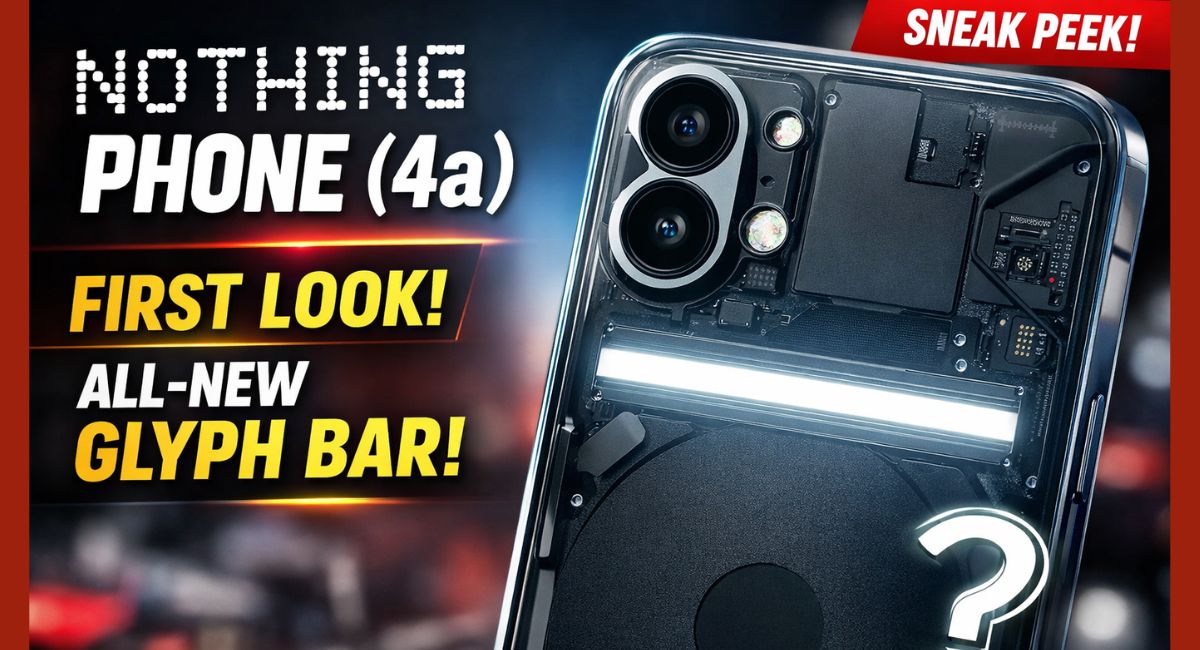
Now, Nothing offers sneak peek at Phone (4a), and the teaser has sparked widespread interest across tech communities. The most striking update? An all-new Glyph Bar, which appears to refine and rethink the lighting system that made earlier models stand out.
This isn’t just another mid-range refresh. From what we know so far, Phone (4a) aims to sharpen Nothing’s identity while improving practicality, performance, and battery life — all without losing its signature aesthetic.
Let’s explore what the sneak peek reveals and what it could mean for buyers in 2026.
A Design Language That Refuses to Conform
Nothing has consistently treated industrial design as a core differentiator. Instead of hiding components behind glossy panels, the company highlights internal symmetry and visual structure.
With Phone (4a), early glimpses suggest:
- A refined transparent rear panel
- A cleaner LED arrangement
- More symmetrical camera housing
- Slimmer bezels
The all-new Glyph Bar appears to simplify the previous segmented lighting strips into a more unified design element. This change may not just be cosmetic — it could signal deeper software integration.
Unlike traditional notification LEDs, Nothing’s Glyph system has always been interactive. If the new bar improves brightness control, pattern precision, or energy efficiency, it could make notifications more intuitive without increasing battery drain.
Design-wise, Phone (4a) seems to strike a balance between boldness and maturity. It looks less experimental than early models, but still unmistakably Nothing.
Read more:- Realme Buds Clip Review: The Most Comfortable Earbuds I’ve Worn in Years?
The All-New Glyph Bar: More Than Just Lights
The headline feature of the sneak peek is undoubtedly the redesigned Glyph Bar.
What’s Different?
Earlier Nothing phones used multiple LED strips placed across the back panel. These worked as segmented indicators for:
- Calls and notifications
- Charging progress
- App-specific alerts
- Timer countdowns
- Music visualization
With Phone (4a), the lighting appears more streamlined — potentially integrated into a single elongated bar. This could bring:
- Better visual clarity
- More uniform brightness
- Expanded customization options
- Improved energy management
If optimized correctly, the Glyph Bar could become a practical tool rather than a novelty.
Why It Matters?
In a world of identical smartphone slabs, meaningful differentiation matters. The Glyph system serves three purposes:
- Functional alert system
- Brand identity
- Conversation starter
If Nothing enhances developer access to the Glyph API, third-party apps could further integrate custom lighting patterns — strengthening the ecosystem.
That would transform the Glyph Bar from aesthetic branding into a platform feature.
Expected Specifications of Phone (4a)
While Nothing offers sneak peek at Phone (4a) without revealing full official specs, industry expectations and past “a” series trends give us a realistic picture of what to expect.
Here’s a likely specification overview:
Display
- 6.7-inch AMOLED display
- Full HD+ resolution (2412 x 1080)
- 120Hz adaptive refresh rate
- HDR10+ support
- Gorilla Glass protection
Nothing has consistently delivered high-quality displays in its mid-range devices. A 120Hz AMOLED panel is almost certain at this price category.
Processor
- Qualcomm Snapdragon 7-series chipset (likely Gen 3 variant)
- 4nm architecture
- Improved AI processing
- Efficient thermal management
The “a” series typically targets upper mid-range performance. Expect smooth multitasking, stable gaming, and improved power efficiency.
RAM & Storage
- 8GB / 12GB RAM
- 128GB / 256GB UFS storage
- No microSD slot
Nothing has historically favored fast internal storage over expandable memory, maintaining a clean hardware layout.
Camera System
- Dual rear camera setup
- 50MP primary sensor (OIS-enabled)
- 50MP ultra-wide
- 32MP front camera
Nothing’s camera tuning has improved generation after generation. Expect better HDR performance, improved low-light processing, and cleaner color science.
Battery & Charging
- 5,000mAh battery
- 45W wired fast charging
- Reverse wired charging
- Possible wireless charging (to be confirmed)
Battery life is likely to be a major upgrade. Combined with a power-efficient chipset, Phone (4a) could comfortably deliver all-day endurance.
Software
- Nothing OS (based on Android 15)
- 3 years of Android updates
- 4 years of security patches
- Deep Glyph customization
Nothing OS has been praised for:
- Clean UI
- Minimal bloatware
- Fast updates
- Unique widget design
If the Glyph Bar integrates more deeply into the system UI, Phone (4a) could offer one of the most distinct Android experiences in its segment.
Performance Expectations in Real-World Use
Based on previous Nothing devices, we can anticipate:
Everyday Use
- Smooth scrolling at 120Hz
- Responsive app switching
- Stable multitasking with 12GB RAM variant
Gaming
- Comfortable performance in PUBG, Call of Duty Mobile, and Genshin Impact at medium-high settings
- Stable thermal behavior due to efficient chipset
Camera Use
- Improved night mode processing
- Faster shutter speeds
- More consistent HDR balance
If Nothing refines image processing algorithms, Phone (4a) could close the gap with premium mid-range competitors.
Build Quality and Ergonomics
Nothing phones have consistently delivered strong build quality.
Expected materials:
- Aluminum frame
- Gorilla Glass front and back
- IP rating (likely IP54 or higher)
The sneak peek hints at subtle refinements in symmetry and weight distribution. This matters more than most users realize — balance significantly affects daily comfort.
If the new Glyph Bar reduces internal structural complexity, it may even improve durability.
Market Positioning: Where Phone (4a) Fits
Nothing’s “a” series traditionally sits in the competitive mid-range segment.
Primary competitors may include devices from:
- Samsung Galaxy A series
- OnePlus Nord lineup
- iQOO Neo series
- Xiaomi Redmi Note Pro models
However, Nothing does not compete purely on specifications. It competes on identity.
While many brands chase spec-sheet dominance, Nothing focuses on:
- Design clarity
- User experience refinement
- Clean software philosophy
If pricing remains aggressive — likely in the mid-range bracket — Phone (4a) could become one of the most visually distinctive options available.
Why This Sneak Peek Matters?
When Nothing offers sneak peek at Phone, it does more than tease a product.
It reinforces brand direction.
The all-new Glyph Bar shows that Nothing isn’t abandoning its signature feature — it’s evolving it.
That evolution suggests:
- Strong long-term commitment to hardware identity
- Continued software innovation
- Focus on ecosystem consistency
In a saturated market, consistency builds trust.
Is Phone (4a) Worth Waiting For?
Based on early insights, Phone (4a) appears to offer:
- Refined industrial design
- Enhanced Glyph functionality
- Reliable mid-range performance
- Clean Android experience
- Solid battery life
If Nothing delivers competitive pricing and maintains update reliability, this device could easily become one of the most interesting mid-range launches of the year.
FAQs
What is new in Nothing Phone (4a)?
The biggest visible upgrade is the redesigned Glyph Bar, which appears more streamlined and potentially more customizable. It may offer improved brightness control, better energy efficiency, and deeper software integration.
What are the expected specs of Phone (4a)?
Expected specifications include a 6.7-inch 120Hz AMOLED display, Snapdragon 7-series processor, 50MP dual rear cameras, 5,000mAh battery, and Nothing OS based on Android 15.
Will Phone (4a) support fast charging?
Yes, it is expected to support 45W wired fast charging. Wireless charging support may vary depending on the final model configuration.
How is the Glyph Bar different from previous models?
Unlike earlier segmented LED strips, the new Glyph Bar appears to consolidate lighting into a cleaner and more unified structure. This may enhance usability and customization.