Vivo X300 Pro Launched In India: Know Specs, Prices, Camera, RAM , Display , Battery

Vivo X300 Pro : The Vivo X300 Pro emerges as a top-tier flagship smartphone in India, powered by the cutting-edge MediaTek Dimensity 9500 processor and featuring a groundbreaking 200MP ZEISS APO telephoto camera system that sets new benchmarks in mobile photography.

Launched recently with a starting price of Rs 1,09,999 for the 16GB RAM and 512GB storage variant, it combines a vibrant 6.78-inch LTPO AMOLED display, long-lasting 6510mAh battery with 90W fast charging, and OriginOS 6 based on Android 16 for a seamless user experience tailored to Indian consumers.

Vivo X300 Pro Sleek Design and Superior Durability

Crafted with premium materials, the Vivo X300 Pro sports a slim profile in Elite Black and Dune Gold colour options, weighing just under 230 grams for comfortable one-handed use during long commutes. It achieves IP68 and IP69 ratings, offering exceptional resistance to dust, water immersion up to 2 metres, and high-pressure jets, which proves invaluable during India’s heavy monsoons or dusty environments.

The flat-edged frame houses an ultrasonic under-display fingerprint scanner for quick, secure unlocks, alongside stereo speakers tuned for immersive audio and an IR blaster for controlling home appliances

Vivo X300 Stunning Display for Every Scenario

At its core lies a 6.78-inch BOE Q10+ LTPO AMOLED panel with 1.5K resolution (2800×1260 pixels), 120Hz refresh rate, and an astonishing peak brightness of 4500 nits, ensuring crisp visuals even under direct sunlight at Mumbai beaches or Delhi markets.

Supporting HDR10+, Dolby Vision, and 100% P3 colour gamut with 452 PPI density, it delivers lifelike colours and smooth scrolling for gaming and video streaming. ZEISS Natural Colour Solution and 2160Hz PWM dimming further enhance eye comfort during extended binge-watching sessions.

Read More : Samsung Galaxy S26 Ultra : The Next Big Leap in Smartphone Innovation

Vivo X300 Pro: Revolutionary ZEISS-Backed Camera Array

Photography takes centre stage with the triple rear setup: a 50MP Sony LYT-828 main sensor (1/1.28-inch, f/1.57) for exceptional low-light performance, a 50MP ultra-wide lens capturing expansive landscapes, and the hero 200MP (1/1.4-inch HPB periscope telephoto at 85mm) offering 3.7x optical zoom up to 20x lossless with CIPA 5.5 stabilisation.

Features like the VSi imaging chip, telephoto macro, AI One-Shot Multi-Crop, and Stage Mode 2.0 enable pro-level portraits, birdwatching shots, and 4K Dolby Vision videos with dual-view recording. The 50MP front camera produces natural selfies with precise skin tones, perfect for Instagram reels in varied Indian lighting.

Vivo X300 Pro: Blazing Performance and Endurance

The Dimensity 9500 (octa-core, up to 4.21GHz) paired with 12GB/16GB LPDDR5X RAM and up to 1TB UFS 4.1 storage handles intensive tasks like playing PUBG Mobile at maximum settings or video editing without a hitch, thanks to advanced cooling.

The massive 6510mAh silicon-carbon battery endures over a day of heavy usage, refuelling to 100% in about 35 minutes via 90W wired, with 40W wireless and reverse charging options for earbuds. Connectivity shines with 5G, Wi-Fi 7, Bluetooth 5.4, NFC, and optional satellite support.

Vivo X300 Pro: Availability and Value in India

Sales kick off on December 10, 2025, through Flipkart, Vivo’s e-store, and partner retailers, offering attractive deals including 10% bank cashback, no-cost EMI starting at Rs 3,167 per month, exchange offers of up to Rs 30,000, and freebies such as TWS earbuds or a ZEISS telephoto extender kit.

Jio users benefit from bonus Google Gemini Pro access worth Rs 35,000, making this Rs 1,09,999 device a compelling choice against rivals like the iPhone 16 Pro or Samsung Galaxy S25 Ultra for camera-focused buyers.

Oppo Find X9 Pro: Where Photography and Perfection Converge

The OPPO Find X9 Pro sits at the top of OPPO’s 2025 smartphone lineup, blending high-end hardware, a premium build, and a camera system aimed at photography lovers. It’s designed to compete with the best flagship phones available — delivering powerful performance, big battery life, and flagship-grade imaging.

Key Specifications & Hardware

Performance & Storage

  • Processor: It’s powered by the MediaTek Dimensity 9500 chipset — built on a 3 nm process. This ensures strong CPU/GPU performance and efficient power management.
  • RAM / Storage: The flagship variant ships with 16 GB LPDDR5X RAM + 512 GB UFS 4.1 storage.
  • OS: Runs on ColorOS 16 (based on Android 16), with the usual mix of OPPO custom features.

Display & Build

  • Screen: The phone sports a 6.78-inch AMOLED display (measured as 17.23 cm) with FHD+ resolution (2772 × 1272 px).
  • Refresh & Smoothness: It offers a 120 Hz refresh rate (with dynamic refresh) and 240 Hz touch sampling rate — meaning smooth scrolling and responsive touch inputs.
  • Display Quality: Uses 10-bit color depth (1.07 billion colors), supports DCI-P3 gamut, and delivers excellent brightness — typical brightness ~800 nits, and HBM up to ~1800 nits.
  • Build & Design: The phone is protected by Corning Gorilla Glass Victus 2, with ultra-thin bezels (~0.12 cm) for an edge-to-edge look.
  • Durability: It’s rated IP66, IP68, and IP69 for dust and water resistance — a big plus for ruggedness.

Battery & Charging

  • Battery: A huge 7,500 mAh (typical) battery — among the largest in flagship smartphones.
  • Charging: Supports 80 W wired SUPERVOOC and 50 W wireless AIRVOOC, enabling fast top-ups.
  • Other Features: USB-C with USB 3.2 Gen 1, NFC (depending on region), Wi-Fi 2.4/5/6/7, Bluetooth 6.0 with modern audio codecs, and a 3-D ultrasonic in-display fingerprint sensor.

Camera System — Photography & Video Focus

The camera setup is one of the biggest strengths of Find X9 Pro — a sophisticated, high-end system built with photography in mind.

Rear Cameras

  • Main Camera: 50 MP with a large 1/1.28″ sensor, f/1.5 aperture, and optical image stabilization (OIS) — intended for sharp, bright images with good low-light performance.
  • Ultra-Wide Camera: 50 MP, f/2.0 aperture, 120° field of view — suitable for landscapes, group photos, wide-angle shots.
  • Telephoto Camera: A standout 200 MP periscope-style telephoto lens (f/2.1, 70 mm equivalent focal length, OIS included). This enables a mix of zoomed-in photography, distant landscape shots, and macro photography (down to ~10 cm) with detail retention.
  • Monochrome / Multispectral Sensor: 2 MP sensor for improved color processing and supplemental detail — adds to camera versatility.

Front Camera

  • Selfie camera: 50 MP, f/2.0, autofocus (AF) — capable of high-quality selfies and sharp video calls.

Video Recording & Modes

  • Rear video: Up to 4K video at 120 fps, with Dolby Vision HDR support. Also offers Pro-video mode, 10-bit LOG, dual-stabilization (OIS + EIS), optical zoom up to 3×, digital up to 18×.
  • Slow-motion: 1080p up to 240 fps, 720p up to 480 fps.
  • Additional modes: Night, Portrait, Panorama, Master mode with manual control (ISO, shutter, focus, WB), RAW capture support, Master Motion Photo, underwater mode (with appropriate housing), and more.

Overall, the camera system targets serious hobbyists — people who want DSLR-like control, versatility, and high-resolution telephoto / macro capability, all in a smartphone.

Read More: OnePlus Pad Go 2: What to Know Before the December 17 Launch

Software & Smart Features

  • OS: ColorOS 16 on top of Android 16 — smooth, optimized, and with OPPO’s custom UI tweaks.
  • Convenience: Customizable “Snap Key” — a dedicated hardware button to launch functions like camera, recorder, torch, screenshots, or AI tools quickly.
  • Connectivity: Full suite — Wi-Fi 6 / 7, Bluetooth 6 with modern codecs (LDAC, aptX HD, LHDC 5.0), NFC (region-dependent), USB 3.2, OTG support.
  • Security: In-display ultrasonic fingerprint sensor (embedded under screen) for secure unlocking even under less-than-ideal conditions (sweaty hands, rain, smudges).

What OPPO Find X9 Pro Excels At — Who It’s For

  • Photography & Videography Enthusiasts: The combination of a large sensor main camera, ultra-wide, a 200 MP telephoto lens, and robust video capabilities (4K 120 fps, Dolby Vision) makes this phone a dream for people who care about image quality, versatility, and control.
  • Heavy Users & Power Users: With a 7,500 mAh battery and fast wired/wireless charging, it’s well-suited for heavy daily use — gaming, video editing, streaming, multitasking.
  • Flagship Seekers: If you want a phone that pulls no punches — premium build, top-tier display, latest chipset, generous storage, and flagship-grade features — the Find X9 Pro delivers.
  • Content Creators: For vloggers, mobile filmmakers, social media creators — the strong camera + video specs + editing-ready video modes (RAW, LOG, 10-bit color) make it a capable on-the-go content tool.

What to Consider — Limitations & Tradeoffs

  • High price point — as a true flagship, it costs significantly more than mid-range devices.
  • Large and potentially heavy — with premium build and big battery, it might not be as compact and pocket-friendly as smaller phones.
  • Telephoto zoom is impressive but per-lens zoom range (70 mm 3× optical) is modest compared to some ultra-zoom phones; digital zoom may degrade quality.
  • As with many feature-rich phones, battery life under heavy camera/video/Gaming + 120 Hz use + 5G might drain faster than “idle + light use” estimates.

Read More:- OnePlus Pad Go 2: What to Know Before the December 17 Launch

OPPO Find X9 Pro stands out as a well-balanced flagship smartphone, appealing especially to users who want high-end performance, a versatile and powerful camera system, and long battery life, all wrapped in a premium build. For photographers, content creators, and power users, it represents one of the strongest “all-rounder” Android phones of 2025 — offering near-flagship class across display, performance, battery, and camera.

OnePlus Pad Go 2: What to Know Before the December 17 Launch

The OnePlus Pad Go 2 is positioned as a refreshed mid-range/upper-mid tablet from OnePlus, meant to deliver balanced performance, better connectivity and productivity features — including stylus support — without the premium tablet price tag.

Launch Info

  • The Pad Go 2 will be officially launched on 17 December 2025.
  • The launch coincides with that of its sibling device OnePlus 15R.

Read More : One Plus 15R : Launch Date, Specs, Camera, Hardware, Battery

Key Specifications & Features

Here’s what we currently know about OnePlus Pad Go 2 — based on leaks, certification listings, and company hints:

Performance & Software

  • Pad Go 2 is powered by a MediaTek Dimensity 7300 chipset, marking a significant performance upgrade over the original Pad Go.
  • Benchmark results (Geekbench) reportedly show ~1065 in single-core and ~3149 in multi-core — giving a sense of capable everyday performance, including multitasking, media, browsing, and light productivity.
  • The tablet ships with 8 GB RAM + 256 GB storage (at least in one confirmed variant).
  • Software side: runs Android 16, most likely with OnePlus’s custom interface (OxygenOS 16).

Display & Design

  • The Pad Go 2 features a 12.1-inch 2.8K display — larger and sharper than many standard tablets in its range.
  • Display highlights include Dolby Vision support, and peak brightness ~900 nits — which should aid readability under bright light or for media consumption.
  • The tablet will be available in at least two finishes: Shadow Black and Lavender Drift (Purple).
  • For connectivity: Pad Go 2 will support 5G (on certain variants — first in the Pad Go line), as well as Wi-Fi 6 and Bluetooth.

Stylus & Productivity Focus

  • A new addition for the Pad Go series: OnePlus Pad Go 2 Stylo — a stylus that promises 4,096 levels of pressure sensitivity. Useful for note-taking, drawing, annotation, creative work or productivity tasks.
  • With this stylus + large display + performance, the tablet seems targeted not only at media or casual use, but also at students, creators, and professionals who need a tool for work, note-taking or digital art.

Camera & Other Features

  • The Pad Go 2 reportedly has a single rear camera (no major camera setup) — indicating OnePlus isn’t marketing it as a photography tablet, but more a utility/entertainment/productivity device.
  • As per FCC certification details: dual-band WiFi, Bluetooth, full 5G cellular support (2G/3G/4G/5G), making it a well-connected device potentially usable without WiFi.

Who Is This Tablet For?

The OnePlus Pad Go 2 seems especially well-suited for:

  • Students — Stylus + large screen + decent performance = good for reading PDFs, taking notes, online classes, sketching, etc.
  • Casual/professional creators & note-takers — Stylus offers creative freedom; screen size and performance helps for sketching, design, editing, or brainstorming.
  • Media consumers and entertainment seekers — Big 2.8K display + Dolby Vision + 5G/WiFi 6 connectivity makes it ideal for video streaming, reading, and browsing.
  • Users needing connectivity on the go — 5G + WiFi 6 + LTE/Cellular support enables use without depending on home WiFi.

Read More : Samsung Galaxy S26 Ultra : The Next Big Leap in Smartphone Innovation

What to Watch Out For

  • The rear camera is basic — if you want a photography-oriented tablet, this likely isn’t ideal.
  • So far, only one RAM/Storage variant (8 GB + 256 GB) is confirmed — a lack of multiple configurations may limit flexibility for users with different needs.
  • As with any new release, final user experience (software optimization, stylus responsiveness, battery life) will only be clear after hands-on use.

The OnePlus Pad Go 2 looks like a strong, balanced tablet — offering a good harmony of performance, portability, connectivity and productivity features, especially at a presumably competitive price point (given it’s mid-range oriented). For anyone seeking a tablet for study, media, light work or creative tasks — without splurging on premium flagship tablets — Pad Go 2 seems like a very attractive option.

One Plus 15R : Launch Date, Specs, Camera, Hardware, Battery

OnePlus 15R: The OnePlus 15R is shaping up to be one of the most talked-about smartphones of late 2025. With a confirmed launch event and a promising spec sheet, the 15R aims to deliver flagship-level performance at a more accessible price point.

Launch Date & Event

  • The 15R will be officially unveiled on 17 December 2025, during an event named “Rise as One” in Bengaluru, India — a major live keynote that will also be globally livestreamed.
  • The launch in India will see the 15R debut alongside the OnePlus Pad Go 2 tablet.

Read More:- Samsung Galaxy S26 Ultra : The Next Big Leap in Smartphone Innovation

Key Specifications & Features

Here’s what we (likely) know so far about the OnePlus 15R — from performance to battery and display to design:

Performance & Hardware

  • At the heart of the 15R is the new Qualcomm Snapdragon 8 Gen 5 — making the 15R the first phone to launch with this chipset.
  • According to Qualcomm, this chip offers a ~36% CPU performance boost and ~11% GPU performance uplift over the older Snapdragon 8 Gen 3. AI workloads also see up to ~46% improvement.
  • OnePlus reportedly adopts a “triple-chip” architecture: besides the main SoC, the 15R will include a dedicated Wi-Fi chip and a Touch Response chip — designed to improve network stability, reduce latency, and optimize touch responsiveness, especially for gaming.
  • Memory and storage: rumours point to LPDDR5x RAM and UFS 4.0/4.1 storage, though exact configurations (e.g., 8GB / 12GB / 16GB RAM) are not yet final.

Display and Design

  • The 15R is said to sport a 6.7–6.83 inch AMOLED display with 1.5K resolution.
  • Refresh rate: 165 Hz — matching the high-end flagship class and offering a smoother experience for gaming and media.
  • Brightness: Reports suggest peak brightness up to 1,800 nits along with features like PWM dimming at 3,840 Hz and hardware blue-light reduction — good for viewing under bright sunlight or for long reading/gaming sessions.
  • Build & durability: Design leaks show a flat metal frame, a sleek camera module (dual-camera at the back), and global colour options expected: Charcoal Black and Mint Breeze (Green).
  • Additional touches: In-display ultrasonic fingerprint scanner, and a “Rain Touch 2.0” feature — which should keep the touchscreen responsive even when wet.

Cameras

  • Rear camera: Expected to be 50 MP (main) + 8 MP (ultra-wide). The main sensor reportedly uses Sony IMX906 with OIS (optical image stabilisation).
  • Front camera: Rumoured to be 32 MP — ideal for selfies and video calls.
  • At present, there is no confirmed telephoto lens (unlike some flagships), indicating that the 15R may prioritise balanced performance and battery over high-end camera versatility.

Battery & Charging

  • Possibly the standout feature: battery capacity is expected to be 8,000–8,300 mAh — making it among the largest ever offered in a OnePlus smartphone.
  • Fast charging: Likely 100W wired charging and rumours hint at 50W wireless charging support.

Durability & Build Quality

  • The 15R is tipped to come with a quad IP rating: IP66, IP68, IP69, and IP69K — indicating strong dust and water resistance.

Expected Price & Availability in India

  • Leak reports suggest a starting price in India of around ₹44,999–₹45,000 — placing the 15R as a “value flagship” offering strong specs without flagship-level pricing.
  • The phone is expected to be available through official channels like the OnePlus online store, Amazon, and offline retail partners.

The OnePlus 15R appears targeted toward smartphone users who want flagship-level performance and battery life without paying top-tier flagship prices. In particular:

  • Gamers and heavy users — thanks to the Snapdragon 8 Gen 5, triple-chip architecture for low-latency gaming, and massive 8000mAh+ battery.
  • Media consumers & frequent travellers — long battery life plus a bright, high-refresh 165 Hz AMOLED display is ideal for binge-watching, browsing, or reading on the go.
  • Value-conscious users — the 15R seems to balance performance, battery, and price effectively, making it attractive for those who want high-end features at a mid-to-upper mid-range price.

What to Watch Out For

  • No confirmed telephoto camera — if you care about zoom photography, 15R might not match a full-blown flagship.
  • Until the official unveiling, RAM/storage, camera tuning, software (OS, updates) are still rumours — we’ll know final specs only on 17 December.
  • At ~8,000 mAh battery, thickness/weight might be more than typical phones — could affect portability or “slim feel.”

The OnePlus 15R seems like a strong “value-flagship” proposition from OnePlus — combining the latest Snapdragon 8 Gen 5 performance, large battery, high-refresh display, and a durable build — all while likely staying below the ₹50,000 mark. If the leaks and early confirmations hold true, the 15R has the credentials to become one of the best all-rounders of 2025, especially for gamers, power users, and those who value battery longevity.

Samsung Galaxy S26 Ultra : The Next Big Leap in Smartphone Innovation

Samsung’s next-generation flagship, the Galaxy S26 Ultra, is shaping up to be a major step forward for the S-series. Leaks and reliable rumours point to an early-2026 unveiling (January–February) and a set of upgrades focused on camera capabilities, display tech, battery life, and charging speeds — while keeping Samsung’s premium build and software polish. Below is a concise, easy-to-read breakdown of everything we currently expect from the S26 Ultra and how it might stack up in the flagship arena.

Launch window and positioning

Samsung is widely expected to reveal the S26 family at an Unpacked event in early 2026, with the Ultra model positioned as the company’s top-tier flagship — engineered for users who want the best camera system, the most advanced display, and the most capable on-device AI and performance features.

Design & build

Early imagery and design leaks suggest Samsung will refine the S-series look rather than radically change it: a premium glass-and-metal body, very slim bezels, and a more unified — possibly blacked-out — finish option for a sleeker, “all-black” aesthetic. Expect subtle camera housing tweaks (a new bump or island inspired by recent foldable designs) and minor ergonomics improvements to make the large Ultra model easier to hold. These refinements are intended to keep the phone recognizably Samsung while giving it a fresher, more modern silhouette.

Display: brighter, sharper, and smoother

The S26 Ultra is expected to feature Samsung’s best-in-class AMOLED — a large QHD+ panel around 6.8–6.9 inches with superb peak brightness, excellent color accuracy, and a high refresh rate (adaptive up to 120–144Hz depending on final tuning). Rumours mention an M-series QHD panel that boosts clarity and power efficiency compared with previous generations, so expect terrific outdoor visibility and buttery motio

Performance: flagship silicon and memory

Under the hood, Samsung will likely pair the S26 Ultra with the top SoC available for its respective regions (the latest Snapdragon “Elite” Gen 5 variant in many markets and Samsung’s Exynos alternative where applicable), combined with large RAM options (12GB and above) and up to 1TB internal storage. That combo should deliver industry-leading multi-core performance, robust graphics for mobile gaming, and fast on-device AI processing for camera and system-level features.

Cameras: a major focus (200MP + upgraded telephoto)

Camera upgrades are the headline feature for the S26 Ultra. Leaks point to a 200MP primary sensor retained or improved from previous models, a 50MP ultra-wide, and a stronger telephoto system with enhanced 3x and 5x modules — promising better optical quality, improved low-light performance, and superior zoom clarity. Expect substantial computational photography improvements (on-device AI for noise reduction, detail recovery, and smarter HDR), making the S26 Ultra a top pick for photographers and creators.

Battery & charging: bigger battery, faster charging

Battery capacity rumours vary slightly, but the S26 Ultra is expected to bump endurance with a battery in the ~5,000–5,200mAh range (some leaks even suggest a larger cell) and faster wired charging compared with recent Samsung flagships — figures like 60W are repeatedly mentioned, with improvements to wireless charging as well. In addition, One UI code hints at a rebranded and upgraded “Super Fast Charging” implementation in the 2026 software cycle, which would finally close the gap with competitors on charging speed. Together, these changes should result in noticeably faster top-ups and better all-day battery life for power users.

Software & AI: One UI evolution

Expect the S26 Ultra to ship with the latest One UI version built on Android 14/15 (depending on timing), with extra emphasis on on-device AI features: smarter camera modes, improved noise-free voice/video capture, and workflow enhancements (AI-assisted editing, smarter multitasking, and more advanced accessibility features). Samsung’s push into more powerful on-device AI will be a selling point, especially where the phone can deliver real-world productivity and creativity gains.

Connectivity & extras

Anticipate full flagship connectivity: Wi-Fi 7 (or the latest Wi-Fi standard Samsung supports at launch), Bluetooth 5.4+, ultra-fast 5G bands, NFC, and UWB in selected models. The S26 Ultra should also keep IP68 water/dust resistance, stereo speakers tuned for clarity, and possibly updated S Pen support and magnetic accessory compatibility, depending on Samsung’s accessory strategy for 2026.

Expected price & availability (India)

Market reports and retailer estimates point to a premium pricing strategy — early India estimates place the S26 Ultra base price around ₹1,59,990 (or the local equivalent), with exact SKUs and launch dates tied to Samsung’s Unpacked schedule (rumoured for late January to February 2026, with market availability rolling into February–March depending on region). As with previous generations, early buyers can expect pre-order bundles and trade-in offers that soften the effective price.

How the S26 Ultra compares to the S25 Ultra

Compared to its predecessor, the S26 Ultra is rumoured to deliver:

  • Better optics and zoom systems (clearer telephoto results and improved sensor sizes).
  • Improved battery and practical charging speeds.
  • A refined industrial design with possibly darker finish options and minor handling improvements.
    These iterative but meaningful upgrades are targeted to keep Samsung at the top of the Android flagship pile.

If the leaks hold true, the Galaxy S26 Ultra will be one of the strongest flagship candidates for early 2026: an exceptional display, top-tier performance, a camera suite tuned for real-world photographers, and sensible (if not class-leading) charging and battery improvements. The principal tradeoff will be price — Samsung appears set to keep the Ultra at a premium level. For buyers who want the best Android phone money can buy (and who value camera versatility and longevity), the S26 Ultra looks like a smart buy once official specs and pricing are confirmed.

NEW Scrambler 400 XC – Full Review, Features, Performance & Complete Buyer’s Guide

Scrambler 400 XC : The NEW Scrambler 400 XC from Triumph has quickly become one of the most talked-about motorcycles in the 400 cc segment. Blending classic British scrambler design with modern performance and off-road capability, the Scrambler 400 XC stands out as a stylish, versatile machine perfect for both daily rides and weekend trails.

What Makes the Scrambler 400 XC Special?

The new Scrambler 400 XC is a motorcycle built for riders who want a perfect balance between urban practicality and scrambler adventure DNA. It carries the iconic old-school Triumph styling — high exhaust, sculpted tank, wide handlebars — but enhances it with advanced tech, rugged hardware and rider-friendly ergonomics.

Triumph has designed it as a true everyday scrambler, capable of handling:

  • Daily commuting
  • Rough village roads
  • Unpaved trails
  • Weekend off-road exploration
  • Highway touring

The result is a motorcycle that is beautiful to look at, fun to ride, and practical enough to be your everyday companion.

Price & Segment Positioning

The Scrambler 400 XC is positioned as a premium mid-capacity scrambler, offering adventure-focused equipment at an attractive price point.

  • Ex-showroom Price (India): ₹ 2.94 Lakh

This places it slightly above the Scrambler 400 X but still competitive for riders who want a more off-road-oriented scrambler without moving into expensive, heavyweight adventure bikes.

Engine & Performance – Powerful Yet Smooth

At the heart of the Scrambler 400 XC is a modern 398 cc single-cylinder engine tuned for strong mid-range power and refined performance.

Key Engine Highlights

  • 398 cc, liquid-cooled, single-cylinder
  • 40 PS of power at 8,000 rpm
  • 37.5 Nm of torque at 6,500 rpm
  • 4-valve, DOHC layout
  • 6-speed gearbox
  • Slip & Assist clutch for smooth operation
  • Ride-by-wire throttle

This engine delivers a strong combination of:

  • Smooth acceleration in the city
  • Confident cruising on highways
  • Controlled traction during off-road riding

The slip-assist clutch reduces hand fatigue, while the ride-by-wire system ensures precise throttle control, even on rough surfaces.

Chassis, Suspension & Wheels – Built for Adventure

The Scrambler 400 XC gets a rugged and durable chassis setup inspired by bigger Triumph scramblers.

Chassis & Mechanical Setup

  • Hybrid tubular steel frame
  • Bolt-on rear subframe
  • Aluminium alloy swingarm

Suspension Travel

To make the XC more capable off-road, Triumph offers extended suspension travel:

  • Front: 43 mm USD forks with 150 mm travel
  • Rear: Gas-charged monoshock with external reservoir and 150 mm travel

This setup lets the bike glide over:

  • Speed breakers
  • Potholes
  • Muddy patches
  • Gravel roads

Wheels & Tyres

This is one of the biggest upgrades of the XC model.

  • Front: 19-inch cross-spoke tubeless wheel
  • Rear: 17-inch cross-spoke tubeless wheel
  • Dual-purpose tyres

Tubeless spoked wheels offer the best of both worlds — classic style + modern puncture protection and far better off-road compliance.

Features & Technology – Modern Equipment, Classic Feel

Even though the Scrambler 400 XC looks retro, it packs a surprising amount of modern rider technology.

Major Features

  • Switchable Traction Control
  • Off-road ABS Mode
  • All-LED Lighting (Headlight, Taillight & DRL)
  • Ride-by-Wire Throttle
  • Torque-Assist Clutch
  • USB Charging Port
  • Immobiliser & Steering Lock
  • Dual Format Instrument Cluster

Instrument Cluster

The unique dual-format cluster combines:

  • Analogue speedometer (classic look)
  • Multi-function LCD (modern functionality)

LCD Shows:

  • Gear position
  • Fuel level
  • Distance-to-empty
  • Trip meters
  • Alerts & warnings

Design & Styling – Pure Scrambler DNA

One of the strongest attractions of the Scrambler 400 XC is its design. Triumph has nailed the perfect scrambler look by combining rugged off-road styling with a premium retro finish.

Design Elements That Stand Out

  • High-mounted exhaust with stainless finish
  • Sculpted fuel tank with unique scrambler graphics
  • High front mudguard (“beak-style”)
  • Engine protection guards
  • Aluminium skid plate
  • Wide handlebar for better control
  • Two-piece seat with retro design
  • Knee pads on tank for better grip

Color Options

  • Racing Yellow
  • Storm Grey
  • Vanilla White

Each colour enhances its retro-modern charm and gives the bike a distinctive road presence.

Read More: TVS Apache RTX — The New Benchmark in Affordable Adventure Motorcycles

Real-World Riding Experience

The Scrambler 400 XC is designed to feel stable, comfortable and confident across all types of roads.

In the City

  • Light clutch
  • Smooth throttle
  • Manageable power
  • Upright stance
  • Easy pothole absorption

On the Highway

  • Capable of cruising comfortably
  • Stable even at higher speeds
  • Flyscreen reduces wind pressure

Off-Road & Rough Terrain

This is where the XC shines:

  • Long-travel suspension
  • Spoked tubeless wheels
  • Off-road ABS
  • Traction control
  • High ground clearance
  • Sump & engine protection

Whether it’s loose gravel, muddy patches or broken grounds — the XC handles it effortlessly.

8. Comfort & Ergonomics

Triumph has tuned the ergonomics to make the Scrambler 400 XC feel natural and comfortable for most riders.

  • Upright seating position
  • Wide handlebar for high leverage
  • Comfortable rider seat
  • Pillion seat usable for short-medium trips
  • Suspension tuned for mixed terrain

The bike offers a relaxed posture that reduces fatigue on longer rides.

Fuel Efficiency & Range

The Scrambler 400 XC delivers practical mileage for mixed usage.

  • Fuel Tank Capacity: 13 litres
  • Real-world mileage: 28–33 km/l (approx.)

This gives a usable riding range of roughly 300–350 km, depending on riding style.

Maintenance, Warranty & Ownership

Triumph has ensured that ownership remains easy and predictable.

Service Intervals

  • Every 16,000 km or 12 months

This is one of the longest service intervals in the 400 cc class.

Warranty

  • 5-Year Standard Warranty
  • Optional extended warranty available

Accessories

Over 20+ custom accessories are available, including:

  • Luggage systems
  • LED indicators
  • Protection kits
  • Styling parts

Scrambler 400 XC vs Scrambler 400 X

Feature400 X400 XC
WheelsAlloySpoked Tubeless
SuspensionStandardLonger travel (150 mm)
TyresRoad-biasedDual-purpose
MudguardStandardHigh-mounted
ProtectionBasicExtra off-road protection
PriceLowerSlightly higher

The XC is essentially a more adventure-ready version of the Scrambler 400 X.

Pros & Cons of the Scrambler 400 XC

Pros

  • Strong mid-range engine
  • Great for both city and off-road
  • Tubeless spoked wheels (rare in segment)
  • Long-travel suspension
  • Stylish retro-scrambler design
  • Modern features like ABS, TC, LED lighting
  • Comfortable riding ergonomics
  • Long service intervals
  • Excellent value for adventure-oriented riders

Cons

  • Not suitable for hardcore off-roading
  • 13L fuel tank could be bigger for long tours
  • Pillion comfort decent but not exceptional
  • Slightly higher price than base model

Who Should Buy the Scrambler 400 XC?

This motorcycle is perfect for:

  • Urban riders who enjoy weekend exploration
  • Travel enthusiasts who want a do-it-all bike
  • Riders upgrading from 150–250 cc motorcycles
  • People who want retro style + modern tech
  • Anyone wanting a scrambler capable of rough terrain

If your rides involve a mix of city traffic, open highways, and occasional off-road adventures, the Scrambler 400 XC is one of the most balanced choices available.

Read More: Hero Glamour X – Complete Review, Features, Specs & Price (2025)

Is the NEW Scrambler 400 XC Worth Buying?

Absolutely yes, if you want a motorcycle that blends:

  • Stunning scrambler styling
  • Lightweight adventure capability
  • Modern riding technology
  • Refined engine performance
  • Premium brand value
  • Everyday comfort

The NEW Scrambler 400 XC is not just another 400 cc motorcycle — it’s a character-rich, go-anywhere machine built for riders who demand versatility and style. With its rugged design, reliable engine, impressive features and strong real-world performance, the Scrambler 400 XC stands out as one of the best motorcycles in its segment.

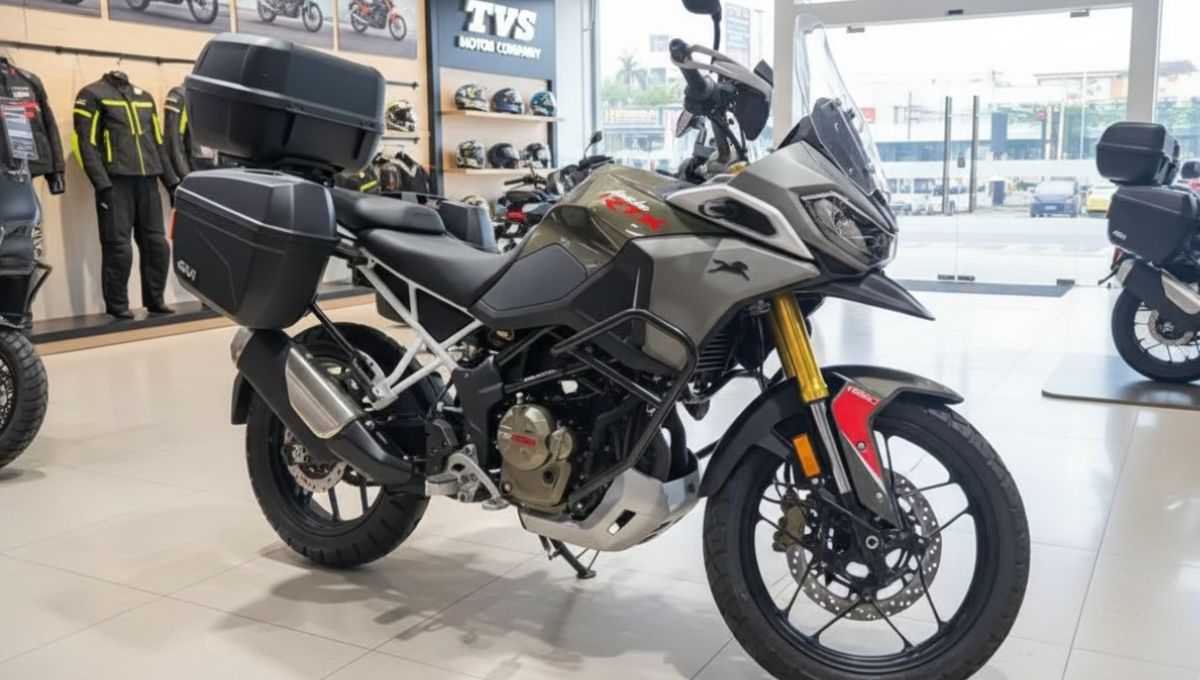
TVS Apache RTX — The New Benchmark in Affordable Adventure Motorcycles

TVS Apache RTX is not just another motorcycle — it represents a new philosophy: making adventure-ready bikes accessible, practical, and enjoyable for everyday riders. Designed to merge sporty performance, touring comfort, and daily usability, Apache RTX stands out in its class as a versatile, value-driven machine. Whether you ride through city traffic, cruise on highways, or hit rough patches on rural roads, RTX aims to adapt and deliver.

Engine & Performance: Balanced Power for Real-World Use

At the heart of Apache RTX lies a finely tuned engine that offers a strong balance between performance and practicality. The powertrain delivers robust torque output at manageable rpm, giving the bike enough grunt for climbing inclines, overtaking traffic, or carrying a pillion and luggage without strain. The multi-gear transmission offers smooth shifts and reliable control, whether you are accelerating from standstill or cruising at high speed.

Engine

  • Apache RTX is powered by a 299.1 cc, single-cylinder, liquid-cooled DOHC engine — a product of the all-new RT-XD4 platform developed in-house by TVS.
  • It produces 36 PS at 9,000 rpm and 28.5 Nm torque at 7,000 rpm — a strong specification for a sub-300 cc bike targeting adventure and touring.

Performance

  • Transmission is via a 6-speed gearbox, featuring assist and slipper clutch for smoother downshifts, coupled with a bi-directional quickshifter — useful for both spirited riding and quick gear changes on highways or trails.
  • The engine is tuned for versatility — capable of efficient cruising on highways, stable performance on city roads, and potent enough for light off-road conditions.

This engine character makes RTX a highly usable motorcycle: responsive enough for spirited rides, yet composed and efficient for daily commuting or longer touring.

Read More : BMW F450 GS : Specs, Design, Mileage , Price, Top Speed & Launch Date In India 2025

Chassis & Suspension: Built for Versatility

Apache RTX’s chassis and suspension setup reflect a thoughtful design for real-world versatility. The frame is engineered to provide stability and durability, ensuring firmness under load while retaining agility in corners. The suspension system offers a well-judged balance: firm enough to absorb bumps and uneven patches on rough roads, yet compliant enough to remain comfortable on smooth urban tarmac.

Apache RTX’s underpinnings reflect its dual-purpose ambition:

  • The bike uses a steel trellis frame, which offers structural rigidity while keeping weight optimized.
  • The suspension setup is premium — 41 mm inverted WP (USD) front fork and a mono-tube floating piston rear shock. This long-travel suspension system is designed to soak up rough terrain while providing stability on tarmac.

Suspension

  • Suspension travel and clearance are tuned for adventure: the setup delivers confident handling on uneven roads without compromising comfort on city or highway runs.
  • Braking is handled by front and rear disc brakes with dual-channel ABS (switchable), offering safety and control on unpredictable terrain or wet surfaces.

This makes RTX not just a highway tourer, but also a reliable city-friendly ride, and a competent companion on rural, uneven terrain.

Riding Comfort & Ergonomics: Practical and Rider-Friendly

Riding comfort often falls by the wayside in performance-oriented bikes — but not with Apache RTX. The riding posture is upright and natural, reducing fatigue even on long journeys. Seat padding offers a balance between firmness and comfort, supporting both short city rides and extended travel. The handlebar, footpegs, and seat geometry together create a riding stance that is neither too aggressive nor too relaxed — ideal for riders who want a bike for “all-round use.”

Whether you are weaving through traffic or cruising down an open highway, RTX keeps rider comfort and control in check.

Features & Utility: Modern Expectations on a Mid-Segment Bike

What distinguishes RTX from many others in its category is the attention to modern necessities and rider convenience. It incorporates features that many premium motorcycles carry — but does so at a relatively affordable package.

From user-friendly gearing and responsive throttle to stable braking and well-balanced handling, Apache RTX offers a complete toolkit for everyday use, occasional touring, and even longer rides. For a mid-segment bike, this level of utility and adaptability gives riders flexibility: one machine that can double as a city commuter, weekend tourer, or adventure companion.

Design & Styling: Blending Aggression with Practicality

The design of Apache RTX strikes a compelling balance: it wears a sporty and aggressive stance that reflects its performance nature, while maintaining practicality and subtlety that avoids excess. The bodywork is sculpted yet functional. Ground clearance, proportions, and ergonomics are all calibrated for a wide range of road and riding conditions. Lightning-fast curves, sharp lines, and a purposeful posture — all contribute to a bike that looks ready to ride out of the showroom and into the open road.

The aesthetic of Apache RTX is crafted to match its purpose:

  • The bike sports a mono-volume silhouette — with a sculpted tank merging seamlessly with the headlamp module, offering an aggressive/rally-inspired profile.
  • Its angular bodywork, muscular proportions, high-mounted exhaust and semi-faired structure strike a balance between sporty and rugged — ideal for both city rides and long tours.
  • Lighting identity — twin-beam LED headlamps, DRL blades, and distinctive tail lamp design — adds character and ensures night-time visibility.
  • Colour & finish options: from earthy tones to bold shades, complemented with signature decals and textures that reflect the adventurous spirit.

The design makes it clear: RTX isn’t just a commuter — it’s a machine built for exploration and boldness.

Read More:- Kawasaki New 2026 Z1100 – Full Review, Specifications & Features Analysis

Who Apache RTX Is For: Versatile Riders with Diverse Needs

Apache RTX is ideal for riders who:

  • Want a motorcycle capable of daily commuting, but also ready for weekend touring.
  • Prefer versatility over specialisation — a bike that performs capably across city, highway, and rough roads.
  • Value comfort, reliability and usability rather than purely sport-bike aggression or heavy-duty off-road ruggedness.
  • Are you looking for a single bike that can adapt to different usage patterns: daily rides, occasional long rides, urban and semi-urban commuting?

If you want one bike that can do it all — within reasonable cost and maintenance — Apache RTX fits that requirement well.

Potential Trade-Offs: What to Keep Realistic Expectations About

No motorcycle is perfect for everything. With Apache RTX, potential riders should consider:

  • It’s designed as a versatile “all-rounder,” so it won’t match specialized bikes if you demand aggressive off-road performance or niche racing characteristics.
  • Its strength lies in balance — for heavy-duty off-road, or heavy load + rough terrain + long-distance touring with passenger + luggage, expectations should be moderate.
  • As with any mid-range motorcycle, regular maintenance, thoughtful riding style, and practical load management matter to get consistent performance and long life.

Apache RTX emerges as a smart, balanced, and practical choice in the landscape of motorcycles. It does not claim to be the fastest, nor the most hardcore off-road machine — instead, it offers reliability, versatility, comfort, and value in a single package.

For riders who prefer a pragmatic motorcycle that adapts to their lifestyle — whether urban commuting, weekend rides, or occasional countryside exploration — Apache RTX offers the perfect middle ground. It is a bike that understands everyday riders: what they need, when they need it, and how they ride.

In a world where motorcycles often demand trade-offs, Apache RTX shows that balance is possible — combining enough performance, comfort, and practicality to satisfy a wide variety of needs. If you’re looking for a dependable, flexible, and enjoyable riding companion, Apache RTX is a solid, realistic choice.


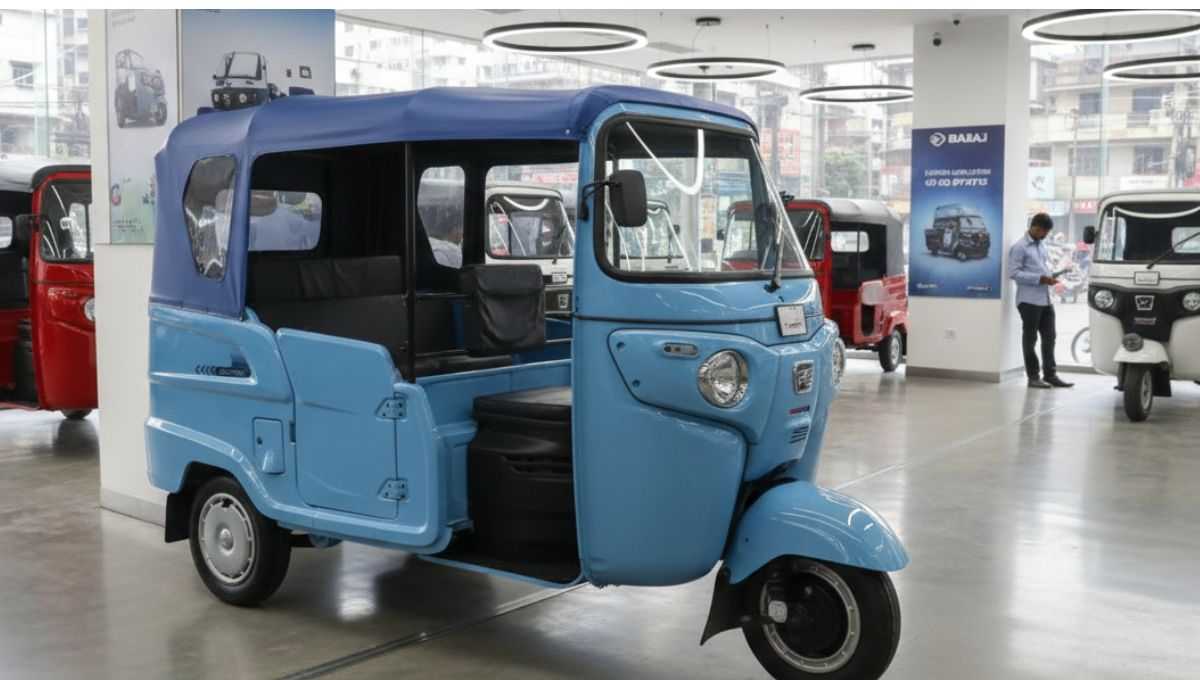
Bajaj GoGo — Pioneering Electric Autos for India’s Last-Mile Mobility

Bajaj GoGo is the all-new electric three-wheeler brand launched by Bajaj Auto in February 2025. GoGo is designed to cater to both passenger and cargo needs — although at launch the company introduced only passenger variants, with cargo versions planned for later.

As of now, the GoGo line-up consists of three variants: P5009, P5012, and P7012. In the naming scheme:

  • “P” denotes passenger category.
  • “50” or “70” indicates the size class (compact vs larger).
  • “09” or “12” reflect battery capacity: ~9 kWh or ~12 kWh.

Technical Specs & Features

Here’s a breakdown of the key specs and features of the GoGo variants:

VariantBattery / CapacityRange (single charge)Key Features
P5009~9.2 kWh~176 km 36 Nm torque; two-speed automated transmission; basic safety & lighting
P5012~12.1 kWh~248 km 36 Nm torque; better range; same transmission & safety/lighting features
P7012~12.1 kWh (larger body)Up to ~251 km (best-in-class in segment)36 Nm torque; two-speed automated transmission; full-metal body; improved passenger space; LED lights; advanced safety features

Standout Features — What Makes GoGo Special

  • Two-speed automated transmission: Helps with better efficiency and climbing ability on inclines — a first in this segment.
  • Safety & convenience features: GoGo offers first-in-class features such as auto-hazard warning, anti-roll detection, LED lighting, and hill-hold assist.
  • Full-metal durable body: Designed for Indian road conditions, likely to be more robust than many conventional auto-rickshaws.
  • 5-year battery warranty: Bajaj promises a five-year battery warranty — providing peace of mind for operators who rely on regular incomes.
  • Optional Premium “TecPac” pack: Offers extra features like remote immobilization, reverse assist — useful for fleet operators.

With these features, GoGo aims to deliver a reliable, cost-effective, and modern alternative to traditional fuel-based auto-rickshaws.

Pricing & Market Launch

At launch, GoGo’s passenger variants were priced (ex-showroom, Delhi) as follows:

  • P5009 — ₹ 3,26,797
  • P7012 — ₹ 3,83,004 Bookings opened across all Bajaj Auto dealerships pan-India soon after launch.

Bajaj Auto has indicated that cargo variants (for goods/ freight) will be launched later — expanding GoGo’s usability beyond passenger transport.

Early Market Response & Impact

The launch of GoGo has had an immediate and strong impact on the Indian electric three-wheeler (3W) market:

  • Within months of launch, GoGo helped Bajaj Auto secure a 36% share of India’s electric three-wheeler market (L5 segment) as of April 2025.
  • In the passenger e-3W segment, Bajaj claims even 39% share — signaling strong acceptance among buyers and operators.
  • Sales numbers back this — in April 2025 alone, the company sold 5,506 units of electric three-wheelers under GoGo.

Such rapid adoption suggests that GoGo met a real need for affordable, efficient, and reliable electric autos suitable for Indian conditions.

Why GoGo Matters: Implications for Mobility in India

For Drivers / Auto-Operators

  • Lower running cost: Electric autos mean significant savings compared to petrol or CNG fuel — electricity cost is lower, and maintenance tends to be simpler.
  • Higher earning potential: Low operating costs + decent range = more rides per charge, and less downtime.
  • Less maintenance & longer life: Full-metal body, robust build and 5-year battery warranty reduce long-term costs and hassles.

For Environment & Cities

  • Zero tailpipe emissions: Helps reduce pollution in dense urban areas — cleaner air for cities.
  • Support for sustainable transport push: As India pushes EV adoption, vehicles like GoGo support last-mile connectivity without sacrificing convenience.

For the EV Market & Industry

  • Benchmark for e-3W segment: GoGo sets a new standard (longest range, better build, modern features) — pushing other manufacturers to upgrade offerings.
  • Encouraging shift from ICE to EV Autos: Demonstrates that EV autos aren’t just experimental — they can be practical, profitable, and scalable.

Considerations & What to Watch Out For

While GoGo offers many advantages, there are a few practical considerations:

  • Charging infrastructure: Operators need access to reliable charging — especially important for long-range claims to translate into real-world daily usage.
  • Initial cost vs ICE autos / used autos: Though cheaper over time, upfront cost is still significant vs used ICE autos or second-hand rickshaws.
  • Cargo variants not yet launched: For businesses needing cargo transport, they’ll have to wait until cargo versions become available under GoGo.

GoGo vs Competitors — Quick Comparison

Mahindra Treo (and variants)

  • Price (approx.): ₹ 2.92–3.02 lakh ex-showroom.
  • Battery / Motor / Range: Lithium-ion battery ~7.37 kWh; certified/claimed range ~130–141 km per charge.
  • Top Speed: ~55 km/h.
  • Other Features: Direct-drive transmission (less vibration, simpler maintenance), decent suspension setup (helical springs + hydraulic shock absorbers), compact size — good for narrow streets and dense urban areas.

Pros

  • Lower entry cost compared to premium 3-wheelers.
  • Lower operating/maintenance cost (smaller battery, simpler setup).
  • Good for short or moderate urban trips; manoeuvrable and suitable for tight, crowded areas.

Cons

  • Much shorter range compared to high-range EV 3Ws — may need frequent recharging on busy operation days.
  • Smaller battery/motor — may struggle with heavy loads or repeated full-day usage compared to bigger 3Ws.

Piaggio Ape E‑City FX Max / Piaggio Ape E‑City Ultra

  • Price (approx.): FX Max ~₹ 3.30 lakh, Ultra ~₹ 3.88 lakh (ex-showroom).
  • Battery / Motor / Range:
    • FX Max: ~8.0 kWh battery, 7.4 kW motor, range ~174 km.
    • Ultra: ~10.2 kWh LFP battery, 9.55 kW motor, certified range up to ~236 km.
  • Performance / Features: Top speed ~50–55 km/h; good gradeability/climb-assist (useful in slopes/flyovers); full-metal body; 4G telematics, remote immobilization, digital instrumentation.

Pros

  • Very good range — FX Max and particularly Ultra can cover long city routes or heavy usage days without frequent recharging.
  • Strong motor and torque — better for fully loaded trips or frequent start-stop city driving.
  • Modern features: telematics, remote monitoring, build quality — useful for fleet owners or commercial operators.

Cons

  • Higher upfront cost compared to budget e-rickshaws like Treo.
  • Slightly bulkier than small e-rickshaws — might be less nimble in narrow lanes or congested roads.

Montra Electric Super Auto (2025 model)

  • Price (approx.): ₹ 3.79 lakh ex-showroom (post-subsidy) for base variant.
  • Battery / Range / Performance: Claimed range up to ~160 km per charge. — Some variants reportedly achieve ~203 km (with larger battery pack).
  • Features: LED headlamps, tubeless radial tyres, re-engineered suspension for a smoother ride, updated cabin, connected platform (“One Montra Electric”) for real-time data and charging-station info.

Pros

  • Balanced offering: decent range and performance for daily operations without going to premium price bracket.
  • Modern comforts and safety/upgrades — good for drivers and passengers alike.
  • Good candidate for medium-distance city runs or for users needing more range than basic e-rickshaws.

Cons

  • Price is moderate-high; upfront cost may be a factor for small-scale operators.
  • Real-world range will likely depend heavily on load, traffic and driving patterns — may be less than claimed 160–200 km.

Bajaj GoGo (GoGo P50 / P70 series)

  • Range & Performance: As per manufacturer claims, GoGo offers up to ~248–251 km per charge (in higher battery/size variants) — among the highest in passenger EV-3W segment in India.
  • Market Response: According to recent data, GoGo helped Bajaj Auto secure ~36% share in India’s electric 3-wheeler market soon after launch.
  • Use Case: With high range, relatively modern EV tech, and brand backing, GoGo seems suited for heavy usage — full-day city commuting, last-mile passenger transport, fleet operations.

Pros

  • Among the best range per charge in its class — reduces dependency on frequent charging, good for long shift operations.
  • Backed by brand and wide dealer/service network (assuming from Bajaj’s reach) — useful for long-term reliability.
  • Likely well-suited for daily high-usage patterns (multiple trips, long hours).

Cons / What to watch out for

  • Being a newer entrant, real-world performance (ride quality, after-sales service in small towns) is yet to be fully established.
  • Higher-range/battery vehicles may cost more upfront compared to basic e-rickshaws; electricity costs & charging infrastructure matter.

Summary Comparison (When to Choose What)

Your Requirement / UseBest Option(s)
Low upfront investment / short intra-city trips / narrow lanesMahindra Treo
Balanced price + range + reliability (fleet use, moderate city routes)Montra Super Auto; Piaggio Ape FX Maxx
Long daily usage, many trips, need high range / heavy usage / potentially full-day shiftsBajaj GoGo; Piaggio Ape E-City Ultra
Need stronger motor / power / better build and optionally better gradeability (for hills / heavier loads)Piaggio Ape E-City models; GoGo (higher variants)

My View — How GoGo Stands Out (and Tradeoffs)

  • GoGo’s long range is a major advantage over many basic & mid-range e-rickshaws — this reduces “range anxiety,” especially for operators doing many trips or long hours.
  • Compared with budget options (like Treo), GoGo likely offers better total value in the long term if you cover high daily kilometers.
  • However, if your use is limited to short daily runs, narrow roads (like many parts of West Bengal), or you want the lowest investment/maintenance, simpler e-rickshaws may still make sense.
  • Also, charging infrastructure and electricity price where you operate matter a lot: with high-capacity batteries, you need reliable access to charging to realize the benefits fully.

Bajaj GoGo represents a bold and timely push by a legacy automaker into India’s electric mobility future. With competitive pricing, modern features, and a focus on reliability and practicality, GoGo has already disrupted the electric three-wheeler segment within months of launch.

For passengers, operators, and urban mobility alike, GoGo offers a glimpse into what EV-driven last-mile transport could — and perhaps should — look like: efficient, clean, and built for Indian roads.

Hyundai Ioniq 3 – The Next-Generation Compact Electric EV Revolution

Hyundai Ioniq 3: The Next-Generation Compact Electric EV Revolution Hyundai Ioniq 3 emerges as one of the most anticipated electric cars in the global automotive market. Designed to redefine the compact EV segment, this futuristic hatchback brings Hyundai’s cutting-edge innovation, advanced design language, and superior electric mobility into a practical, urban-friendly form. As part of Hyundai’s ambitious IONIQ lineup, the Ioniq 3 promises exceptional efficiency, a bold modern identity, and next-level connected technology that elevates everyday driving.

Bold Exterior Design with Futuristic Aesthetics

The Hyundai Ioniq 3 presents a striking visual appeal that seamlessly merges minimalistic aesthetics with futuristic design language. Its clean profile and sculpted surfaces reflect Hyundai’s modern EV DNA.

Key Exterior Highlights

  • Parametric Pixel LED Headlamps inspired by the Ioniq 5
  • Aerodynamic body sculpting for enhanced range
  • Signature full-width LED tail light bar
  • Compact yet muscular stance, perfect for urban roads
  • Flush door handles improve airflow and style
  • Dual-tone alloy wheels crafted for reduced drag

Built on Hyundai’s evolving EV design philosophy, the Ioniq 3 achieves a perfect blend of boldness and efficiency.

Advanced Electric Powertrain Built for Urban Efficiency

The Ioniq 3 is engineered on the E-GMP (Electric Global Modular Platform), allowing greater flexibility, efficiency, and performance.

Powertrain & Performance

  • Single-motor FWD setup expected for most variants
  • Power output estimated to be between 135–160 PS
  • Instant torque delivery for rapid urban acceleration
  • Smooth, silent and stable driving dynamics
  • Expected to offer multiple drive modes including Eco, Normal, and Sport

This compact EV promises agile handling, making it ideal for narrow streets, quick lane changes, and city traffic environments.

Battery Capacity, Range & Charging Technology

The Hyundai Ioniq 3 is expected to come equipped with highly efficient battery options that ensure an optimal balance between performance and range.

Battery & Range Expectations

  • Standard battery pack: ~48 kWh
  • Long-range battery pack: ~60 kWh
  • Expected driving range of 350–450 km per charge (WLTP)
  • 800V fast-charging capability – rare in compact EVs
  • Ability to charge from 10% to 80% in approx. 25 minutes with ultra-fast DC chargers

Hyundai’s thermal battery management system ensures reliable performance even in extreme weather conditions.

Premium Interior with Modern Digital Tech

Inside the Hyundai Ioniq 3, minimalism meets practicality. The cabin is thoughtfully designed to provide maximum space, comfort, and intuitive technology for an effortless electric driving experience.

Interior Highlights

  • Dual 10.25-inch digital screens for cluster & infotainment
  • Touch-enabled climate control panel
  • High-quality soft-touch dashboard with futuristic contours
  • Eco-friendly upholstery made from recycled materials
  • Flat floor design thanks to E-GMP architecture
  • Customizable ambient lighting
  • Advanced steering-mounted controls

The cabin’s airy layout and low-clutter approach make the Ioniq 3 feel larger than most compact hatchbacks.

Next-Level Connectivity & Smart Features

The Ioniq 3 is designed as a fully connected electric vehicle with Hyundai’s state-of-the-art digital ecosystem.

Connectivity Features

  • Hyundai SmartSense connected suite
  • Over-the-Air (OTA) updates for continuous improvements
  • Wireless Apple CarPlay & Android Auto
  • Voice-enabled commands
  • Remote vehicle monitoring & control via mobile app
  • Navigation with AI-assisted routing for EV charging stations

These smart features offer a seamless digital experience, making everyday driving more convenient and intuitive.

Safety Technology with Hyundai SmartSense ADAS

Safety remains a core focus for the Ioniq series, and the Ioniq 3 continues this momentum with an advanced safety feature suite.

Top Safety Features

  • Level-2 ADAS for assisted driving
  • Adaptive Cruise Control
  • Forward Collision Avoidance Assist
  • Lane Keeping Assist
  • Driver Attention Warning
  • High Beam Assist
  • 360° camera and parking assist (expected in higher trims)
  • Strong body structure designed for maximum crash protection

The combination of safety engineering and intelligent driver assistance makes the Ioniq 3 one of the safest compact EVs in its class.

Practicality, Space & Everyday Usability

The Ioniq 3 is created with urban practicality in mind. Despite its compact footprint, the EV offers generous interior space and smart utility enhancements.

Practicality Features

  • Enhanced rear legroom thanks to EV platform
  • Large boot space suitable for weekend trips
  • Split-folding rear seats for added utility
  • Multiple USB-C fast-charging ports
  • Smart storage spaces across the cabin

Whether for daily commuting or weekend escapes, the Ioniq 3 is crafted to accommodate active lifestyles.

Read More :- Mercedes-AMG CLE Coupé 2026 : Specs, Engine, Interior, Speed & Other Details

Sustainability & Eco-Friendly Materials

Hyundai integrates sustainable materials and processes into the Ioniq 3’s construction.

Eco-Friendly Elements

  • Recycled PET bottle fabric
  • Bio-based paints
  • Recycled fishing nets used for floor carpets
  • Minimal environmental impact manufacturing processes

This makes the Ioniq 3 not just an EV but a responsible mobility solution.

Expected Price, Variants & Market Position

The Hyundai Ioniq 3 is expected to be positioned below the Ioniq 5, making it a more affordable and compact option.

Expected Pricing

  • Base variant: $25,000 – $30,000 (international markets)
  • Higher variants: $32,000 – $38,000

In Asian and European regions, the Ioniq 3 will compete directly with:

  • Renault Megane E-Tech
  • Volkswagen ID.3
  • Peugeot e-308

Its competitive pricing and strong feature list position it as a compelling choice in the compact EV market.

Why the Hyundai Ioniq 3 Stands Out

The Ioniq 3 stands out due to:

  • Highly efficient EV performance
  • Premium-quality interior
  • Advanced range & fast-charging technologies
  • Smart connectivity & ADAS features
  • Visually striking modern design
  • Competitive pricing in the compact EV category

It is engineered to deliver a future-ready driving experience with unmatched practicality and innovation.

Hyundai Ioniq 3 – A Game Changer in Compact Electric Mobility

The Hyundai Ioniq 3 represents Hyundai’s commitment to shaping the future of electric mobility. With its advanced EV platform, futuristic design, cutting-edge digital ecosystem, and superior efficiency, the Ioniq 3 is set to redefine what compact electric vehicles should offer. For those seeking a stylish, technologically rich, and sustainable EV that combines performance with practicality, the Ioniq 3 stands as one of the most promising electric hatchbacks in the upcoming global market.

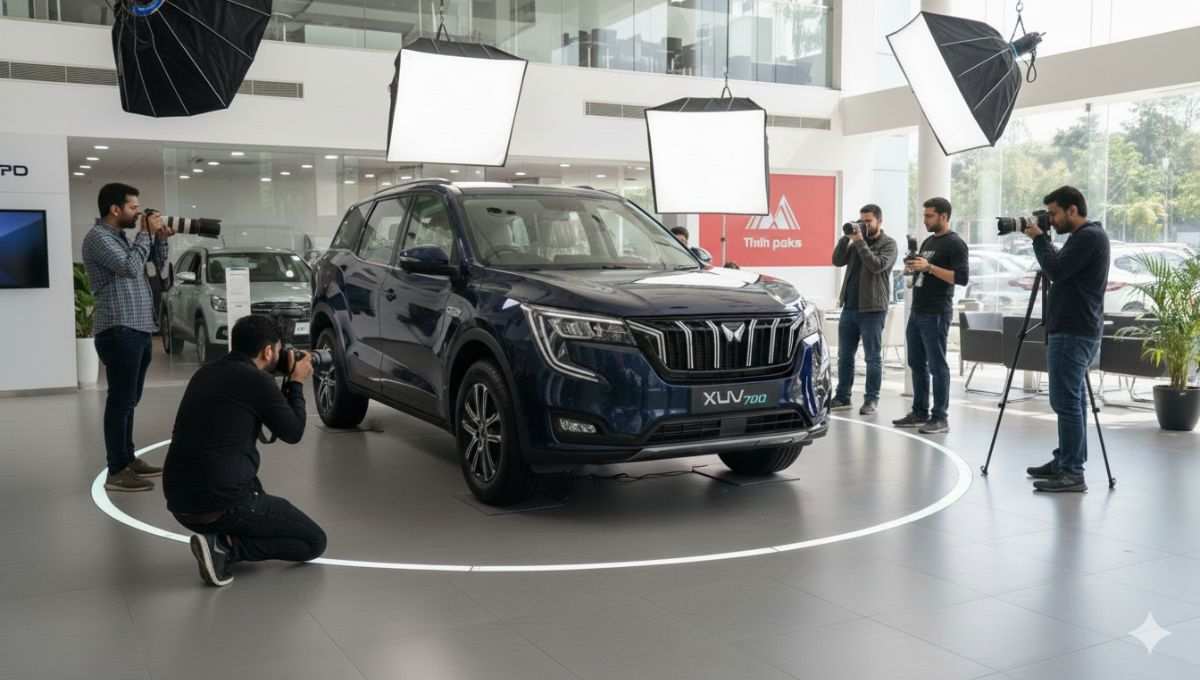
XUV700 AX7 L Diesel – The Ultimate Premium SUV for Power, Luxury & Innovation

XUV700 AX7 L Diesel : The Mahindra XUV700 AX7 L Diesel stands as one of the most feature-rich, powerful, and technologically advanced SUVs in India’s premium segment. With its commanding stance, refined diesel engine, and segment-leading ADAS features, this top-of-the-line variant represents the pinnacle of modern engineering. In this detailed guide, we explore every element of the AX7 L Diesel—from its design and performance to interior comfort, safety technology, and ownership benefits.

Bold Exterior Styling That Makes a Statement

The XUV700 AX7 L Diesel features a striking exterior design that blends aggression with elegance. Its aerodynamic profile, expansive shoulder lines, and modern lighting signature allow it to dominate the road effortlessly.

Key Exterior Highlights

  • Massive Chrome-Finished Grille with Mahindra’s new Twin Peaks logo
  • LED Headlamps, DRLs, and Sequential Turn Indicators
  • Smart Door Handles that sit flush with the body
  • 18-inch Diamond-Cut Alloy Wheels exclusive to higher variants
  • Panoramic Skyroof providing a premium and airy cabin experience
  • Bold character lines and sculpted bumpers enhancing road presence

The SUV’s exterior elements are not just designed for beauty—they also enhance aerodynamics and overall driving efficiency.

Power-Packed Diesel Powertrain with Superior Performance

Under the hood sits Mahindra’s acclaimed 2.2L mHawk Diesel Engine, renowned for its refined performance and strong torque delivery.

Engine & Performance Specifications

  • Engine: 2.2L Turbocharged mHawk
  • Maximum Power: 185 PS
  • Maximum Torque: 420 Nm (MT) / 450 Nm (AT)
  • Transmission Options:
    • 6-speed manual
    • 6-speed automatic torque converter
  • Drivetrain: Front-wheel drive with an optional All-Wheel Drive (AWD)

The AX7 L Diesel offers a smooth, linear power delivery ideal for city and highway driving. With its advanced engine tuning, the SUV delivers quick acceleration, refined NVH levels, and excellent high-speed stability.

Luxurious Cabin Designed for Superior Comfort

Step inside the XUV700 AX7 L Diesel, and you are welcomed into a world of sophistication. Every inch of the cabin is crafted to enhance comfort and convenience.

Premium Interior Features

  • Dual HD 10.25-inch Displays (Infotainment + Digital Cluster)
  • Immersive Sony 3D Sound System with 12 Speakers
  • Leatherette Upholstery and Soft-Touch Dashboard
  • Electric Seat Adjustment with Memory Profile
  • Ventilated Front Seats (variant dependent)
  • Large Flat-Bottom Steering Wheel with Multifunction Controls
  • Ambient Lighting
  • Panoramic Skyroof

The interiors of the XUV700 AX7 L Diesel create the feel of a high-end European SUV, offering unmatched comfort in long journeys.

Advanced Infotainment & Connectivity Ecosystem

Mahindra integrates the signature AdrenoX connected car technology into the AX7 L Diesel, introducing smarter vehicle interactions and seamless connectivity.

Read More:- BMW M9: The Ultimate Future Hypercar from BMW – Full Review, Specs, Features & Expected Price

Connectivity & Infotainment Features

  • Wireless Android Auto & Apple CarPlay
  • AdrenoX Mobile App Controls
  • Built-in Navigation with Live Traffic Updates
  • Alexa Voice Assistant Integration
  • Personalized User Profiles
  • OTA (Over-the-Air) Software Updates

The infotainment suite offers brisk responsiveness and gives drivers full command over vehicle functions at their fingertips.

ADAS Level 2 – Maximum Safety with Intelligent Technology

The AX7 L Diesel comes equipped with Level 2 Advanced Driver Assistance Systems, positioning it among the safest SUVs in India.

Top ADAS Features Include:

  • Adaptive Cruise Control
  • Forward Collision Warning
  • Automatic Emergency Braking (AEB)
  • Traffic Sign Recognition
  • Lane Keep Assist
  • Lane Departure Warning
  • High Beam Assist
  • Smart Pilot Assist

Beyond ADAS, the SUV includes:

  • 7 Airbags
  • Electronic Stability Program (ESP)
  • Hill Hold & Hill Descent Control
  • 360° Surround View Camera
  • Tyre Pressure Monitoring System (TPMS)

Together, these systems make the XUV700 AX7 L one of the most secure vehicles in its class.

Ride Quality & Handling Experience

The XUV700 AX7 L Diesel is engineered to offer a balance of comfort and performance with its independent front and rear suspension system.

Driving Experience Highlights

  • Superior high-speed stability
  • Comfortable suspension designed for Indian roads
  • Precise steering feedback
  • Minimal cabin noise thanks to improved insulation

Whether cruising on highways or navigating urban traffic, the SUV delivers confidence and comfort mile after mile.

Practicality, Space & Utility

The XUV700 AX7 L Diesel is built with families in mind. It offers generous seating across three rows along with flexible storage options.

Interior Space Features

  • 7-seater configuration
  • Spacious second-row legroom
  • Adjustable rear AC vents
  • Large boot with foldable third row

Storage pockets, cup holders, a cooled glove box, and rear charging ports add to the everyday practicality of this SUV.

Fuel Efficiency & Ownership Costs

Even with its powerful diesel engine, the AX7 L Diesel delivers competitive fuel efficiency.

Expected Mileage

  • City: 12–14 km/l
  • Highway: 16–18 km/l

Mahindra’s widespread service network ensures convenient and cost-effective maintenance.

Why the XUV700 AX7 L Diesel Stands Above the Competition

The AX7 L Diesel excels because it offers:

  • Segment-best technology
  • Powerful diesel performance
  • A premium and comfortable cabin
  • Unmatched ADAS safety features
  • Outstanding road presence

It successfully bridges the gap between mass-market SUVs and luxury offerings, making it one of the best choices in the ₹25–30 lakh segment.

A SUV That Redefines Luxury & Performance

The Mahindra XUV700 AX7 L Diesel is more than an SUV—it’s a performance powerhouse fused with luxury and intelligence. For buyers seeking superior comfort, robust performance, and best-in-class safety, this variant stands as the ultimate choice. It blends advanced technology with premium craftsmanship, delivering an undeniably future-ready ownership experience.

Exit mobile version