
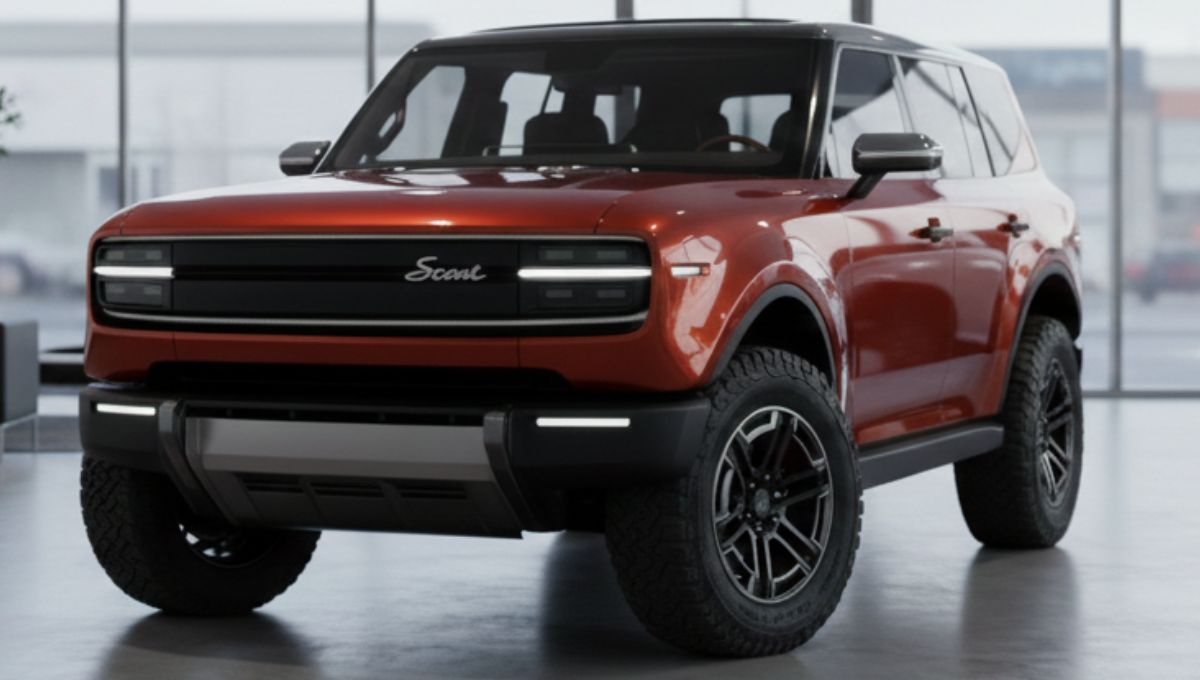
Scout Traveler Terra 2027: The automotive world is witnessing a rugged revival with the arrival of the 2027 Scout Traveler Terra. Bringing back the spirit of the original 1960s icon, this modern iteration isn’t just a nostalgia trip—it is a serious contender in the electric off-road space.
Built by Scout Motors, a new independent American company backed by the Volkswagen Group, the Traveler is designed to be a “Connection Machine,” bridging the gap between digital disconnect and the great outdoors. It promises to be a vehicle that respects its heritage while embracing the future of mobility, offering a tactile, mechanical experience in an increasingly screen-dominated world.
Engine and Harvester Powertrain
While the Scout Traveler Terra is fundamentally an electric vehicle, it offers two distinct powertrain philosophies to suit different adventurers. The pure Battery Electric Vehicle (BEV) variant delivers an estimated range of up to 350 miles, powered by high-torque electric motors that can launch the SUV from 0 to 60 mph in just 3.5 seconds.
For those who fear range anxiety deep in the wilderness, Scout introduces the “Harvester” range-extended system. This optional powertrain incorporates a small gasoline engine—likely a refined 4-cylinder generator—that does not drive the wheels directly but acts as an onboard generator to recharge the high-voltage battery. This innovative setup extends the total driving range to over 500 miles, blending the instant torque of electric motors with the go-anywhere reliability of gas refueling. With nearly 1,000 lb-ft of torque on tap, the Traveler ensures that power is never in short supply, whether you are climbing rock faces or merging onto the freeway.
Read More : MG Majestor: Experience Luxury and Performance with Cutting-Edge Specs
Chassis and Suspension
Beneath its retro-futuristic body lies a dedicated, proprietary body-on-frame platform designed specifically for durability and off-road dominance. Unlike many modern electric SUVs that opt for unibody construction, the Traveler sticks to its roots with a robust steel ladder frame.
The suspension setup is a love letter to serious off-roaders: it features a solid rear axle, a rarity in the EV segment that provides superior articulation and durability on rough terrain. To further enhance its capability, the chassis is equipped with front and rear mechanical locking differentials and a front sway bar disconnect, allowing for maximum wheel travel when navigating uneven obstacles. With over 12 inches of ground clearance and the ability to ford nearly three feet of water, the Traveler’s chassis is engineered to handle environments that would sideline typical crossovers.
Design and Utility
The Traveler’s design is unmistakably Scout, featuring a short front overhang, a long hood, and a split tailgate that doubles as a seat for camping or tailgating. The “Cabana Top” option offers one of the largest roof openings in its class, providing an open-air experience that connects occupants with nature.
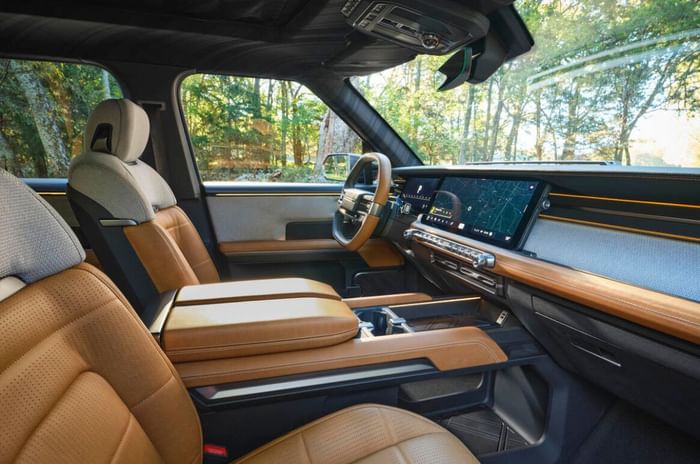
Inside, the cabin rejects the trend of burying every function in a touchscreen. Instead, it features a “bank” of tactile toggle switches and knobs for climate control and critical vehicle functions, ensuring they can be operated easily, even while wearing gloves. The vehicle also boasts a spacious front trunk (frunk) capable of holding a cooler or gear, complete with 120V and USB-C power outlets to run camp accessories.

Charging and Technology
Built on a modern 800-volt architecture, the Scout Traveler Teera supports rapid charging speeds up to 350 kW, ensuring minimal downtime at charging stations. It natively uses the North American Charging Standard (NACS) connector, granting access to the extensive Tesla Supercharger network alongside other DC fast chargers. Additionally, the vehicle supports bidirectional charging (V2H), allowing it to power your home during outages or serve as a massive energy bank for your campsite.
Key Technical Specifications
| Specification | Details |
| Powertrain Options | Fully Electric (BEV) or Harvester (EREV) |
| 0-60 mph | 3.5 seconds (estimated) |
| Torque | ~1,000 lb-ft |
| Range (BEV) | Up to 350 miles |
| Range (Harvester) | Over 500 miles (Gas + Electric) |
| Towing Capacity | 7,000+ lbs |
| Payload Capacity | ~2,000 lbs |
| Platform | Body-on-Frame |
| Rear Axle | Solid Rear Axle |
| Ground Clearance | Over 12 inches |
| Water Fording | Nearly 3 feet |
| Tire Size | Up to 35 inches |
| Charging Architecture | 800V system (NACS connector) |
Read More : Hyundai Ioniq 3 – The Next-Generation Compact Electric EV Revolution
Pros and Cons
Pros
- Harvester Range Extender: Eliminates range anxiety by offering over 500 miles of total range, making it a viable option for remote overlanding.
- Authentic Off-Road Hardware: Features like a solid rear axle, mechanical lockers, and body-on-frame construction provide genuine capability unmatched by many EV rivals.
- Tactile Interior Controls: The commitment to physical buttons and switches offers a user-friendly, functional experience preferred by driving enthusiasts.
Cons
- Production Timeline: With production slated for late 2026/2027, the long wait time may deter buyers ready to purchase an EV today.
- Size and Weight: As a large body-on-frame SUV with a massive battery or gas generator, it will likely be heavy, which could impact efficiency and maneuverability in tight urban spaces.
- Towing Range Impact: While it has a high towing capacity, towing heavy loads with the pure BEV version will significantly reduce range, a common challenge for electric trucks.