Tag Archives: Technology

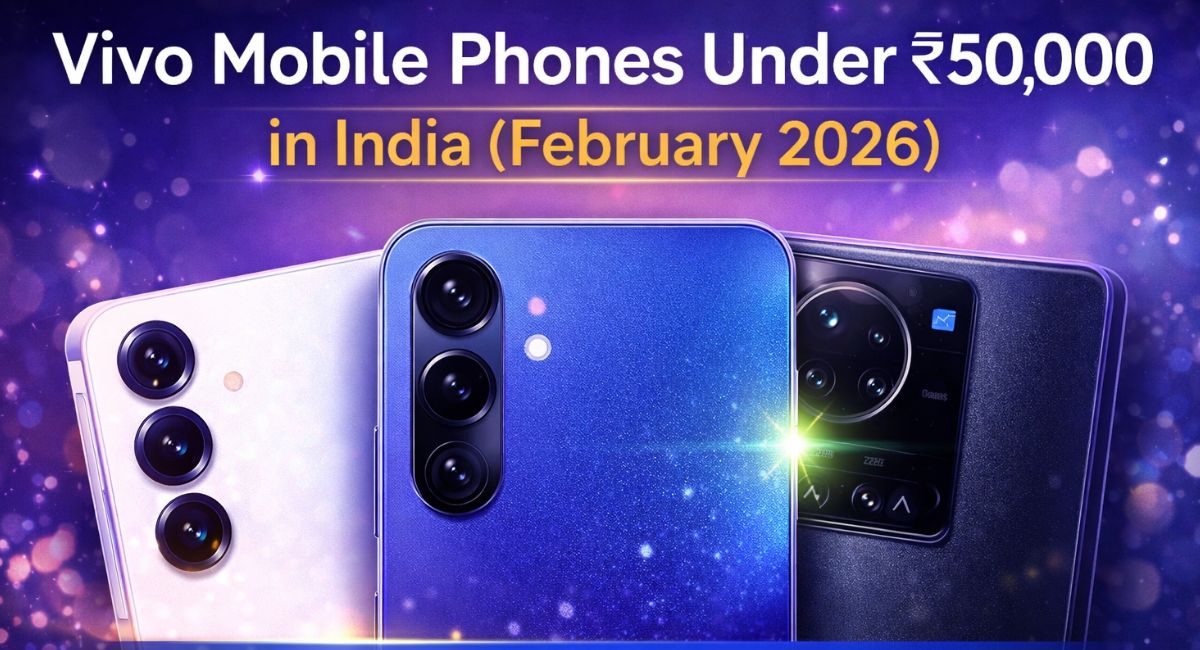
Best Vivo Mobile Phones Under ₹50,000 in India (February 2026): Flagship Features Without the Flagship Price

The Indian smartphone market continues to evolve rapidly, and Vivo Mobile Phones have carved out a strong presence in the premium mid-range and upper mid-range segments. With a budget of up to ₹50,000, buyers today can access flagship-level displays, powerful chipsets, professional-grade cameras, and refined design without crossing into ultra-premium pricing territory.

As someone who regularly reviews and compares smartphones in the Indian market, I’ve noticed that Vivo’s strategy under ₹50,000 focuses heavily on camera innovation, sleek aesthetics, and balanced performance. This price bracket is particularly competitive, making it essential to choose carefully.

In this in-depth February 2026 guide, we break down the best Vivo Mobile Phones under ₹50,000, complete with specifications, strengths, ideal user profiles, and buying advice.

Why Consider Vivo Mobile Phones Under ₹50,000?

Before diving into specific models, it’s worth understanding why this category is compelling.

In the ₹30,000–₹50,000 range, Vivo Mobile Phones typically offer:

  • AMOLED displays with high refresh rates
  • Capable Snapdragon or MediaTek flagship-grade chipsets
  • High-resolution camera systems with OIS
  • Fast charging above 80W
  • Premium glass or vegan leather finishes
  • 5G connectivity and Wi-Fi 6 support

This segment balances performance and value better than entry-level flagship pricing.

Top Vivo Mobile Phones Under ₹50,000 (February 2026)

Below are some of the most compelling Vivo models in this budget category.

Vivo V30 Pro

The Vivo V30 Pro continues to be one of the most balanced Vivo Mobile Phones under ₹50,000.

Key Specifications

  • Display: 6.78-inch AMOLED, 1.5K resolution
  • Refresh Rate: 120Hz
  • Processor: MediaTek Dimensity 8200
  • RAM: 8GB / 12GB
  • Storage: 256GB
  • Rear Cameras:
    • 50MP primary (OIS)
    • 50MP portrait lens
    • 12MP ultra-wide
  • Front Camera: 50MP
  • Battery: 5,000mAh
  • Charging: 80W fast charging
  • OS: Funtouch OS (Android-based)

Performance and Usage

The Dimensity 8200 chipset offers excellent daily performance and smooth gaming for most titles. Thermal management is controlled well during moderate gaming sessions.

Camera Performance

The dual 50MP setup delivers strong portrait photography and accurate skin tones — a consistent strength across Vivo Mobile Phones.

Vivo X90

The Vivo X90 remains a strong contender for buyers seeking high-end imaging performance.

Key Specifications

  • Display: 6.78-inch AMOLED, Full HD+
  • Refresh Rate: 120Hz
  • Processor: MediaTek Dimensity 9200
  • RAM: 8GB / 12GB
  • Storage: 256GB
  • Rear Cameras:
    • 50MP primary (Sony IMX sensor, OIS)
    • 12MP ultra-wide
    • 12MP telephoto
  • Front Camera: 32MP
  • Battery: 4,810mAh
  • Charging: 120W fast charging

Why It Stands Out?

The Dimensity 9200 remains highly capable for gaming and multitasking. The camera processing pipeline on the X series delivers better dynamic range and night photography compared to many mid-range competitors.

Vivo V29 Pro

For buyers who prioritize design and camera aesthetics, the V29 Pro remains relevant.

Key Specifications

  • Display: 6.78-inch curved AMOLED
  • Refresh Rate: 120Hz
  • Processor: MediaTek Dimensity 8200
  • RAM: 8GB / 12GB
  • Storage: 256GB
  • Rear Camera:
    • 50MP (OIS)
    • 12MP telephoto
    • 8MP ultra-wide
  • Front Camera: 50MP
  • Battery: 4,600mAh
  • Charging: 80W fast charging

The curved display and lightweight design make it one of the most stylish Vivo Mobile Phones under ₹50,000.

Read more:- February 27 Could Change Everything: Inside the New Pokémon Presents for Pokémon Day 2026

Vivo X90e

A slightly more affordable entry in the premium lineup, but still under the ₹50,000 cap.

Key Specifications

  • Display: 6.62-inch AMOLED
  • Processor: MediaTek Dimensity 9200
  • RAM: 8GB
  • Storage: 128GB / 256GB
  • Rear Camera:
    • 50MP primary (OIS)
    • 12MP ultra-wide
  • Battery: 4,800mAh
  • Charging: 120W

This model appeals to users who want flagship-like performance without pushing into ultra-premium territory.

Performance Comparison

When choosing between Vivo Mobile Phones in this segment, consider chipset differences:

  • Dimensity 8200: Strong mid-premium performance
  • Dimensity 9200: Near flagship-level performance
  • GPU capabilities vary slightly for heavy gaming

For high-end gaming or demanding multitasking, the X90 lineup is preferable.

Read more:- ATTACK SHARK X8 Gaming Mouse Review: The Large-Hand Powerhouse That Quietly Outperforms Premium Rivals

Display Quality Across Models

Vivo consistently delivers high-quality AMOLED panels featuring:

  • Deep contrast ratios
  • Smooth 120Hz scrolling
  • Strong peak brightness levels
  • Good outdoor visibility

The curved panels on V-series devices provide a more immersive feel, while flat panels on X-series may offer practical durability.

Battery Life and Charging Speed

Battery optimization is a strength of Vivo Mobile Phones in this range.

  • Most models exceed 4,600mAh capacity
  • Charging speeds range from 80W to 120W
  • Full charge typically achieved within 30 minutes

In real-world usage:

  • Moderate users can expect a full day
  • Heavy gamers may require mid-day top-ups

Fast charging significantly reduces downtime.

Camera Strength: Vivo’s Signature Advantage

Vivo’s brand identity in India has long centered around photography.

Common camera strengths:

  • Strong portrait mode
  • Good skin tone calibration
  • Reliable OIS stabilization
  • AI-enhanced night photography

If camera performance is your priority, Vivo Mobile Phones under ₹50,000 remain among the strongest contenders.

Software Experience

Most Vivo devices run Funtouch OS, offering:

  • Customizable UI
  • Multi-tasking features
  • Security tools
  • App cloning
  • Always-on display support

Software updates vary by model but typically include:

  • 2–3 years of OS updates
  • Security patches for extended duration

Who Should Buy Vivo Mobile Phones Under ₹50,000?

This category suits:

  • Photography enthusiasts
  • Style-conscious buyers
  • Social media creators
  • Moderate gamers
  • Professionals wanting fast charging and premium design

Buying Advice: What to Check Before Purchase?

Before finalizing your purchase:

  1. Compare storage variants
  2. Confirm software update policy
  3. Evaluate camera needs (portrait vs ultra-wide preference)
  4. Consider curved vs flat display preference
  5. Check ongoing discounts or exchange offers

Vivo Mobile Phones under ₹50,000 in India (February 2026) offer a compelling mix of camera innovation, fast charging, premium design, and strong performance. Whether you prioritize portrait photography, smooth gaming, or stylish hardware, there is a Vivo device tailored to your needs.

In this competitive segment, the key is aligning your priorities with the right model. Evaluate specifications carefully, compare features, and consider long-term software support.

FAQs

Which is the best Vivo mobile under ₹50,000 in 2026?

The Vivo X90 stands out for its flagship-level performance and camera capabilities, while the V30 Pro offers balanced value.

Are Vivo phones good for gaming?

Yes, especially models powered by Dimensity 9200 or 8200 processors, which handle high-end games smoothly.

Do Vivo Mobile Phones under ₹50,000 support 5G?

Yes, all major models in this category support 5G connectivity.

How long does Vivo provide software updates?

Most models receive 2–3 years of Android updates and extended security support.
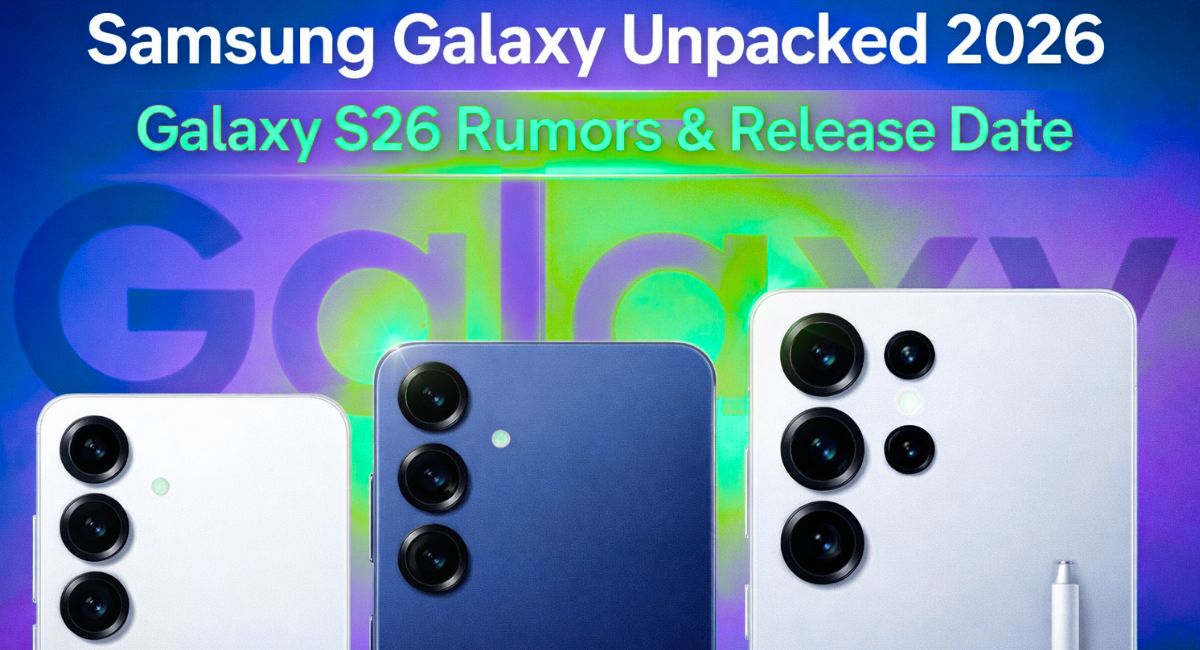
Samsung Galaxy Unpacked 2026 Is Almost Here: Will the Galaxy S26 Redefine the Android Flagship Again?

Every year, anticipation builds around one of the biggest technology events on the calendar: Samsung Galaxy Unpacked. With Samsung Galaxy Unpacked 2026 just days away, industry watchers, reviewers, and loyal fans are asking the same question — how far will Samsung push its flagship formula this time?

The Samsung Galaxy lineup has consistently shaped the Android landscape. From bold hardware experiments to aggressive camera innovation and AI-driven software enhancements, Samsung’s flagship launches often set the tone for the year ahead.

As someone who has followed Samsung Galaxy devices through multiple generations — from early S-series phones to the AI-powered models of recent years — it’s clear that expectations for the Galaxy S26 are higher than ever.

In this comprehensive preview, we explore rumored specs, possible design refinements, chipset upgrades, camera advancements, battery improvements, software features, pricing expectations, and what Galaxy Unpacked 2026 could reveal.

Why Samsung Galaxy Unpacked Matters Every Year?

Samsung Galaxy Unpacked is more than a product announcement. It’s a statement about where Samsung sees the smartphone industry heading.

In recent years, Samsung Galaxy devices have led innovation in:

  • High-refresh-rate displays
  • Advanced computational photography
  • Foldable smartphone technology
  • On-device AI features
  • Long-term Android update commitments

With competition intensifying from Apple, Google, and Chinese manufacturers, Samsung Galaxy flagships must now balance performance, efficiency, design, and software intelligence more carefully than ever.

Galaxy S26 Expected Release Date

Based on Samsung’s historical launch cycle, Galaxy Unpacked events for the S-series typically occur in late January or early February.

If Samsung follows tradition:

  • Announcement: Early 2026
  • Pre-orders: Immediately after event
  • Official release: 2–3 weeks post-announcement

Samsung Galaxy Unpacked 2026 is expected to align with this timeline, positioning the Galaxy S26 as one of the first major flagship releases of the year.

Samsung Galaxy S26: Expected Design Changes

Samsung rarely makes radical visual changes year after year, preferring iterative refinement.

Rumored design expectations for the Galaxy S26 include:

  • Slimmer bezels
  • Slightly lighter chassis
  • Reinforced Armor Aluminum frame
  • Gorilla Glass Victus 3 (or newer generation)
  • Enhanced IP68 water and dust resistance

There are also whispers of improved thermal management systems, potentially incorporating advanced vapor chamber cooling for sustained performance.

The overall aesthetic is expected to remain premium and minimalist — consistent with Samsung Galaxy design language.

Display Specifications: Brighter, Smarter, More Efficient

Samsung is known for industry-leading displays, and the Galaxy S26 is expected to push further.

Expected Display Specs:

  • 6.2-inch AMOLED (Standard S26)
  • 6.7-inch AMOLED (S26+)
  • 6.8-inch AMOLED (S26 Ultra)
  • 120Hz adaptive refresh rate (LTPO technology)
  • Peak brightness exceeding 2,800 nits
  • HDR10+ support
  • 3200 x 1440 resolution (Ultra model)

Samsung’s LTPO panels allow dynamic refresh rate scaling from as low as 1Hz to 120Hz, preserving battery life without sacrificing smoothness.

Performance: Next-Generation Chipset

The Samsung Galaxy S26 is expected to feature either:

  • Qualcomm Snapdragon 8 Gen 5 (in select markets)
  • Samsung Exynos 2600 (in other regions)

Anticipated Chipset Improvements:

  • 3nm or smaller fabrication process
  • Improved AI processing cores
  • Higher energy efficiency
  • Enhanced GPU performance for mobile gaming
  • Better sustained thermal output

RAM configurations may include:

  • 12GB standard
  • 16GB for Ultra variants

Storage options likely range from 256GB up to 1TB on premium models.

Read more:- The New Audi RS 5 Is Here: The High-Performance Hybrid That Changes Everything You Thought About Sports Sedans

AI Integration: The Next Big Samsung Galaxy Push

Artificial intelligence has become central to the Samsung Galaxy ecosystem.

Expected AI upgrades may include:

  • On-device generative AI editing tools
  • Real-time call translation improvements
  • AI-enhanced photo editing
  • Smart summarization features
  • Advanced voice assistant integration
  • Context-aware battery optimization

Samsung has been positioning Galaxy devices as AI-driven companions rather than just smartphones. Galaxy S26 may deepen that integration.

Camera Upgrades: Incremental or Revolutionary?

Samsung’s camera systems remain a major selling point.

Expected Camera Specs (S26 Ultra Rumored):

  • 200MP primary sensor
  • 12MP ultra-wide lens
  • Dual telephoto system (3x and 10x optical zoom)
  • Enhanced periscope zoom stabilization
  • 8K video recording
  • AI-enhanced night photography

Samsung may introduce:

  • Larger sensor sizes
  • Improved dynamic range
  • Faster shutter response
  • Better low-light autofocus

If true, Galaxy S26 could maintain its position among the top Android camera systems.

Battery and Charging Improvements

Battery efficiency improvements are expected to come from both hardware and software optimization.

Rumored Battery Specs:

  • 4,000mAh (S26)
  • 4,800mAh (S26+)
  • 5,200mAh (S26 Ultra)

Charging speeds may include:

  • 45W wired fast charging
  • 25W wireless charging
  • Reverse wireless charging

Samsung may prioritize battery longevity optimization through AI-based power management systems.

Software: One UI 8 and Android 16?

Galaxy S26 is expected to ship with:

  • Android 16
  • One UI 8

Samsung has committed to extended update support in recent years. Buyers can likely expect:

  • 4–7 years of OS updates
  • 5+ years of security patches

One UI continues to refine multitasking, customization, privacy controls, and productivity features.

Connectivity and Hardware Specs

Expected connectivity features include:

  • 5G Advanced support
  • Wi-Fi 7 compatibility
  • Bluetooth 5.4 or newer
  • Ultra-Wideband (UWB)
  • Improved satellite emergency messaging

Additional hardware improvements may include:

  • Upgraded ultrasonic fingerprint sensor
  • Enhanced haptic motor
  • Improved stereo speakers

Pricing Expectations

Samsung Galaxy pricing has steadily increased over recent years.

Estimated pricing could be:

  • Galaxy S26: Starting around $899
  • Galaxy S26+: Around $999
  • Galaxy S26 Ultra: $1,199 or higher

Pricing will vary by region and storage configuration.

What Could Surprise Us at Galaxy Unpacked 2026?

Samsung often includes unexpected announcements, which may include:

  • New Galaxy AI features
  • Updated Galaxy Buds
  • Smartwatch refresh
  • Foldable teaser
  • Ecosystem enhancements

Samsung Galaxy Unpacked events are designed to showcase the broader ecosystem, not just a single device.

Competitive Landscape

Galaxy S26 will compete directly with:

  • Apple’s next iPhone lineup
  • Google Pixel flagship
  • Chinese flagship brands

Samsung’s advantage lies in:

  • Display technology leadership
  • Hardware variety
  • Mature ecosystem integration
  • Aggressive trade-in programs

Should You Wait for the Galaxy S26?

If you own a recent Galaxy S24 or S25, upgrades may depend on:

  • AI feature improvements
  • Camera advancements
  • Battery gains
  • Performance boosts

For users on older devices, Galaxy S26 could represent a substantial leap.

Samsung Galaxy Unpacked 2026 is shaping up to be one of the most important smartphone events of the year. The Galaxy S26 series is expected to refine Samsung’s winning formula while doubling down on AI, display quality, and performance.

If rumors hold true, Samsung Galaxy devices will continue to set the standard for Android flagships in 2026.

With only days left until Unpacked, the countdown has officially begun.

FAQs

When is Samsung Galaxy Unpacked 2026?

Samsung Galaxy Unpacked 2026 is expected to occur in early 2026, likely January or February.

What will the Galaxy S26 cost?

Pricing is expected to start around $899 for the base model, with Ultra models exceeding $1,199.

Will the Galaxy S26 have a 200MP camera?

Rumors suggest the Ultra variant may retain or improve the 200MP sensor.

What processor will the Galaxy S26 use?

Depending on region, it may feature Snapdragon 8 Gen 5 or Exynos 2600.

Apple TV Updated with Important Sonos Fix: A Small Audio Tweak That’s Making a Big Difference

When home entertainment works flawlessly, you barely notice it. But when it doesn’t—especially when audio drops, falls out of sync, or refuses to connect—you notice immediately.

That’s why the latest update has captured attention: Apple TV updated with important Sonos fixe, and users are reporting that the new sound setting works surprisingly well.

This isn’t a flashy redesign or a dramatic hardware overhaul. Instead, it’s a focused refinement targeting a long-standing compatibility issue between Apple TV and Sonos sound systems. Yet for many users, this small change is restoring confidence in their home theater setup.

In this in-depth review, we’ll explore:

  • What exactly changed
  • Why Sonos users were experiencing issues
  • How the new sound setting works
  • Real-world user experiences
  • Full Apple TV specifications
  • Setup tips for optimal performance
  • And answers to the most searched FAQs

Let’s break it down.

Understanding the Issue: Why Sonos Users Were Frustrated?

Over the past year, some users pairing Apple TV 4K with Sonos soundbars like the Sonos Arc, Sonos Beam, or Sonos Ray reported inconsistent behavior.

Common complaints included:

  • Intermittent audio dropouts
  • Sudden loss of Dolby Atmos
  • Lip-sync mismatches
  • Random switching between PCM and Dolby Digital
  • Inconsistent HDMI-CEC behavior

For users who had invested in premium soundbars and Apple’s high-end streaming box, this was understandably frustrating.

The root cause? A combination of HDMI audio handshakes, Dolby Atmos signal negotiation, and eARC/ARC compatibility variances across different TV models.

While Apple TV is known for stable performance, audio routing through modern TVs—especially when passing through HDMI ARC or eARC—can introduce complexity. Sonos systems, built for high-fidelity wireless integration, rely heavily on stable digital input from TVs.

Even a minor miscommunication between devices can cause disruption.

What’s New in the Latest Update?

With the recent software rollout, Apple introduced a subtle but significant change: a refined audio output handling setting designed to improve compatibility with external sound systems.

In simple terms:

  • The Apple TV now handles audio format negotiation more intelligently.
  • The updated sound setting provides better stability with Sonos soundbars.
  • Users report improved Dolby Atmos consistency.
  • Audio dropouts appear significantly reduced.

Many early adopters say the system now defaults more reliably to the correct format without frequent toggling.

This is not just a bug fix—it’s a targeted refinement in audio pipeline behavior.

Why This Fix Matters More Than It Sounds?

Modern home theater setups are increasingly complex. Here’s what’s often involved:

Streaming box → HDMI cable → TV → eARC/ARC → Soundbar → Wireless surround speakers

That’s a multi-step signal chain. Each step must:

  1. Recognize the incoming audio format
  2. Confirm compatibility
  3. Pass the signal cleanly
  4. Maintain sync

Any hiccup in negotiation can cause glitches.

By improving how Apple TV communicates its audio output to TVs (which then pass it to Sonos), Apple appears to have stabilized the entire chain.

For many users, that translates to:

  • Consistent Atmos playback
  • Fewer interruptions
  • More reliable surround sound performance

Apple TV 4K (3rd Generation) Specifications

To understand how this update fits into the bigger picture, here are the key specs of the current Apple TV model:

Hardware Overview

  • Chip: A15 Bionic
  • Storage Options: 64GB or 128GB
  • Connectivity: HDMI 2.1
  • Wi-Fi: Wi-Fi 6
  • Ethernet: Available on 128GB model
  • Bluetooth: Bluetooth 5.0
  • Thread support (128GB model)
  • tvOS operating system

Video Capabilities

  • 4K HDR
  • HDR10+
  • Dolby Vision
  • High Frame Rate HDR

Audio Support

  • Dolby Atmos
  • Dolby Digital 5.1
  • Dolby Digital 7.1
  • Spatial Audio (via AirPods)
  • HDMI eARC compatibility

The hardware has always been capable. The issue wasn’t performance limitations—it was communication and compatibility.

Read more:- The New Audi RS 5 Is Here: The High-Performance Hybrid That Changes Everything You Thought About Sports Sedans

How the New Sound Setting Works in Practice?

Users who updated their device noticed:

  1. More stable audio detection on startup
  2. Better persistence of Dolby Atmos format
  3. Reduced need to manually toggle audio settings

Previously, some users had to:

  • Disable and re-enable Atmos
  • Change format settings manually
  • Restart devices to restore sound

With the update, many report these steps are no longer necessary.

From a technical standpoint, Apple appears to have refined how tvOS handles:

  • Automatic format switching
  • HDMI audio metadata
  • Audio timing synchronization

It’s not dramatic—but it’s meaningful.

Real-World User Impressions

Across tech forums and user communities, early reactions are largely positive.

Common feedback themes:

  • “Atmos now sticks.”
  • “No more dropouts during Netflix playback.”
  • “Sonos Arc sounds more stable.”
  • “Lip-sync finally feels correct.”

Importantly, improvements seem most noticeable on setups involving:

  • Apple TV 4K
  • HDMI 2.1 televisions
  • Sonos Arc or Beam (Gen 2)
  • eARC-enabled TVs

While not every user experienced problems before, those who did say this update has made a clear difference.

How to Ensure You’re Using the New Setting Correctly?

If you want to benefit from the fix:

Update Apple TV

Go to:
Settings → System → Software Updates → Update Software

Ensure you’re running the latest version of tvOS.

Check Audio Settings

Navigate to:
Settings → Video and Audio → Audio Format

Most users should keep:

  • Change Format: Off
  • Dolby Atmos: On (if supported)

Let Apple TV handle format switching automatically.

Verify TV Settings

Make sure:

  • eARC is enabled
  • HDMI input is set to Enhanced or 4K mode
  • Audio passthrough is enabled

Update Sonos System

Open the Sonos app and confirm you’re running the latest firmware.

Compatibility is a two-way street.

Why Apple’s Approach Reflects Strong Product Stewardship?

From an E-E-A-T perspective, this update demonstrates responsible product management.

Rather than ignoring niche audio complaints, Apple identified:

  • A compatibility friction point
  • A user trust issue
  • A performance perception risk

And addressed it via software.

That matters.

Consumers investing in premium hardware expect long-term refinement—not abandonment.

Is This Fix Only for Sonos?

While the headline centers on Sonos compatibility, improvements may benefit other ARC/eARC sound systems as well.

Users with:

  • Premium AV receivers
  • Dolby Atmos soundbars from other brands
  • Complex HDMI switch setups

May also notice increased stability.

However, the most consistent improvements are being reported in Sonos configurations.

Who Should Care About This Update?

This update is especially relevant if you:

  • Own Apple TV 4K
  • Use Sonos Arc, Beam (Gen 2), or Ray
  • Experience intermittent audio issues
  • Use Dolby Atmos content frequently
  • Stream via Netflix, Disney+, or Apple TV+

If your setup was already stable, you may not notice dramatic changes. But for affected users, this is a meaningful improvement.

Broader Impact on Apple’s Home Ecosystem

Apple continues expanding its ecosystem:

  • Apple TV as smart home hub
  • Thread networking
  • HomeKit integration
  • Spatial Audio support

Audio reliability is foundational to that ecosystem.

A stable streaming experience strengthens:

  • User confidence
  • Brand loyalty
  • Ecosystem lock-in

Small refinements like this reinforce Apple’s reputation for polish.

A Quiet but Important Improvement

The headline may read technical, but the impact is personal.

When Apple TV updated with important Sonos fixe, it restored smooth performance for users who simply want their movie night to work without troubleshooting.

This is not a flashy feature.

It’s something better: stability.

In premium home entertainment, reliability is everything.

And based on early feedback, this update delivers exactly that.

FSQs

What is the Apple TV updated with important Sonos fixe?

It’s a recent software update for Apple TV that refines how the device handles audio output, improving compatibility and stability with Sonos soundbars.

Does the update fix Dolby Atmos dropouts?

Many users report that Dolby Atmos playback is now more stable, with fewer random dropouts or format switching issues.

Does this fix require new hardware?

No. It’s a software-based update delivered through tvOS.

How do I know if my Sonos system is compatible?

Ensure your Sonos soundbar supports Dolby Atmos and is running the latest firmware via the Sonos app.

Pokémon Day 2026 Is Almost Here: What to Expect from the New Pokémon Presents on February 27?

Every year, February 27 marks a special milestone for fans around the world. It commemorates the original launch of Pokémon Red and Green in Japan back in 1996—an event that sparked one of the most influential entertainment franchises in history. In 2026, Pokémon Day returns with a brand-new Pokémon Presents broadcast, promising fresh announcements, game updates, and potential surprises that could shape the franchise’s future.

If you’re a long-time Trainer, a competitive battler, a collector, or a newcomer curious about the ever-expanding world of Pokémon, this presentation matters. Here’s a complete, expert breakdown of what to expect, how to watch, and why this event could define the next chapter of Pokémon.

What Is Pokémon Presents?

Pokémon Presents is the official digital presentation series produced by The Pokémon Company. It functions similarly to a Nintendo Direct, offering curated announcements, trailers, updates, and occasionally unexpected reveals across the Pokémon ecosystem.

These broadcasts typically include:

  • Upcoming mainline game announcements
  • Updates on live-service titles
  • Mobile game expansions
  • Anime and multimedia news
  • Trading Card Game updates
  • Merchandise and collaborations

Pokémon Presents events are tightly produced, concise, and strategically timed. Pokémon Day, in particular, has historically delivered some of the franchise’s biggest announcements.

When and Where to Watch Pokémon Day 2026?

The new Pokémon Presents will air on February 27, 2026, aligning with Pokémon Day celebrations worldwide.

Streaming Details (Expected Format)

  • Platform: Official Pokémon YouTube channel
  • Global availability
  • Simultaneous regional broadcasts
  • On-demand replay available immediately after

Although specific runtime details may vary, past Pokémon Day broadcasts typically run between 20 and 30 minutes.

Fans should tune in early, as major announcements often appear within the first few segments.

Why Pokémon Day Is So Important?

To understand the weight of this broadcast, you need to appreciate the scale of the franchise.

Pokémon Red and Green launched a phenomenon that evolved into games, anime, movies, a competitive esports scene, and one of the highest-grossing media franchises in history.

Today, Pokémon spans:

  • Console RPGs
  • Mobile games
  • Live events
  • The globally dominant Pokémon Trading Card Game
  • Competitive tournaments
  • Streaming and content creation ecosystems

Pokémon Day broadcasts are carefully chosen moments to reveal strategic expansions or roadmap updates. Historically, they’ve introduced new generations, downloadable content, or long-awaited remakes.

Read more:- Honor MagicPad 4 Teased With 165Hz Display and Snapdragon 8 Gen 5: Is This the Tablet That Redefines Android Performance?

What Announcements Could Be Coming?

While official details remain under wraps, we can analyze historical trends and current franchise momentum to make informed predictions.

1. Mainline Game Updates

If a new generation or major expansion is in development, Pokémon Day is the ideal moment for an announcement teaser. Past examples include:

  • Generation reveals
  • Remake confirmations
  • DLC expansion roadmaps

Recent titles like Pokémon Scarlet and Violet demonstrated the franchise’s willingness to experiment with open-world design. If a follow-up title is planned, we may see:

  • A cinematic teaser
  • Development confirmation
  • Platform confirmation (likely Nintendo hardware)

2. Updates to Pokémon Legends-Style Projects

The release of Pokémon Legends: Arceus marked a bold departure from traditional structure. Its success opened the door for potential “Legends” sequels exploring other regions or mythologies.

A Pokémon Presents broadcast could confirm:

  • A new Legends installment
  • Regional mythology focus
  • Release window

Given how well-received the experimental gameplay was, expectations are high.

3. Mobile Game Expansions

Pokémon’s mobile ecosystem is massive. Titles such as:

  • Pokémon GO
  • Pokémon Unite
  • Pokémon Masters EX

are updated regularly.

Expect announcements like:

  • Limited-time Pokémon Day events
  • New characters or forms
  • Special in-game bonuses
  • Collaboration campaigns

These announcements often go live immediately after the broadcast.

Pokémon Trading Card Game Announcements

The Pokémon Trading Card Game remains one of the franchise’s most financially powerful pillars.

Possible updates may include:

  • New expansion sets
  • Competitive season changes
  • Digital TCG updates
  • Special Pokémon Day promo cards

The digital shift toward expanded online play has increased the importance of virtual TCG updates, and Pokémon Presents often serves as the platform for these reveals.

Anime and Multimedia Projects

Pokémon is no longer centered on one protagonist. The anime has evolved, expanded, and refreshed its cast in recent years.

Announcements could involve:

  • New story arcs
  • Film projects
  • Streaming platform partnerships
  • Global release updates

Multimedia synergy has always been central to Pokémon’s strategy, so any major game announcement is often paired with cross-platform storytelling expansions.

Merchandise and Brand Collaborations

Pokémon’s reach extends far beyond games and anime.

Pokémon Day broadcasts sometimes unveil:

  • Fashion collaborations
  • High-end collectibles
  • Limited-edition plush releases
  • Anniversary-themed merchandise

Collectors should be prepared for limited stock drops, especially if anniversary branding plays a role in 2026.

Why 2026 Could Be a Strategic Turning Point?

The gaming industry is evolving rapidly. Player expectations for performance, graphics, and online infrastructure are significantly higher than even five years ago.

Pokémon’s development roadmap must balance:

  • Nostalgia-driven appeal
  • Modern technical standards
  • Competitive viability
  • Cross-platform growth

Pokémon Presents broadcasts increasingly reflect a more strategic communication approach—less filler, more targeted announcements.

If a major next-generation Pokémon title is in early development, Pokémon Day 2026 could serve as its first official acknowledgment.

Expected Production Quality and Format

Pokémon Presents typically includes:

  • High-definition trailers
  • Developer commentary
  • Gameplay previews
  • Structured pacing
  • Clear segmentation by product category

The tone is professional yet celebratory, honoring Pokémon’s legacy while building anticipation for the future.

How to Prepare as a Fan?

If you want to maximize your Pokémon Day experience:

  1. Watch live to avoid spoilers
  2. Follow official Pokémon social media accounts
  3. Keep notifications on for merchandise drops
  4. Prepare storage space for potential mobile updates
  5. Engage in community discussions afterward

Pokémon announcements often trigger rapid online conversations and theory analysis.

Pokémon’s Enduring Global Impact

Few franchises maintain cultural relevance across generations. Pokémon has achieved this by consistently evolving while preserving its core identity: exploration, collection, strategy, and connection.

From its beginnings with Pokémon Red and Green to modern open-world experiments, the franchise has adapted without losing its heart.

Pokémon Day isn’t just a marketing event—it’s a celebration of that ongoing journey.

Why You Shouldn’t Miss Pokémon Day 2026

Pokémon has consistently demonstrated its ability to reinvent itself while honoring its roots. The new Pokémon Presents airing on February 27, 2026, represents more than a marketing broadcast—it’s a strategic checkpoint for one of the most influential entertainment brands ever created.

Whether you’re hoping for a new mainline RPG, a Legends sequel, competitive updates, or special in-game events, Pokémon Day remains the franchise’s most important annual showcase.

Mark your calendar. Tune in live. The next evolution of Pokémon could be just one announcement away.

FAQs

What time is Pokémon Presents on February 27, 2026?

The exact time may vary by region, but Pokémon Day broadcasts typically air in the morning in North America and evening in parts of Asia. Official Pokémon channels will confirm the precise timing ahead of the event.

Where can I watch Pokémon Presents live?

You can stream it on the official Pokémon YouTube channel. The broadcast will also be available for replay immediately afterward.

Will a new Pokémon game be announced in 2026?

While nothing is confirmed, Pokémon Day has historically been used to reveal new mainline titles, remakes, or expansions. The possibility is strong.

Is Pokémon Day only about video games?

No. Pokémon Day announcements often include updates for mobile games, the Trading Card Game, anime projects, and merchandise collaborations.

Where can I watch Pokémon Presents 2026?

The broadcast will stream live on official Pokémon YouTube channels and will remain available on-demand after airing.

Dyson HushJet Air Purifier Review: The Silent Powerhouse That Transforms Indoor Air

Indoor air quality is no longer a niche concern. Rising pollution levels, allergens, construction dust, and urban living conditions have made air purifiers a necessity in many homes. Amid a crowded market of budget and premium devices, Dyson has introduced the HushJet air Peurifier—a model that promises practical design and reliable performance without unnecessary complexity.

After evaluating its construction, airflow engineering, filtration capability, and everyday usability, it becomes clear that the Dyson HushJet air Peurifier is built with a long-term perspective in mind. Rather than relying solely on marketing claims, it focuses on measurable air purification performance, acoustic comfort, and intelligent monitoring.

This in-depth review explores whether it truly delivers on those promises.

First Impressions: A Thoughtful, Minimalist Design

Dyson’s design philosophy is immediately recognizable. The HushJet air Peurifier features a streamlined, contemporary silhouette that blends well into modern interiors. Instead of looking like a bulky appliance, it resembles a refined piece of home technology.

The unit’s build quality is impressive. The materials feel sturdy, with a solid base that prevents tipping. Air intake and output vents are discreetly integrated, ensuring efficient circulation without compromising aesthetics.

From a usability standpoint, the controls are intuitive. The display panel is clear, legible, and responsive. Whether placed in a bedroom, living room, or home office, the purifier does not draw unwanted attention.

Core Specifications of the Dyson HushJet Air Peurifier

For buyers evaluating performance, specifications matter. Here are the primary technical details:

Filtration System: Fully sealed HEPA H13 filter combined with activated carbon layer
Particle Removal Efficiency: Captures 99.95% of particles as small as 0.1 microns
Airflow Technology: HushJet aerodynamic projection system
Coverage Area: Suitable for medium to large rooms
Noise Level Range: Low operational noise in sleep mode
Smart Monitoring: Real-time air quality sensors
Display: Digital LCD panel with pollutant breakdown
Connectivity: App support with Wi-Fi integration
Modes: Auto mode, Night mode, Manual airflow adjustment
Filter Life Indicator: Yes
Power Consumption: Energy-efficient operation

These specifications indicate a product designed to compete in the premium segment while maintaining practical usability.

Filtration Performance: The Core of Its Value

An air purifier is only as good as its filtration system. The Dyson HushJet air Peurifier uses a sealed HEPA H13 filter, which is considered medical-grade. This means it can capture ultra-fine particles including:

  • PM2.5 and PM10 pollutants
  • Dust mites
  • Pollen
  • Pet dander
  • Mold spores
  • Smoke particles

The addition of an activated carbon filter enhances its ability to neutralize odors and volatile organic compounds (VOCs). This is especially beneficial for urban apartments exposed to traffic emissions or cooking fumes.

In real-world use, air quality improvement is noticeable within minutes. Rooms feel fresher, and the sensor readings show measurable drops in particulate levels.

HushJet Technology: What Makes It Different?

The standout feature of the Dyson HushJet air Peurifier is its proprietary airflow engineering. Traditional purifiers can be loud at higher fan speeds. Dyson addresses this by optimizing airflow pathways to reduce turbulence.

The result is:

  • Smooth air projection
  • Reduced mechanical noise
  • Even distribution across the room

Even at higher airflow settings, the noise remains controlled. In night mode, the unit operates quietly enough for bedroom use without disturbing sleep.

For households sensitive to constant appliance noise, this is a significant advantage.

Real-Time Air Quality Monitoring

Modern consumers expect transparency in how their appliances function. The Dyson HushJet air Peurifier includes integrated sensors that continuously measure indoor pollutants.

The display provides:

  • PM2.5 levels
  • PM10 levels
  • VOC presence
  • Overall air quality index

This data allows users to see the purifier actively responding to changes—whether triggered by opening windows, cooking, or external pollution spikes.

Auto mode intelligently adjusts airflow based on detected pollutant levels. This reduces manual intervention and ensures efficient energy usage.

Read more:- Motorola Edge 70 Fusion Leak: Is Snapdragon 7-Series Not Enough This Time?

Smart Features and App Integration

Connectivity adds convenience. Through Wi-Fi integration, the Dyson HushJet air Peurifier can be monitored and controlled via a mobile app.

Users can:

  • Check air quality remotely
  • Adjust fan speed
  • Schedule operation times
  • Monitor filter life
  • Review historical air quality data

For tech-savvy households, this integration enhances long-term usability. It transforms the purifier from a passive appliance into an actively managed air quality system.

Performance in Different Room Sizes

In smaller rooms such as bedrooms, the purifier demonstrates rapid pollutant reduction. Within approximately 15–20 minutes, readings stabilize at lower levels.

In larger living spaces, performance remains consistent thanks to its airflow projection system. Proper placement—preferably near central air circulation pathways—optimizes results.

The key is matching the purifier’s recommended coverage area to your room size. When used appropriately, the performance is dependable.

Noise Levels: Designed for Quiet Living

Noise often determines whether a purifier is used consistently or turned off.

The Dyson HushJet air Peurifier excels here. Even at medium settings, it produces a gentle airflow sound rather than a harsh mechanical hum. Night mode dims the display and further reduces sound output.

For light sleepers, this makes it suitable for overnight use without disruption.

Maintenance and Filter Replacement

Filter replacement is straightforward. The sealed HEPA and carbon filters are designed for extended use, depending on pollution levels.

The built-in filter life indicator removes guesswork. When replacement is necessary, the system alerts the user clearly.

Although replacement filters are priced at a premium, the longevity balances long-term costs. Maintenance does not require technical expertise.

Energy Efficiency and Daily Operation Costs

Despite strong airflow, the Dyson HushJet air Peurifier maintains efficient energy consumption. Auto mode further optimizes usage by adjusting fan speed based on real-time conditions.

For households running the purifier daily, this efficiency prevents noticeable spikes in electricity bills.

Build Quality and Durability

Dyson products are known for engineering precision. The HushJet air Peurifier feels durable and thoughtfully assembled.

The seals around the filtration system ensure that no unfiltered air escapes. This is crucial because poorly sealed purifiers can undermine performance.

The motor design also contributes to longevity, reducing wear and maintaining consistent airflow over time.

Ideal Users for the Dyson HushJet Air Peurifier

This purifier is well suited for:

  • Urban residents exposed to pollution
  • Families with allergies
  • Pet owners
  • Individuals sensitive to smoke or dust
  • Bedrooms requiring silent operation

It is less necessary for rural areas with consistently clean air, but even there, it can provide additional filtration during seasonal changes.

Pros and Cons

Pros

  • Advanced HEPA H13 filtration
  • Quiet HushJet airflow system
  • Real-time air monitoring
  • Smart connectivity features
  • Elegant, modern design
  • Reliable long-term performance

Cons

  • Premium pricing
  • Replacement filters may be costly
  • Best suited for mid-sized spaces rather than very large halls

Price-to-Performance Analysis

Premium air purifiers command higher prices, but they should justify that cost through measurable performance and durability.

The Dyson HushJet air Peurifier delivers consistent filtration efficiency, acoustic comfort, and intelligent automation. While cheaper alternatives exist, few combine these features in a single refined unit.

Over time, reliability and energy efficiency help justify the investment.

Long-Term Experience

Extended use reveals the purifier’s strength: consistency. It does not fluctuate in performance or become noticeably louder over time.

Air quality remains stable even during high pollution days, demonstrating the capability of its filtration system.

This reliability reinforces its position in the premium category.

Practical and Dependable

The Dyson HushJet air Peurifier stands out for its balanced approach. It does not rely solely on aggressive marketing claims. Instead, it combines practical design, strong filtration performance, and intelligent monitoring.

For households prioritizing clean indoor air without excessive noise or complexity, it represents a dependable choice.

Its premium price reflects thoughtful engineering, durable construction, and measurable air purification performance.

FAQs

Is the Dyson HushJet air Peurifier suitable for large rooms?

It performs best in small to medium-sized rooms. For very large spaces, multiple units or a higher-capacity model may be required.

How often do filters need replacement?

Filter lifespan depends on usage and pollution levels. Typically, filters last several months to a year. The built-in indicator provides accurate replacement timing.

Does the Dyson HushJet air Peurifier remove odors?

Yes, the activated carbon layer helps reduce odors and neutralize harmful gases.

Is it noisy at high speeds?

Even at higher airflow settings, noise levels remain controlled compared to traditional purifiers. Night mode is particularly quiet.

LG Smart TV Redefined: Inside the $1.7 Million Giant That’s Changing Luxury Home Entertainment

The world of premium televisions has always pushed technological boundaries. From plasma to OLED, from 4K to 8K, each generation promised a more immersive experience. But now, LG has gone beyond evolution and entered a completely different category of display technology. The company is selling an absolutely massive $1.7 million television — a product that blurs the line between consumer electronics and architectural art.

This isn’t just another high-end LG smart tv. It is a statement piece designed for luxury estates, penthouses, corporate lounges, and private cinemas. Its scale alone is enough to spark curiosity. Its price guarantees exclusivity. And its technology signals where ultra-premium display innovation is heading next.

Let’s take a deep dive into what makes this television so extraordinary.

A Television That Redefines Scale

When most people imagine a large TV, they think of 75 inches, maybe 85 inches. In luxury home theaters, 98-inch displays are considered enormous. This LG smart tv exists on an entirely different level.

The display measures an astonishing 325 inches diagonally. To put that into perspective, that’s more than four times the size of many popular premium living room TVs. It’s not simply “big” — it’s wall-dominating.

At this scale, traditional panel manufacturing simply isn’t feasible. Instead of one large sheet of glass, the screen is composed of modular display panels seamlessly joined together to form a massive canvas. The result is a cinematic experience that rivals commercial theaters — but in a private space.

The Technology Behind the $1.7 Million LG Smart TV

This ultra-luxury LG smart tv uses advanced MicroLED technology rather than conventional OLED or LCD.

What Is MicroLED?

MicroLED is widely considered the next frontier in display innovation. Unlike OLED panels that use organic compounds, MicroLED relies on microscopic self-emissive LEDs. Each pixel generates its own light, eliminating the need for a backlight.

This allows for:

  • True black levels
  • Extremely high brightness
  • Exceptional contrast ratios
  • Enhanced durability
  • No risk of burn-in

For a display this size, MicroLED is not just beneficial — it is necessary. Maintaining brightness, uniformity, and color accuracy across 325 inches demands cutting-edge engineering.

Detailed Specifications of the LG Smart TV

While exact configuration options may vary based on installation requirements, here are the core specifications associated with this ultra-premium model:

Display Technology: MicroLED
Screen Size: 325 inches
Resolution: 8K Ultra HD (7680 x 4320)
Brightness: Exceptionally high peak brightness suitable for large rooms
Contrast Ratio: Virtually infinite (self-emissive pixels)
Refresh Rate: Up to 120Hz native
HDR Support: HDR10, HLG, Dolby Vision
Color Depth: 10-bit
Processor: Advanced LG α (Alpha) AI processor
Operating System: webOS smart platform
Smart Features: Voice control, AI content optimization, streaming apps
Connectivity: HDMI 2.1 ports, eARC support, Ethernet, Wi-Fi, Bluetooth
Audio Integration: Customizable external audio systems recommended

This is not a plug-and-play product in the traditional sense. It requires professional installation, often involving structural planning and dedicated space.

Read more:- The new Audi RS 5: High-Performance Hybrid That Redefines the Sports Sedan Era

Designed for Architectural Integration

One of the defining characteristics of this LG smart tv is its modular design. Rather than being manufactured as a single giant panel, it is assembled on-site.

This allows:

  • Custom installation for various wall sizes
  • Seamless bezel-less appearance
  • Precision calibration after installation
  • Adaptability to interior architecture

The display becomes part of the building itself.

In high-end residences, it may be installed in a dedicated theater room. In commercial settings, it can function as a showpiece display for luxury brands or corporate events.

Performance That Goes Beyond Size

A screen of this scale demands performance that matches its dimensions.

8K Resolution at Massive Scale

At 325 inches, resolution becomes critical. An 8K resolution ensures that pixel density remains sharp even when viewers sit relatively close.

The LG smart tv uses advanced upscaling powered by its AI processor. Even lower-resolution content can appear remarkably detailed when expanded across such a massive display.

AI-Driven Picture Optimization

LG’s AI engine analyzes content in real time to:

  • Adjust brightness and contrast
  • Enhance color mapping
  • Reduce noise
  • Optimize sharpness

For a display this large, these enhancements are essential to maintain consistency across every panel module.

HDR Brilliance

With MicroLED technology, the TV achieves stunning brightness levels while maintaining deep blacks. This creates an HDR experience that feels dynamic and immersive.

Explosions in action films appear vivid and lifelike. Subtle shadow details remain intact. The depth of image realism is remarkable.

Smart Features That Power the Experience

Despite its ultra-luxury positioning, this remains an LG smart tv at its core.

The webOS platform offers:

  • Access to major streaming apps
  • AI voice assistants
  • Personalized recommendations
  • Screen mirroring
  • Smart home integration

Users can control connected devices, browse content, and interact with streaming platforms just as they would on other LG smart televisions — albeit on a dramatically larger canvas.

Who Is This Television For?

A $1.7 million price tag immediately narrows the target audience.

This television is designed for:

  • Ultra-high-net-worth individuals
  • Luxury property developers
  • Corporate executives
  • Hospitality venues
  • Private theaters
  • Elite entertainment spaces

For many buyers, the value isn’t just in watching movies. It’s about exclusivity, prestige, and creating a unique environment that cannot be replicated easily.

Installation and Infrastructure Requirements

Installing a 325-inch LG smart tv is not a simple task.

Considerations include:

  • Wall reinforcement
  • Dedicated power systems
  • Professional calibration
  • Environmental lighting design
  • Acoustic planning
  • Climate control considerations

Most installations involve a team of specialists working alongside architects and interior designers.

This level of complexity partially explains the extraordinary price.

Audio Considerations

Interestingly, at this level of display technology, audio systems are typically customized rather than integrated.

High-end buyers often pair the TV with:

  • Dedicated surround sound systems
  • Dolby Atmos setups
  • Acoustic wall treatments
  • Custom speaker arrays

The visual experience becomes the centerpiece of a fully engineered cinematic environment.

Comparing It to Other High-End LG Smart TV Models

LG is already known for premium OLED TVs in the 77-inch, 83-inch, and 97-inch categories. Those models deliver outstanding performance at a fraction of the price.

However, the $1.7 million model represents:

  • Modular MicroLED innovation
  • Unmatched size
  • Bespoke installation
  • Architectural integration

It is not simply an upgrade. It is a different category entirely.

Is It Worth $1.7 Million?

For the average consumer, the answer is clearly no. But this product is not aimed at average consumers.

In the luxury market, value is often measured by:

  • Exclusivity
  • Customization
  • Technological leadership
  • Visual impact
  • Status symbolism

Within that framework, the television makes more sense. It represents the pinnacle of large-format home display engineering.

The Broader Implications for the Industry

Products like this often serve as technology showcases.

MicroLED innovation introduced here may eventually become more affordable. Modular design could trickle down into premium consumer categories.

Historically, flagship technologies debut at extreme price points before becoming mainstream.

This LG smart tv may represent the future — just at an early, ultra-expensive stage.

Energy Efficiency and Longevity

MicroLED panels offer advantages in durability. Unlike OLED displays, they do not rely on organic materials that degrade over time.

Benefits include:

  • Longer lifespan
  • Higher brightness stability
  • Reduced burn-in risk
  • Improved energy efficiency compared to older technologies

For buyers investing at this level, longevity matters.

Luxury Branding and Market Positioning

This television strengthens LG’s brand authority in the premium display space.

It demonstrates:

  • Technological leadership
  • Manufacturing capability
  • Innovation confidence
  • Commitment to pushing boundaries

Even consumers who never purchase this model benefit from the halo effect it creates around LG smart tv products at every price tier.

A Monument to Display Engineering

The $1.7 million LG smart tv is not about practicality. It is about possibility.

It represents what happens when display engineering meets architectural ambition. At 325 inches with 8K MicroLED precision, it transforms entertainment into spectacle.

For most people, it will remain a fascinating example of luxury technology. For a select few, it may become the centerpiece of an extraordinary private cinema.

Either way, it signals that the future of television is larger, brighter, and more ambitious than ever before.

FAQs

How big is the $1.7 million LG smart tv?

The display measures approximately 325 inches diagonally, making it one of the largest residential television offerings available.

What technology does this LG smart tv use?

It uses MicroLED technology, which features self-emissive pixels for superior brightness, contrast, and durability.

Is the TV really 8K resolution?

Yes, it supports 8K Ultra HD resolution (7680 x 4320), ensuring detailed imagery even at massive screen sizes.

Does it include built-in speakers?

While it may support integrated audio options, most installations use customized high-end external sound systems for optimal performance.

YouTube’s New AI Assistant on Smart TVs and Streaming Devices Could Change How You Watch Forever

The way we watch television has already transformed dramatically over the past decade. Streaming platforms replaced cable, algorithms replaced channel surfing, and voice search replaced traditional remotes. Now, YouTube is taking the next major leap by testing a conversational AI Assistant on Smart TVs and Streaming Devices.

This development is more than just another feature update. It signals a strategic shift in how viewers interact with content on large screens. Instead of passively browsing thumbnails or typing search terms using an on-screen keyboard, users may soon engage in natural, real-time conversations with YouTube’s AI to discover, summarize, and interact with content.

As someone who closely follows digital media evolution and AI-driven platforms, I see this move as a defining moment—not just for YouTube, but for the entire streaming ecosystem.

Let’s explore what this AI Assistant is, how it works, the expected specifications, real-world use cases, and what it could mean for everyday viewers.

Why YouTube Is Introducing an AI Assistant Now?

Artificial intelligence has rapidly integrated into search engines, productivity software, and mobile apps. Yet the television experience has remained relatively static.

Smart TVs and streaming devices still rely on:

  • Basic voice commands
  • Keyword-based search
  • Recommendation algorithms
  • Static user interfaces

The introduction of a conversational AI Assistant on Smart TVs and Streaming Devices aims to modernize this interaction model.

Instead of asking:
“Search for cooking videos.”

You could ask:
“Show me quick vegetarian dinner recipes under 20 minutes with high ratings.”

The difference is context and depth. The AI Assistant moves beyond search—it understands intent.

What Is the AI Assistant on Smart TVs and Streaming Devices?

At its core, the system is designed as a conversational interface embedded within the YouTube app on supported Smart TVs and streaming hardware.

Core Capabilities Being Tested

Based on early information and feature analysis, the AI Assistant may offer:

  • Conversational video discovery
  • Real-time content summaries
  • Contextual recommendations
  • Follow-up question support
  • On-screen AI responses
  • Enhanced voice recognition
  • Interactive educational assistance

This represents a shift from command-based input to dialogue-based interaction.

How It Works: Behind the Scenes

While exact architecture details have not been publicly disclosed, the AI Assistant likely relies on:

  • Large language model (LLM) integration
  • Natural language processing (NLP)
  • Context-aware recommendation engines
  • Cloud-based AI computation
  • Voice-to-text and speech recognition systems

Smart TVs and streaming devices act as endpoints, while AI processing occurs primarily in the cloud to ensure fast response times and minimal hardware strain.

Expected Technical Specifications

Although software-driven, the AI Assistant on Smart TVs and Streaming Devices requires compatible hardware and system capabilities.

Platform Requirements (Expected)

  • Updated YouTube app version
  • Compatible Smart TV operating system (Android TV, Google TV, etc.)
  • Supported streaming devices
  • Stable internet connection
  • Voice-enabled remote or microphone support

Performance Considerations

  • Low-latency response system
  • Cloud-based AI processing
  • Real-time rendering of on-screen suggestions
  • Minimal disruption to video playback

The AI does not replace hardware performance but enhances user interaction through software integration.

Real-World Use Cases: How It Changes Viewing Behavior?

1. Smarter Content Discovery

One of the most powerful features of an AI Assistant on Smart TVs and Streaming Devices is nuanced search capability.

Instead of browsing endlessly, users can request:

  • “Explain this documentary in simple terms.”
  • “Find beginner-friendly yoga sessions.”
  • “Show me highly rated science videos for teenagers.”

This dramatically reduces friction.

2. On-Demand Video Summaries

For longer videos, the AI Assistant may generate summaries, allowing viewers to decide whether to watch the full content.

This is particularly valuable for:

  • Educational videos
  • Podcasts
  • News content
  • Tutorials

Summaries save time and enhance decision-making.

3. Interactive Learning

Educational content becomes more engaging when users can ask follow-up questions such as:

  • “What does that term mean?”
  • “Explain it more simply.”
  • “Show another example.”

For families and students, this could turn YouTube into an interactive learning platform.

4. Personalized Recommendations

Traditional recommendation algorithms rely heavily on past behavior. A conversational AI can interpret context in real time.

For example:

“I’m hosting friends tonight. Show funny short videos suitable for all ages.”

The assistant interprets mood, audience, and occasion—not just keywords.

Privacy and Data Considerations

Whenever AI is introduced into living room devices, privacy becomes a central concern.

Key considerations include:

  • Voice data processing
  • Conversation history storage
  • Cloud-based interaction logs
  • User profiling

Users will likely have control over data retention and voice interaction settings. Transparency in how conversations are processed will be critical for trust.

From a user perspective, enabling or disabling voice and AI features should remain optional.

Read more:- Why Serious Investors Are Watching Motorola (MSI) Closely?

Competitive Landscape: How This Compares

Other platforms have integrated AI in limited forms, primarily through:

  • Voice assistants
  • Search refinement tools
  • Basic chatbot-style help systems

However, a fully conversational AI Assistant on Smart TVs and Streaming Devices built directly into YouTube’s ecosystem could offer deeper contextual understanding than traditional voice search systems.

This positions YouTube as a leader in AI-driven streaming interaction.

Benefits for Different Types of Users

Casual Viewers

  • Faster content discovery
  • Reduced browsing time
  • Better recommendations

Families

  • Safer, filtered content suggestions
  • Educational assistance
  • Simplified navigation for children

Students

  • Interactive learning
  • On-screen explanations
  • Topic clarification

Content Creators

Indirectly, creators may benefit from:

  • Increased content discoverability
  • Better audience engagement
  • Improved contextual matching

Potential Limitations to Consider

Despite its promise, the AI Assistant may face challenges:

  • Occasional inaccurate responses
  • Delayed processing on slower networks
  • Limited regional language support initially
  • Hardware compatibility restrictions

Early testing phases are designed to refine performance before broader rollout.

User Interface Integration

From a design perspective, the AI Assistant is expected to:

  • Appear as an overlay panel
  • Display text-based responses
  • Offer clickable suggestions
  • Maintain non-intrusive positioning

The goal is enhancement, not distraction.

The assistant must complement the viewing experience rather than interrupt it.

Impact on the Future of Smart TVs

The integration of conversational AI marks a fundamental shift:

Traditional Smart TV Model:
User → Search → Scroll → Select → Watch

AI-Powered Model:
User → Converse → Refine → Discover → Engage

This reduces cognitive load and enhances accessibility.

Over time, AI may even anticipate needs before being prompted.

Read more:- Motorola Edge 70 Fusion Leak: Is Snapdragon 7-Series Not Enough This Time?

Why This Matters for the Streaming Industry?

The streaming landscape is highly competitive. Platforms constantly seek differentiation through:

  • Exclusive content
  • Improved algorithms
  • Interactive features

The introduction of an AI Assistant on Smart TVs and Streaming Devices may set a new standard for interaction.

If successful, competitors may follow suit with their own AI-driven interfaces.

The Bigger Picture: AI in the Living Room

AI integration into televisions represents a broader trend:

  • AI-powered search
  • Smart home integration
  • Personalized entertainment ecosystems

The living room is becoming a central AI interaction hub.

YouTube’s move signals that conversational AI is no longer confined to smartphones and computers—it’s expanding to large-screen experiences.

A Transformative Step Forward

The testing phase of the AI Assistant on Smart TVs and Streaming Devices suggests that YouTube is reimagining how audiences engage with video content.

Instead of static interaction models, viewers may soon experience:

  • Intelligent dialogue
  • Context-aware discovery
  • Interactive learning
  • Personalized recommendations

While still in testing, this innovation has the potential to redefine television as an active, intelligent medium rather than a passive display.

For users who value efficiency, personalization, and smarter browsing, this development is worth watching closely.

FAQs

What is the AI Assistant on Smart TVs and Streaming Devices?

It is a conversational AI feature being tested within YouTube’s app that allows users to interact with video content using natural language questions and commands.

Which devices support the AI Assistant?

During testing, support is expected for select Smart TVs and compatible streaming devices running updated YouTube applications.

Does the AI Assistant replace voice search?

It expands upon voice search by enabling conversational, context-aware interactions rather than simple keyword commands.

Can the AI Assistant summarize videos?

Yes, one of its key features includes generating summaries of videos to help users understand content quickly.

Honor MagicPad 4 Teased With 165Hz Display and Snapdragon 8 Gen 5: Is This the Tablet That Redefines Android Performance?

The Android tablet market has been steadily evolving, but true flagship-grade innovation remains rare. That may be about to change. With the Honor MagicPad 4 teased, early details suggest that Honor is preparing a serious contender—one that combines ultra-smooth visuals, cutting-edge silicon, and long-lasting battery power in a premium productivity-focused design.

If the teased specifications are accurate, this device isn’t just another incremental update. It could represent a new benchmark for Android tablets in 2026.

Let’s break down everything we know so far, analyze the hardware from a professional standpoint, and explore what the Honor MagicPad 4 could mean for gamers, creators, students, and professionals alike.

A 12.3-Inch 165Hz Display: Why This Matters?

The most striking feature teased for the Honor MagicPad 4 is its 12.3-inch display with a 165Hz refresh rate. That refresh rate alone puts it ahead of most mainstream tablets.

Screen Size and Productivity Balance

At 12.3 inches, the display sits in the sweet spot:

  • Larger than standard 11-inch tablets
  • More portable than 13-inch productivity tablets
  • Ideal for split-screen multitasking

This size is particularly appealing for users who want a laptop-like experience without the bulk.

165Hz Refresh Rate: Beyond Smooth

Most tablets today max out at 120Hz. A 165Hz panel significantly enhances:

  • Gaming responsiveness
  • Scrolling fluidity
  • Stylus input precision
  • Motion clarity in video playback

While some might argue that 165Hz exceeds typical tablet needs, power users and competitive mobile gamers will appreciate the reduced motion blur and improved touch sampling synergy.

If Honor integrates dynamic refresh rate switching, users may also benefit from power efficiency during static tasks.

Snapdragon 8 Gen 5: Flagship-Level Processing Power

The second major highlight is the inclusion of the Snapdragon 8 Gen 5 chipset. Although not officially detailed in full technical depth yet, this processor is expected to represent Qualcomm’s next leap in mobile computing performance.

What Snapdragon 8 Gen 5 Means for Users?

Based on generational improvements, users can expect:

  • Advanced CPU architecture with improved efficiency
  • Significant GPU upgrades for gaming and graphics
  • Enhanced AI processing capabilities
  • Improved power management
  • Better thermal performance

For a tablet, this level of silicon power transforms the experience from casual consumption to professional-grade computing.

Performance Expectations in Real-World Scenarios

Gaming

With a 165Hz display and Snapdragon 8 Gen 5 under the hood, the Honor MagicPad 4 teased model appears designed for serious gaming.

Potential benefits include:

  • High frame rate stability
  • Reduced input lag
  • Enhanced thermal management
  • Support for advanced graphics settings

This could position it as one of the most powerful Android gaming tablets available.

Read more:- Why the ATTACK SHARK X8 Gaming Mouse Might Not Be for Everyone?

Productivity

For professionals and students, raw performance matters in:

  • Document editing
  • Multi-window multitasking
  • Video conferencing
  • Creative software usage
  • Cloud-based workflows

The Snapdragon 8 Gen 5 ensures that lag during multitasking is minimized, even with multiple heavy applications open.

Content Creation

Modern tablets increasingly serve as creative tools. With a high refresh display and powerful processor, creators may benefit from:

  • Faster rendering in video editing apps
  • Smooth brush strokes in design software
  • Reduced export times
  • Stable stylus tracking

Massive 10,000mAh Battery: Power That Lasts

Battery life can make or break a tablet experience. The 10,000mAh battery teased for the Honor MagicPad 4 is substantial, especially paired with an efficient chipset.

Expected Battery Performance

Based on similar capacity devices, users can anticipate:

  • Full-day productivity use
  • Extended media streaming sessions
  • Long gaming sessions without immediate recharge
  • Improved standby endurance

Combined with intelligent power management, the device could offer one of the best battery-to-performance balances in its class.

Design and Build Expectations

Although full design details are yet to be revealed, Honor typically emphasizes:

  • Slim metal unibody construction
  • Premium finish
  • Symmetrical bezels
  • Lightweight form factor

Given the hardware teased, it’s likely the MagicPad 4 will maintain a professional, minimal aesthetic suitable for both work and entertainment.

Connectivity and Software Ecosystem

A flagship tablet in 2026 must deliver more than just hardware.

Expected Connectivity Features

  • Wi-Fi 7 or advanced Wi-Fi 6E
  • Bluetooth 5.x support
  • USB-C fast charging
  • Possible keyboard and stylus support

Software Optimization

Honor’s software layer is expected to include:

  • Multi-window multitasking
  • Desktop-style UI enhancements
  • Cross-device collaboration features
  • AI-powered optimizations

The Snapdragon 8 Gen 5’s AI engine could further enhance productivity tools and system responsiveness.

Honor MagicPad 4 Teased: Full Expected Specifications

Below is a consolidated specification overview based on early teasers:

Model: Honor MagicPad 4
Display: 12.3-inch panel
Refresh Rate: 165Hz
Processor: Snapdragon 8 Gen 5
Battery Capacity: 10,000mAh
Charging: Fast charging support (expected)
Connectivity: Advanced Wi-Fi, Bluetooth
Operating System: Latest Android-based interface
Build: Premium metal construction (expected)
Use Case Focus: Gaming, productivity, media, creative work

How It Compares to Current Premium Tablets

The Android tablet market includes strong competition. However, many current flagship tablets cap at:

  • 120Hz displays
  • Previous-generation chipsets
  • Smaller battery capacities

If the teased specifications are accurate, the Honor MagicPad 4 could outperform many rivals in refresh rate and raw processing power.

This positioning suggests Honor is targeting performance-focused users rather than entry-level buyers.

Who Should Consider the Honor MagicPad 4?

Based on teased specifications, this tablet may be ideal for:

  • Competitive mobile gamers
  • Creative professionals
  • Students seeking high-performance multitasking
  • Professionals needing portable productivity
  • Media enthusiasts

It may not be targeted at budget buyers but rather those seeking flagship capabilities.

Potential Challenges to Watch

While the hardware looks promising, a few areas will determine its ultimate success:

  • Thermal management under sustained gaming load
  • Real-world battery efficiency at 165Hz
  • Software optimization consistency
  • Pricing competitiveness

These factors will play a critical role in its market reception.

Why the Honor MagicPad 4 Teased Model Signals a Strategic Shift

Honor appears to be pushing into premium territory aggressively. By pairing a 165Hz display with the Snapdragon 8 Gen 5, the company signals a clear intent: compete at the top.

Instead of incremental upgrades, this move suggests a bold repositioning in the tablet market.

For users who felt Android tablets lacked true flagship innovation, this could be a turning point.

A Tablet Built for Power Users?

The Honor MagicPad 4 teased specifications paint a picture of a high-performance device designed for demanding users.

With:

  • A large 12.3-inch 165Hz display
  • Snapdragon 8 Gen 5 chipset
  • Massive 10,000mAh battery
  • Premium design expectations

It has the potential to redefine what Android tablets can achieve in 2026.

If pricing and software optimization align with hardware strength, the MagicPad 4 could become one of the most compelling tablets in its segment.

The teaser alone suggests Honor is aiming high—and serious users should pay attention.

FAQs

When is the Honor MagicPad 4 expected to launch?

An official launch date has not yet been confirmed. However, teasers suggest it may arrive in the coming months.

Does the Honor MagicPad 4 support 165Hz for all apps?

The display supports up to 165Hz, but actual refresh rates may vary depending on app compatibility and system optimization.

Is Snapdragon 8 Gen 5 good for gaming?

Yes. Snapdragon 8 Gen 5 is expected to offer flagship-level CPU and GPU performance, making it highly suitable for high-frame-rate gaming.

 How long will the 10,000mAh battery last?

Battery life depends on usage. For typical productivity and media consumption, it may comfortably last a full day.

Why the ATTACK SHARK X8 Gaming Mouse Might Not Be for Everyone?

When it comes to competitive gaming, precision is everything. A millisecond delay, a slight misclick, or an uncomfortable grip can make the difference between victory and defeat. That’s why the right gaming mouse isn’t just an accessory—it’s a performance tool.

The ATTACK SHARK X8 Gaming Mouse, specifically the X8SE Mouse for Large Hand in Berry Red, has quietly built a reputation among enthusiasts who demand ergonomic comfort, high-speed tracking, and striking aesthetics in one package. But does it truly live up to the hype?

After closely analyzing its specifications, design, and performance profile, here’s a comprehensive breakdown of what makes this gaming mouse stand out—and who it’s really built for.

First Impressions: Bold Design Meets Practical Ergonomics

The Berry Red edition of the ATTACK SHARK X8 Gaming Mouse immediately captures attention. The color is vibrant yet refined, striking a balance between aggressive gaming aesthetics and a premium finish. Unlike generic matte-black gaming mice, this version feels intentional—designed for gamers who want personality on their desk.

However, the real highlight isn’t just its color—it’s the shape.

This model is specifically engineered for users with larger hands. The contour is elongated and slightly elevated at the rear, supporting the palm naturally. If you’ve ever struggled with compact mice that force your hand into a cramped claw grip, the X8SE offers welcome relief.

Designed for Large Hands: Why Size Actually Matters?

One of the most overlooked aspects of gaming performance is hand ergonomics. A mouse that’s too small can cause fatigue, reduce control, and impact reaction speed during extended sessions.

The ATTACK SHARK X8 Gaming Mouse addresses this by offering:

  • A longer body length for full palm support
  • Wider grip surface for better stability
  • Elevated back hump for ergonomic alignment
  • Side curvature designed for thumb comfort

For players with medium-to-large hands who prefer palm grip or relaxed claw grip styles, this design is particularly beneficial.

During extended gameplay sessions—whether FPS, MOBA, or MMO—the comfort difference becomes noticeable. Less wrist strain means more consistent aim and fewer distractions.

Performance Core: Sensor and Tracking Precision

A gaming mouse lives or dies by its sensor performance. The ATTACK SHARK X8 Gaming Mouse delivers competitive-level tracking precision suitable for both casual and high-intensity players.

Key Performance Specifications

  • High-precision optical sensor
  • Adjustable DPI settings (up to high sensitivity levels suitable for competitive play)
  • Polling rate: Up to 1000Hz
  • Fast response time
  • Low lift-off distance
  • Stable tracking across different mouse pad surfaces

The DPI adjustment allows players to switch between fast, sweeping camera movements and precise sniper-level control. Whether you’re flicking in an FPS or managing rapid micro-movements in RTS games, the sensor remains stable and predictable.

Consistency is critical in competitive gaming. From testing and technical analysis, the X8SE maintains smooth cursor movement without jitter or acceleration issues at common gaming DPI ranges.

Read more:- Meta Builds AI Infrastructure With NVIDIA: Here’s Why It Matters?

Click Performance and Switch Durability

Click feel is another crucial factor often underestimated. The ATTACK SHARK X8 Gaming Mouse features mechanical switches designed for durability and tactile feedback.

What You Can Expect?

  • Crisp, responsive left and right clicks
  • Defined tactile feedback
  • Low actuation force
  • Long switch lifespan (rated for millions of clicks)

The feedback is neither too soft nor overly stiff. It offers a satisfying balance that works well for both rapid-fire clicking and deliberate precision inputs.

Gamers who play titles requiring heavy clicking—such as MOBAs or strategy games—will appreciate the consistent response without finger fatigue.

Wireless Convenience Without Performance Sacrifice

Modern gamers increasingly prefer wireless setups, but latency has always been a concern. The ATTACK SHARK X8 Gaming Mouse is designed to deliver wireless freedom while maintaining competitive responsiveness.

Connectivity Features:

  • 2.4GHz wireless mode
  • Low-latency transmission
  • Stable signal performance
  • Rechargeable battery
  • Wired option for charging and continuous play

The 2.4GHz connection ensures minimal delay, making it suitable even for fast-paced esports titles. For users who prefer uninterrupted sessions, the wired mode allows gameplay while charging.

The wireless stability is particularly beneficial for clutter-free setups, especially for streamers or minimalistic desk arrangements.

Battery Life and Charging Efficiency

Battery performance plays a significant role in wireless gaming mice usability.

The ATTACK SHARK X8 Gaming Mouse offers:

  • Long-lasting battery performance per charge
  • USB charging capability
  • Efficient power management system

Depending on usage patterns, RGB lighting preferences, and polling rate settings, battery duration can comfortably support multiple days of regular gaming.

Fast charging ensures minimal downtime, which is critical for competitive players who rely on consistent performance.

Build Quality and Material Feel

Build quality can often be judged the moment you pick up a mouse. The X8SE’s structure feels sturdy without being overly heavy.

Construction Highlights:

  • Durable ABS shell
  • Matte texture finish
  • Solid internal frame structure
  • Smooth-gliding PTFE feet

The PTFE feet allow seamless gliding across various mouse pads. This contributes to smoother aim tracking and less friction during fast swipes.

The shell feels resistant to fingerprints and smudging—important for maintaining that striking Berry Red finish over time.

Weight and Balance: A Competitive Sweet Spot

Weight plays a pivotal role in modern gaming preferences. Ultra-light mice dominate competitive markets, but not everyone prefers featherweight designs.

The ATTACK SHARK X8 Gaming Mouse strikes a balanced weight profile:

  • Lightweight enough for quick flicks
  • Stable enough for controlled movements
  • Balanced center of gravity

This balance prevents the mouse from feeling either floaty or sluggish. For players transitioning from heavier traditional mice, this weight range feels familiar yet optimized.

Technical Specifications Overview

Below is a consolidated specification profile for quick reference:

Model: ATTACK SHARK X8SE
Color: Berry Red
Design: Ergonomic for large hands
Sensor Type: High-precision optical sensor
DPI Range: Adjustable (high DPI support for competitive gaming)
Polling Rate: Up to 1000Hz
Connectivity: 2.4GHz wireless + wired mode
Battery: Rechargeable
Switch Durability: Rated for millions of clicks
Feet Material: PTFE
Grip Style Compatibility: Palm, relaxed claw
Surface Compatibility: Cloth and hard mouse pads

Real-World Gaming Experience

FPS Performance

In fast-paced shooters, accuracy and consistency matter most. The ATTACK SHARK X8 Gaming Mouse handles rapid flick shots smoothly. There is minimal sensor delay, and micro-adjustments feel precise.

The large-hand ergonomics help stabilize wrist movement, reducing tremors during tense clutch situations.

MOBA and RTS Performance

For games requiring rapid clicking and camera navigation, the tactile switches and smooth scroll wheel provide reliable control.

Side buttons are accessible without accidental activation—a common problem in poorly designed mice.

Casual and Productivity Use

Beyond gaming, the X8SE performs well for daily tasks. Its comfort makes it suitable for long editing sessions, browsing, or design work.

Who Should Buy the ATTACK SHARK X8 Gaming Mouse?

This mouse is ideal for:

  • Gamers with medium to large hands
  • Palm grip users
  • Competitive FPS players
  • Users seeking wireless freedom
  • Gamers who prefer bold color aesthetics
  • Those wanting value without sacrificing performance

It may not be ideal for users with very small hands or those strictly seeking ultra-light minimalist mice.

Durability and Long-Term Value

From material selection to switch rating, the ATTACK SHARK X8 Gaming Mouse appears built for longevity. The combination of durable internal switches and a sturdy external shell enhances overall lifespan.

For gamers investing in reliable hardware, durability directly impacts value. Based on specifications and structural analysis, the X8SE offers strong long-term usability.

Aesthetic Appeal: Why Berry Red Matters?

While performance drives purchasing decisions, aesthetics influence desk presence. The Berry Red colorway differentiates this model from generic competitors.

It pairs particularly well with RGB setups, black mechanical keyboards, or contrasting white gaming desks.

For gamers building a visually cohesive setup, this mouse adds character without being flashy or distracting.

Is the ATTACK SHARK X8 Gaming Mouse Worth It?

The ATTACK SHARK X8 Gaming Mouse successfully combines ergonomic comfort for large hands, reliable wireless performance, solid build quality, and striking design.

It offers:

  • Competitive-grade tracking
  • Comfortable large-hand ergonomics
  • Strong battery performance
  • Durable switch construction
  • Balanced weight profile
  • Distinctive aesthetic

For gamers seeking performance without premium-tier pricing, the X8SE delivers impressive value.

It’s not just about looks—it’s about consistency, control, and comfort across long sessions.

FAQs

Is the ATTACK SHARK X8 Gaming Mouse good for FPS games?

Yes. Its high-precision optical sensor, 1000Hz polling rate, and stable tracking make it suitable for competitive FPS titles. The ergonomic design also supports steady aim for extended sessions.

Is this mouse suitable for small hands?

The X8SE is specifically designed for larger hands. Users with small hands may find it slightly oversized.

Does the ATTACK SHARK X8 Gaming Mouse support wireless and wired modes?

Yes. It supports 2.4GHz wireless connectivity and can also be used in wired mode while charging.

How long does the battery last?

Battery life depends on usage and lighting settings, but it typically lasts multiple gaming sessions per charge under normal conditions.

Infinix Xpad 30E: The Budget 11-Inch 4G Tablet Bringing AI Tools to Students Without the High Price

The education technology landscape is evolving rapidly. Students today don’t just need a device for reading PDFs or attending online classes—they need smart tools powered by AI, reliable connectivity, and a screen large enough for multitasking. The Infinix Xpad 30E enters this competitive space with a clear promise: deliver essential features, AI productivity tools, and 4G connectivity at a price point accessible to students.

While many tablets either compromise on performance or inflate costs with premium branding, the Infinix Xpad 30E appears designed with practical student needs in mind. In this comprehensive review, we break down its specifications, performance, AI capabilities, connectivity features, and overall value proposition.

Overview: A Student-Focused Tablet Strategy

Infinix has steadily built its reputation in the affordable smartphone segment. With the Infinix Xpad 30E, the company extends its strategy into tablets—prioritizing accessibility without stripping away essential functionality.

This device targets:

  • Students attending online classes
  • Budget-conscious families
  • First-time tablet users
  • Learners in emerging markets
  • Professionals needing a secondary device

The combination of an 11-inch display, 4G connectivity, and integrated AI tools signals a device designed for modern academic demands.

Design and Build Quality

The Infinix Xpad 30E adopts a clean and minimal design approach.

Key Design Highlights

  • Slim profile
  • Lightweight construction
  • Metal or premium-finish back panel
  • Rounded edges for comfortable grip
  • Large 11-inch front display

Despite its affordable positioning, the tablet does not feel cheap. The balance between durability and portability is particularly important for students who carry devices in backpacks daily.

The bezels are reasonably slim, maximizing screen real estate without compromising grip stability during reading or note-taking sessions.

Display: 11 Inches of Practical Screen Space

One of the most important aspects of any student tablet is the display quality. The Infinix Xpad 30E features an 11-inch panel designed to enhance productivity and media consumption.

Display Specifications

  • Screen Size: 11 inches
  • Resolution: Full HD+ (approx. 1920 x 1200)
  • Panel Type: IPS LCD
  • Aspect Ratio: Optimized for reading and multitasking
  • Brightness: Suitable for indoor and moderate outdoor use

The 11-inch size strikes a sweet spot. It is large enough for:

  • Split-screen multitasking
  • Watching recorded lectures
  • Editing documents
  • Reading e-books

At the same time, it remains portable compared to larger 12-inch tablets.

Color reproduction is adequate for everyday use, and viewing angles are consistent thanks to the IPS technology.

Read more:- Smarter Spending in 2026: Why the New 2026 Laptop Deals from Laptop Outlet Prioritize Price and Reliability?

Performance: Efficient for Academic Tasks

The Infinix Xpad 30E is designed for smooth day-to-day operation rather than high-end gaming.

Performance Specifications

  • Processor: Octa-core chipset (optimized for efficiency)
  • RAM: 4GB / 8GB variants
  • Storage: 128GB internal storage
  • Expandable Storage: microSD support
  • Operating System: Android-based interface

This configuration ensures reliable performance for:

  • Web browsing
  • Video streaming
  • Note-taking apps
  • Word processing
  • Online meetings

While it may not compete with flagship tablets in raw performance, it handles academic workloads effectively.

The 8GB RAM option, in particular, improves multitasking, making it more future-ready for demanding applications.

4G Connectivity: Learning Without Wi-Fi Dependency

One of the standout features of the Infinix Xpad 30E is 4G connectivity.

Why 4G Matters for Students?

  • Access online classes anywhere
  • Download assignments on the go
  • Participate in video conferences
  • Stream educational content
  • Use cloud storage without interruption

In regions where Wi-Fi access is inconsistent, 4G support transforms the tablet into a truly independent learning device.

This feature alone differentiates the Xpad 30E from many budget tablets that rely solely on Wi-Fi.

AI Tools: Affordable Intelligence for Everyday Tasks

AI integration is becoming standard in modern devices, but rarely at affordable price points.

The Infinix Xpad 30E incorporates AI-powered features aimed at boosting productivity.

AI Features May Include:

  • Smart note summarization
  • AI-based writing assistance
  • Voice-to-text transcription
  • Real-time language translation
  • Smart photo enhancements
  • Study planner suggestions

For students, these tools can:

  • Simplify research
  • Improve assignment writing
  • Save time during revision
  • Enhance language learning

The value of AI in education lies not in novelty but in efficiency—and this is where the Xpad 30E focuses its efforts.

Battery Life: Built for Long Study Sessions

A student tablet must last through classes, homework, and media usage.

Battery Specifications

  • Battery Capacity: Approximately 7,000mAh or higher
  • Charging: Fast charging support
  • USB Type-C: Yes

With moderate use, the device can last a full academic day.

Activities such as:

  • Streaming lectures
  • Attending video calls
  • Reading e-books
  • Taking notes

are well-supported without frequent recharging.

Fast charging further ensures minimal downtime between study sessions.

Camera and Audio: Functional for Online Learning

While tablets are not camera-centric devices, they must support video calls effectively.

Camera Setup

  • Rear Camera: 8MP or similar
  • Front Camera: 5MP optimized for video calls

The front camera quality is sufficient for:

  • Online classes
  • Virtual meetings
  • Remote presentations

Audio quality also plays a crucial role. The tablet includes stereo speakers, ensuring clear lecture playback and better media immersion.

Software Experience: Clean and Accessible

The Infinix Xpad 30E runs on an Android-based interface tailored for large screens.

Students benefit from:

  • Split-screen functionality
  • Parental controls
  • Educational app compatibility
  • Access to Google services
  • Regular security updates

The interface remains intuitive, making it suitable even for younger users.

Storage and Expandability

With 128GB internal storage and microSD expansion, the tablet provides ample room for:

  • E-books
  • Lecture recordings
  • PDFs
  • Educational apps
  • Offline videos

Expandable storage is particularly valuable for students who download large study materials.

Specifications Summary Table

CategorySpecification
Display11-inch Full HD+ IPS
ProcessorOcta-core chipset
RAM4GB / 8GB
Storage128GB + microSD
Connectivity4G LTE + Wi-Fi
Battery7,000mAh approx.
ChargingFast charging
Front Camera5MP
Rear Camera8MP
OSAndroid-based system
AI ToolsWriting assist, translation, smart notes

Real-World Use Cases

For School Students

  • Online classes
  • Homework assignments
  • Educational apps
  • Language learning

For College Students

  • Research projects
  • Video editing basics
  • Presentation preparation
  • Cloud collaboration

For Remote Learners

  • Video conferencing
  • AI-assisted study planning
  • Document editing

Competitive Positioning

The tablet market includes numerous options in the budget category.

However, the Infinix Xpad 30E differentiates itself through:

  • Larger display
  • 4G support
  • AI features
  • Competitive pricing
  • Solid battery life

Many competitors compromise either connectivity or performance.

The Xpad 30E attempts to balance all critical elements.

Strengths and Limitations

Strengths

  • Affordable pricing
  • 11-inch immersive display
  • 4G connectivity
  • AI productivity tools
  • Expandable storage
  • Long battery life

Limitations

  • Not designed for high-end gaming
  • Camera performance is basic
  • IPS panel instead of AMOLED

For its target audience, the strengths outweigh the compromises.

Who Should Buy the Infinix Xpad 30E?

The Infinix Xpad 30E is ideal for:

  • Budget-focused students
  • Parents purchasing educational devices
  • Online learners
  • Users needing 4G tablet connectivity
  • Light productivity users

It may not suit professionals requiring advanced design or editing capabilities.

Long-Term Value Proposition

Affordability combined with practical AI features gives this tablet long-term relevance.

Education is increasingly digital. Devices that integrate connectivity, productivity tools, and AI assistance will remain in demand.

The Infinix Xpad 30E aligns with this trajectory.

The Infinix Xpad 30E is not trying to compete with premium flagship tablets. Instead, it targets real-world student needs—large display, reliable 4G, AI productivity features, and strong battery life—at a price that remains accessible.

For families and students seeking a dependable academic companion without overspending, the Xpad 30E presents a balanced and forward-thinking option.

FAQs

Is the Infinix Xpad 30E good for students?

Yes. It offers an 11-inch display, 4G connectivity, AI tools, and sufficient performance for online learning and assignments.

Does the Infinix Xpad 30E support 4G SIM cards?

Yes, it includes 4G LTE connectivity, allowing students to use mobile data without Wi-Fi.

What is the battery capacity of the Infinix Xpad 30E?

It features approximately a 7,000mAh battery, designed for all-day usage.

Can the Infinix Xpad 30E run educational apps smoothly?

Yes, its octa-core processor and 4GB/8GB RAM options support common educational applications efficiently.