
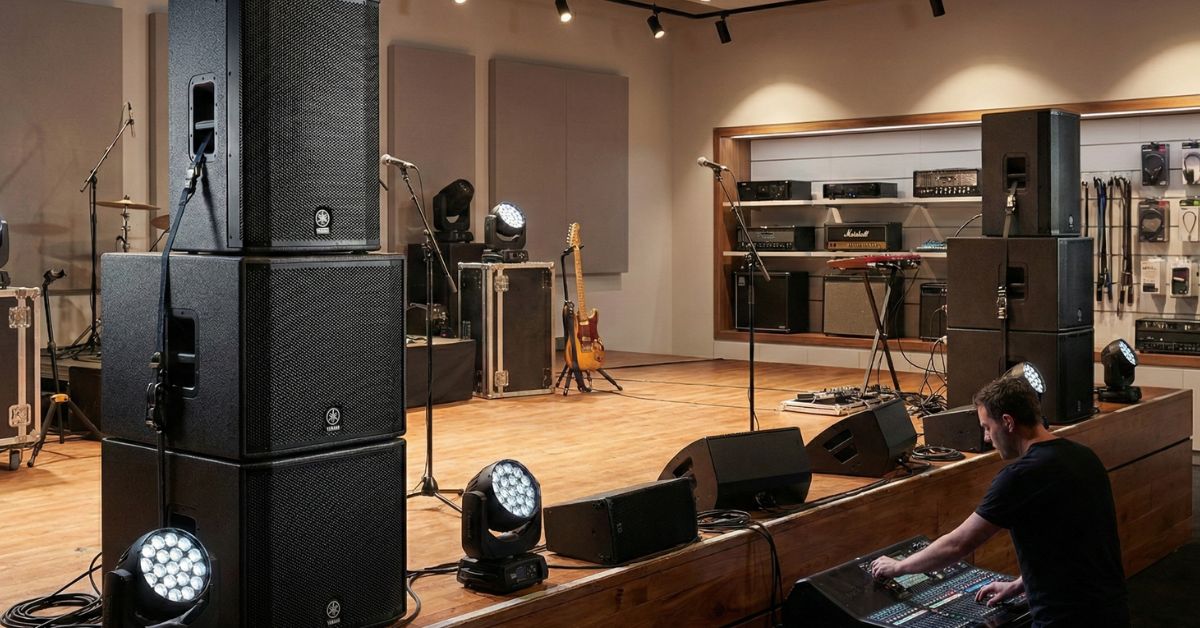
Yamaha CZR / CXS XLF: The Yamaha CZR / CXS XLF Series targets professional users who need passive PA speakers with high power handling, solid output, and dependable voicing for live sound and installs. This family combines CZR full-range tops with CXS XLF subwoofers, giving system designers the flexibility to scale from compact club rigs to sizeable festival stacks without changing tonality.
The series is designed to work with external amplification and processing, which appeals to engineers who prefer fine‑tuned system control instead of fixed built‑in DSP. In practical terms, that makes these cabinets suitable for rental houses, touring DJs, event companies, and venues that want consistent performance night after night.
Design and Build Quality
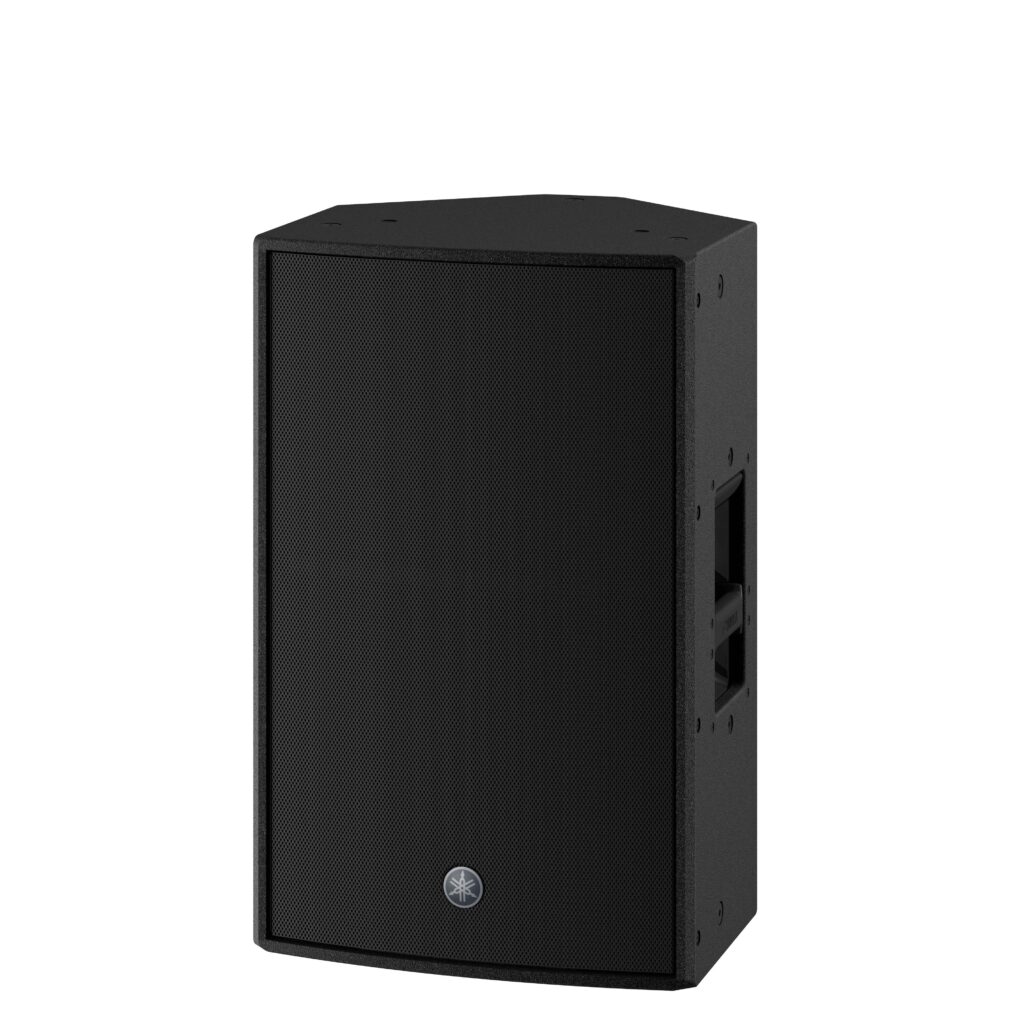
The CZR / CXS XLF enclosures use lightweight yet durable plywood rather than plastic, finished with a tough Polyurea coating that resists scratches and touring abuse better than most painted boxes. This material choice, along with reinforced bracing, helps reduce unwanted cabinet resonance, which is critical when running these boxes near their rated program power for long events. The cabinets include a dual-angle pole socket on the tops and dual-pole sockets on the subs, making it easy to set up satellite/sub stacks at appropriate coverage angles without extra hardware.
A rotatable constant-directivity horn and comprehensive U‑bracket options allow both horizontal and vertical mounting, so integrators can keep dispersion consistent while matching different room geometries. For fixed installs where aesthetics matter, the availability of both black and white finishes lets the system blend into clubs, houses of worship, and corporate venues.
Audio Performance and Sound Signature
In real-world use, the CZR tops deliver a clean, controlled midrange and a clear top end that stays intelligible even in reflective rooms when properly tuned with external DSP. Yamaha’s wide-dispersion CD waveguide horn helps maintain consistent coverage across the audience area, reducing the “hot spot in the center, dull at the sides” effect common in narrower designs. The low-frequency performance of the CZR line is strong for passive cabinets, but the system really comes alive when paired with the CXS XLF subs, which extend usable bass down to around 29 Hz on the 18‑inch model, making EDM, hip‑hop, and modern pop content feel weighty without losing definition. The voicing leans toward accuracy and headroom rather than hyped bass or aggressive high‑frequency bite, which is helpful for long events where listener fatigue and mix translation matter.
Technical Specifications Overview
- CZR15: 2‑way passive loudspeaker with 15″ LF driver and 2″ HF driver.
- CZR12: 2‑way passive loudspeaker with 12″ LF driver and 2″ HF driver.
- CZR10: 2‑way passive loudspeaker with 10″ LF driver and 2″ HF driver.
- Program power handling (CZR15 / CZR12): 800 W program; CZR10: 700 W program, all bi‑amp capable.
- CXS18XLF subwoofer: 18″ driver with 4″ voice coil, 1000 W program power, bass‑reflex design, extended LF down to approximately 29 Hz, up to 133 dB SPL.
- CXS15XLF subwoofer: 15″ driver with 4″ voice coil, 800 W program power, extended LF with up to 131 dB SPL.
- Connectivity: SpeakON NL4MP connectors, typically three on subs (two parallel inputs, one output) for flexible wiring; full‑range cabs use SpeakON for secure locking connections.
- Hardware and dimensions: Lightweight plywood cabinets feature dual-angle pole sockets on tops, dual-pole sockets on subs, and optional covers and wheel kits. Exact physical dimensions vary by model but remain manageable for one- or two-person handling in mobile rigs.

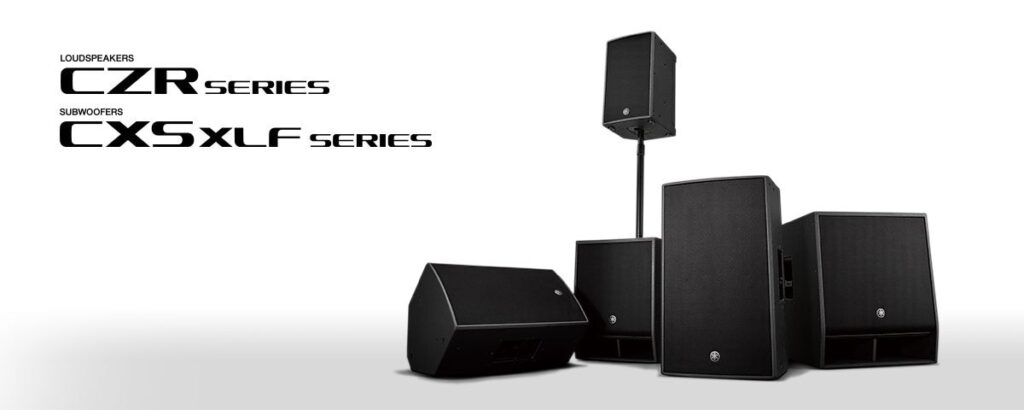
Connectivity and Compatibility Options
Because this is a passive series, the Yamaha CZR / CXS XLF line is compatible with a wide range of professional power amplifiers and external DSP processors, including Yamaha’s own amps with preset processing. Standard SpeakON connectivity simplifies daisy‑chaining tops and subs, and the three‑connector layout on the subwoofers helps implement cardioid arrays when driven by suitable processing and amplifier channels. The ability to run these speakers in bi‑amp mode on the CZR tops gives system techs fine control over crossover points and limiting, which is valuable in demanding touring and rental scenarios. This flexibility also means the same speakers can be repurposed across different venues or event sizes simply by changing amp power and DSP presets rather than replacing hardware.
Real-World Usage Scenarios
In practice, the CZR tops work well as front‑of‑house mains for live bands, DJs, and corporate events when flown or pole‑mounted, with enough headroom to cover medium‑sized venues when paired with adequate amplification. The CZR10 and CZR12 are particularly well suited as stage monitors or side fills thanks to their floor‑monitoring angles, while the CZR15 makes sense as a main box where more low‑mid authority is required. The CXS XLF subs are designed to complement these tops in both mobile and installed rigs, providing the kind of deep, controlled low end needed for big party speaker setups and small to mid‑scale concert environments. Event organizers can deploy a simple two‑top, two‑sub system for weddings and DJ nights, then scale up to multiple stacks or flown arrays for festivals, maintaining a consistent sound signature across configurations.
Power, Battery, and Efficiency
As a passive system, the Yamaha CZR / CXS XLF Series does not include built‑in power amplifiers or batteries and therefore requires external amplification matched to the speakers’ program and peak ratings. This architecture typically offers better long‑term reliability and serviceability than many powered boxes, because amplifiers and speakers can be maintained or upgraded separately as requirements change.

When paired with appropriately sized Class‑D amplifiers and properly configured limiters, the system can run efficiently while maintaining thermal headroom, which is important during long events in high‑temperature environments. From an operator’s perspective, this design trades plug‑and‑play simplicity for more precise control over gain structure, protection, and overall system tuning.
Comparison With Other Brands in the Same Segment
The Yamaha CZR / CXS XLF Series competes with familiar passive or semi‑pro PA families such as JBL PRX / SRX, Electro‑Voice ELX / ZLX, QSC E Series / AP, and RCF ART / HD in terms of output and application. JBL’s SRX line typically emphasizes very high output and robust touring features, while EV’s ELX / ZLX ranges are widely adopted for their value and straightforward deployment in small to mid‑size gigs. QSC’s passive offerings and RCF ART / HD lines are known for refined voicing and strong integration with matching amplification, making them popular in rental and installation markets. In that landscape, the Yamaha CZR / CXS XLF systems stand out for pairing lightweight plywood cabinets and deep‑reaching subs with flexible rigging options and a neutral, mix‑friendly sound that suits both live performance and DJ work.
| Aspect | Yamaha CZR / CXS XLF | JBL PRX / SRX Series* | EV ELX / ZLX Series* | QSC E / AP Series* | RCF ART / HD Series* |
| Cabinet material | Plywood with Polyurea coating. | Mixed, often plywood/composite. | Primarily wood or molded plastic, model‑dependent. | Plywood or composite. | Composite or wood, series‑dependent. |
| System type | Passive tops and subs requiring external amps. | Mostly powered, some high‑end passive. | Largely powered MI / pro‑sumer PA. | Passive PA speakers. | Mostly powered PA speakers. |
| LF extension (subs) | Down to around 29 Hz on 18″ model. | Deep bass on higher SRX subs, model‑specific. | Adequate LF for small to mid gigs. | Strong LF, tuned for live sound. | Deep LF with some models optimized for DJs. |
| Ideal users | Pros, rental houses, event companies wanting passive flexibility. | Touring and high‑demand FOH users. | DJs and small venues needing powered simplicity. | Integrators and rentals preferring passive rigs. | Clubs, DJs, and mobile acts using powered systems. |
Pros, Limitations, and Practical Considerations
The main strengths of the Yamaha CZR / CXS XLF Series include robust plywood construction, high program power handling, rotatable horns, and subs that comfortably reach into true low‑bass territory for modern music styles. For system techs, features like bi‑amp capability, cardioid‑capable sub configurations, and comprehensive rigging accessories offer the kind of flexibility normally expected in more expensive touring lines.
On the limitation side, the passive architecture means users must budget for quality amplifiers, DSP, and cabling, which adds cost and complexity compared with powered alternatives from JBL, EV, QSC, or RCF. These speakers are also overkill for very small, casual setups where compact powered PA boxes would be simpler, and they demand careful gain staging and system tuning to realize their full performance potential.
Overall, the Yamaha CZR / CXS XLF Series is a strong choice for professionals who value a neutral, controllable sound signature, scalable system design, and the reliability of passive loudspeakers backed by solid mechanical engineering. DJs, live sound engineers, and event organizers who routinely handle weddings, club nights, live bands, and small to mid‑scale concert speaker applications will find that a properly matched CZR / CXS XLF rig can cover a wide range of gigs without needing different systems.
Rental companies and venues that already own quality amplifiers and DSP, or plan to standardize on external processing, will particularly benefit from the combination of durable cabinets, versatile rigging, and deep‑reaching subs. On the other hand, users seeking an all‑in‑one portable “plug‑straight‑into‑the‑wall” solution may be better served by powered competitors, as this series expects a more professional, system‑based approach.
FAQs
Is the Yamaha CZR / CXS XLF Series suitable for outdoor events and small concerts?
Yes, when paired with correctly sized amplifiers, the CZR tops and CXS XLF subs can comfortably handle outdoor events and small to mid‑size concerts, offering high SPL and solid coverage. Proper weather protection and system tuning are still essential for consistent results.
Can these speakers be used as studio speakers or for nearfield monitoring?
While the voicing is relatively neutral for a PA system, the CZR / CXS XLF Series is designed as professional speakers for live sound reinforcement, not as nearfield studio monitors. For critical mixing or close‑range monitoring, dedicated studio speaker designs with optimized dispersion and lower self‑noise are more appropriate.
Do the CXS XLF subwoofers provide enough low end for EDM and hip‑hop?
The CXS18XLF, in particular, extends down to approximately 29 Hz with high maximum SPL, which is well suited for EDM, hip‑hop, and other bass‑heavy genres when properly powered. Using multiple subs and correct placement further enhances low‑frequency impact for big party speaker setups.
What type of amplifier should be paired with the CZR tops and CXS subs?
Choose professional power amplifiers that can comfortably deliver at least the program rating of each speaker, with adequate headroom and built‑in or external DSP for crossovers, EQ, and limiting. Matching Yamaha amplifiers with preset processing can simplify deployment, but any quality amp/DSP combination will work if configured correctly.
How do these speakers compare in portability to plastic molded PA speakers?
The plywood construction makes the cabinets more rigid and durable than many molded plastic boxes but can add some weight, especially on the subwoofers. However, their handles, optional covers, and wheel kits mean that one or two people can still manage typical load‑ins and load‑outs efficiently in professional workflows.